
Table of Contents
ToggleDesign and decor techniques can turn a dull room into a space that feels alive. Whether someone is updating a single room or rethinking an entire home, the right approach makes all the difference. Good design isn’t about spending more money, it’s about making smart choices with color, furniture, texture, and light.
This guide breaks down the core principles that professional designers use every day. Readers will learn how to apply these design and decor techniques in practical ways. No jargon, no fluff, just clear strategies that work.
Key Takeaways
- Mastering design and decor techniques starts with understanding fundamentals like balance, proportion, rhythm, and harmony to create intentional spaces.
- Use the 60-30-10 color rule—60% dominant color, 30% secondary, and 10% accent—to achieve visual cohesion without chaos.
- Arrange furniture based on function first, keeping conversation areas within 8 feet and leaving 3 feet for traffic paths.
- Layer textures (hard, soft, and natural materials) and vary pattern scales to add depth and visual interest to any room.
- Combine ambient, task, and accent lighting to transform flat spaces into dynamic, flexible environments.
- Design and decor techniques that treat lighting as both functional and decorative create the most successful, polished spaces.
Understanding the Fundamentals of Interior Design
Every great space starts with solid fundamentals. Interior design rests on a few key principles: balance, proportion, rhythm, and harmony. These aren’t abstract concepts, they’re the building blocks that make a room feel “right.”
Balance refers to how visual weight is distributed. A room with a massive sofa on one side and nothing on the other feels off. Symmetrical balance places matching items on either side of a center point. Asymmetrical balance uses different objects with similar visual weight.
Proportion deals with size relationships. A tiny coffee table in front of a large sectional looks lost. Furniture should relate to the room’s dimensions and to each other.
Rhythm creates movement through repetition. Repeating colors, shapes, or patterns guides the eye around a space. A blue throw pillow that echoes the blue in a painting creates this effect.
Harmony pulls everything together. All elements should feel connected, even if they’re not identical. Design and decor techniques that honor these fundamentals produce spaces that feel intentional rather than random.
The best designers apply these principles instinctively. But anyone can learn them. Start by observing rooms that feel comfortable. Ask why they work. Usually, the answer traces back to these core ideas.
Color Theory and Its Impact on Room Atmosphere
Color changes everything. It affects mood, perceived size, and even temperature. Understanding basic color theory is one of the most powerful design and decor techniques available.
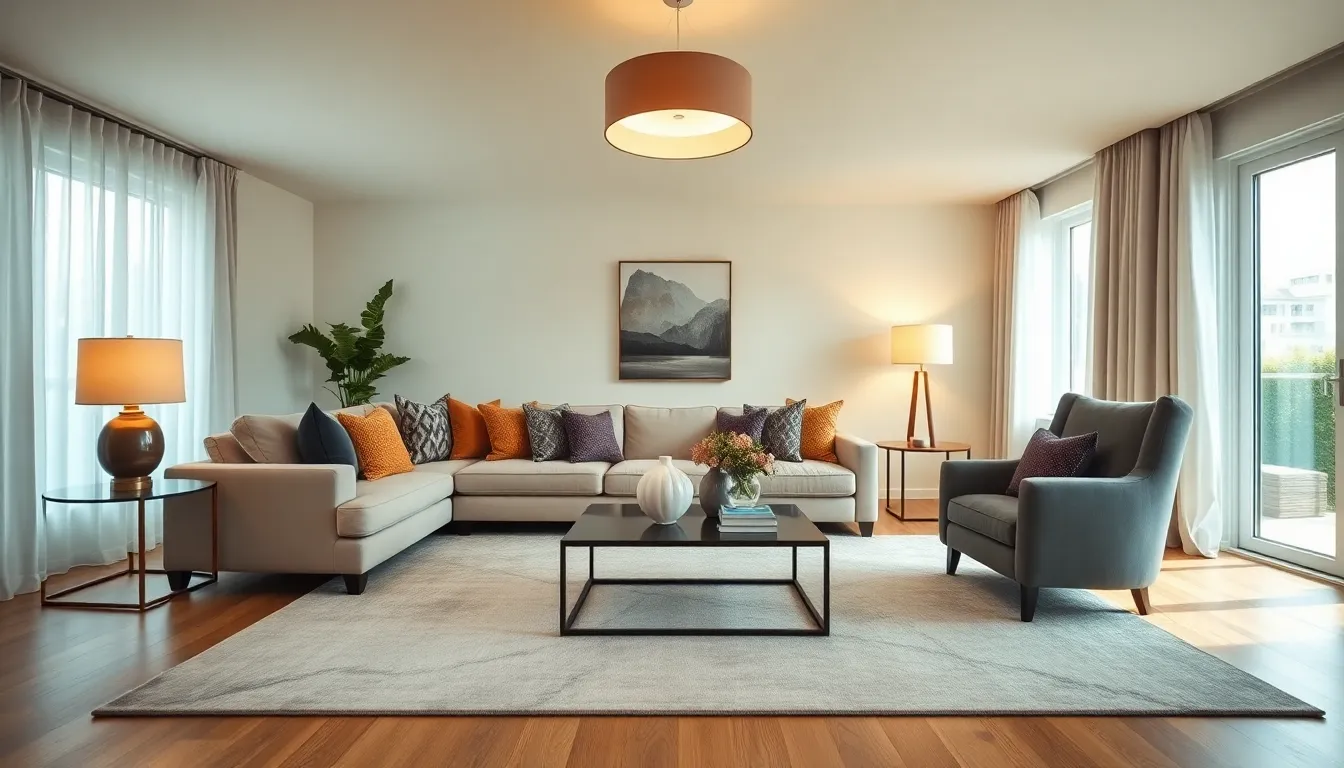
The color wheel organizes hues into relationships. Complementary colors sit opposite each other, blue and orange, red and green. They create energy and contrast. Analogous colors sit next to each other, like blue, blue-green, and green. They produce calm, cohesive spaces.
Warm colors (reds, oranges, yellows) advance toward the viewer. They make rooms feel cozy but smaller. Cool colors (blues, greens, purples) recede. They create a sense of space and calm.
The 60-30-10 rule offers a practical framework:
- 60% dominant color (walls, large furniture)
- 30% secondary color (curtains, accent chairs)
- 10% accent color (throw pillows, artwork)
This ratio prevents visual chaos while allowing personality.
Neutral colors, whites, grays, beiges, serve as anchors. They let bolder choices stand out without overwhelming a space. Many successful design and decor techniques use neutrals as a foundation, then layer in color through accessories.
Lighting affects how colors appear. A paint chip looks different under fluorescent store lights than under warm home lighting. Always test colors in the actual space before committing.
Balancing Furniture and Spatial Arrangement
Furniture placement can make or break a room. Even beautiful pieces fail if they’re arranged poorly. Smart spatial arrangement is among the most practical design and decor techniques homeowners can master.
Start with function. How will people use this room? A living room for entertaining needs different furniture placement than one for watching TV with family. Define the purpose first.
Create conversation areas. In living spaces, arrange seating so people can talk comfortably, typically within 8 feet of each other. Floating furniture away from walls often works better than pushing everything to the edges.
Leave breathing room. Traffic paths need about 3 feet of clearance. Cramming too much furniture into a space makes it feel chaotic, no matter how nice the pieces are.
Anchor with area rugs. A rug defines a seating area and ties furniture together. The rug should be large enough that at least the front legs of major pieces sit on it.
Consider focal points. Every room needs one, a fireplace, a view, a piece of art, or even a statement furniture piece. Arrange other elements to support it.
Scale matters here too. A delicate chair next to an overstuffed sofa looks odd. Mixing heights adds interest, but the overall visual weight should balance. Design and decor techniques that respect scale create spaces that feel cohesive and comfortable.
Layering Textures and Patterns for Visual Interest
Flat, one-dimensional rooms feel boring. Texture and pattern add depth that photographs can’t capture but eyes immediately notice. This is where design and decor techniques get fun.
Texture refers to surface quality, smooth glass, rough linen, soft velvet, woven rattan. Mixing textures creates richness. A leather sofa feels different next to a chunky knit throw than next to a silk pillow. Both work, but they create different moods.
Layer textures thoughtfully:
- Hard materials (wood, metal, glass) for structure
- Soft materials (fabric, upholstery) for comfort
- Natural materials (plants, stone, jute) for warmth
Pattern adds energy. But too many competing patterns create visual noise. The trick is varying scale. Pair a large-scale floral with a medium geometric and a small stripe. Keep them in the same color family for cohesion.
Solid colors provide rest between patterns. If pillows feature bold prints, choose a solid-colored sofa. This gives the eye places to pause.
Textile choices offer easy texture wins. Curtains, rugs, throws, and pillows change a room’s feel without major investment. Swap them seasonally, heavier textures in winter, lighter ones in summer.
Design and decor techniques involving texture and pattern reward experimentation. Hold samples together before buying. What looks good separately might clash in combination. Trust the eye over theory.
Lighting Strategies to Enhance Your Decor
Lighting deserves more attention than most people give it. The best furniture and colors fall flat under bad lighting. Good lighting is among the most overlooked design and decor techniques.
Layer light sources. Relying on a single overhead fixture creates harsh shadows and dull spaces. Use three types:
- Ambient lighting provides overall illumination (ceiling fixtures, recessed lights)
- Task lighting serves specific functions (reading lamps, under-cabinet lights)
- Accent lighting highlights features (picture lights, uplights, candles)
Combining all three creates depth and flexibility.
Consider color temperature. Light bulbs range from warm (2700K-3000K) to cool (5000K+). Warm light flatters skin tones and creates coziness. Cool light energizes and works well in workspaces. Mixing temperatures in one room looks inconsistent.
Use dimmers. They transform a room’s mood instantly. Bright for cooking, dim for dinner parties, same lights, different effects.
Don’t ignore natural light. Window treatments control how much daylight enters. Sheer curtains soften harsh sun. Heavy drapes provide privacy and insulation. Mirrors placed opposite windows bounce light deeper into rooms.
Light fixtures also serve as decor. A statement pendant or sculptural lamp becomes a focal point. Design and decor techniques that treat lighting as both functional and decorative produce the most successful spaces.