
Table of Contents
ToggleShopping for a 7 piece patio furniture set is more than picking a style that looks good online. These sets are built to handle sun, rain, and nightly temperature swings while hosting dinners and weekend gatherings for years. The right choice depends on matching materials to climate, sizing furniture to the actual footprint of a patio or deck, and understanding what “outdoor-rated” really means. A poorly chosen set can fade, rust, or take up too much space within a single season. This guide walks through the anatomy of these sets, material trade-offs, sizing strategies, and maintenance steps that keep a patio looking sharp without constant intervention.
Key Takeaways
- A standard 7 piece patio furniture set includes one dining table and six matching chairs, with table dimensions ranging from 60–84 inches for rectangular or 54–72 inches for round models.
- Material choice is critical: synthetic resin wicker suits most climates, cast aluminum works well for moderate conditions, and extruded aluminum offers the best rust resistance for coastal or humid areas.
- Measure your usable patio footprint by subtracting 3 feet on each side for clearance, then verify the 7 piece furniture set fits without blocking doors, grills, or foot traffic.
- Cushions sold separately should be upgraded to solution-dyed acrylic like Sunbrella, which resists UV fading and mildew far better than factory polyester—budget an extra $200 to $400.
- Seasonal maintenance—weekly cleaning for tree cover, spring inspections of metal joints, and off-season storage with breathable covers—prevents rust, fading, and structural damage that shortens furniture life.
- Avoid pressure washers above 1,500 PSI and plastic tarps; instead use soft-bristle brushes, mild soap solutions, and breathable covers to protect your patio furniture investment.
What Is Included in a 7 Piece Patio Furniture Set?
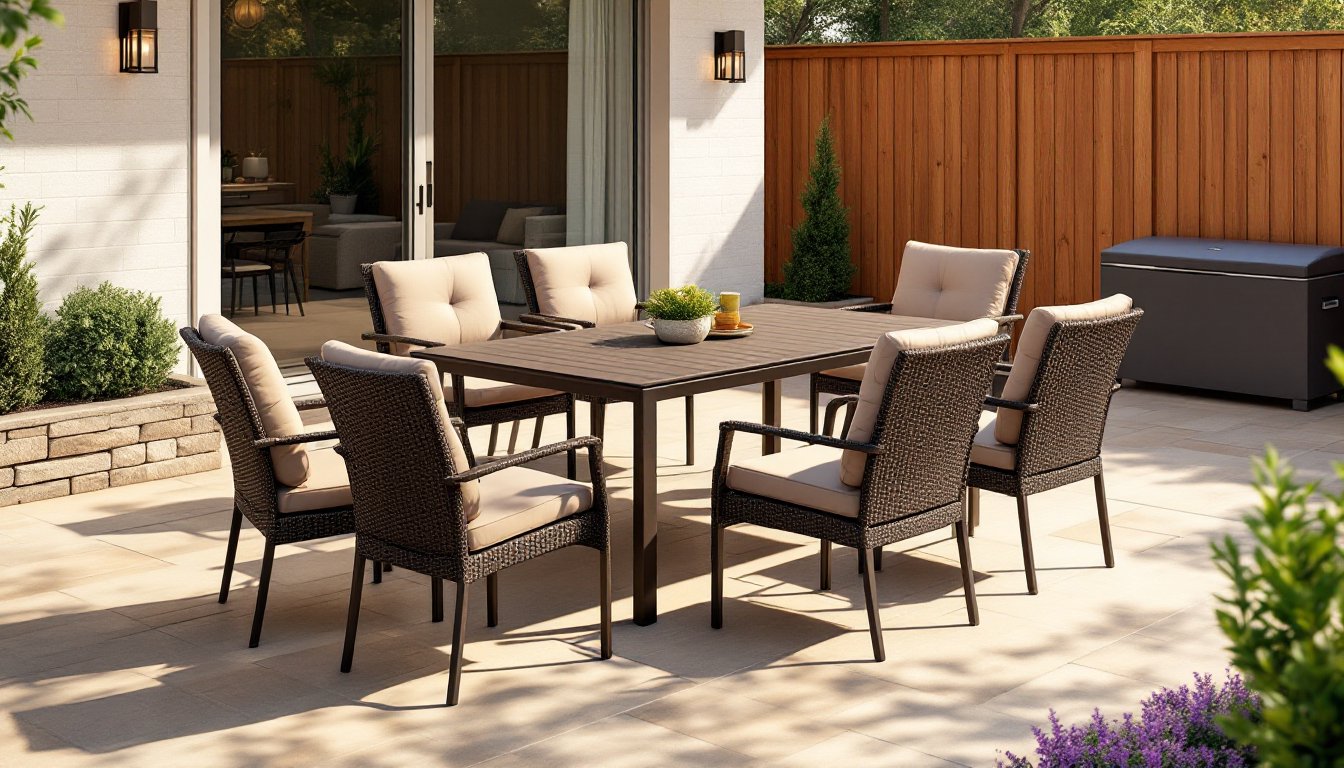
A standard 7 piece patio set consists of one rectangular or round dining table and six matching chairs. The table typically measures between 60 and 84 inches long for rectangular models or 54 to 72 inches in diameter for round versions, designed to seat six adults comfortably with elbow room. Chair dimensions average 24 to 26 inches wide with seat heights around 17 to 18 inches, matching standard dining chair proportions.
Some manufacturers replace two chairs with a bench or include a removable umbrella with a center pole diameter of 1.5 to 2 inches. Check whether the table has a pre-drilled umbrella hole, retrofitting one later weakens the structure and voids most warranties. Sets marketed for “dining” prioritize chair comfort and table height (28 to 30 inches), while “conversation” sets use lower profiles and deeper seating, which isn’t ideal for meals.
Cushions are sometimes included but often sold separately. Factory cushions tend to use 2 to 3-inch foam cores with water-resistant polyester covers, not true outdoor fabric. Upgrading to solution-dyed acrylic (like Sunbrella) adds cost but resists UV fading and mildew far better than standard polyester. If cushions aren’t included, budget an extra $200 to $400 for decent replacements.
Always verify what “7 piece” means for a specific product. Some retailers count the umbrella or a side table as a piece, leaving buyers with only five chairs. Read the spec list, not just the marketing copy.
Top Materials for 7 Piece Patio Furniture Sets
Material choice dictates durability, maintenance load, and whether the set survives regional weather. Coastal humidity, desert sun, and freeze-thaw cycles each demand different properties.
Wicker and Rattan Options
Synthetic resin wicker (also called all-weather wicker or PE rattan) is woven polyethylene strands over an aluminum or steel frame. It mimics natural rattan but won’t crack, split, or absorb water. Quality resin wicker uses high-density polyethylene (HDPE) with UV inhibitors, cheaper versions fade to chalky gray within two seasons. Check the weave tightness: gaps wider than ¼ inch collect debris and indicate thinner strands that sag over time. Many outdoor furniture collections highlight synthetic wicker for its blend of traditional looks and low maintenance.
Natural rattan or wicker is lighter and has authentic texture, but it’s strictly for covered patios or sunrooms. Direct rain causes swelling and mold. If a set uses natural materials, it’ll specify “indoor/outdoor” or “covered use only.”
Resin wicker sits on frames, so inspect those closely. Powder-coated aluminum resists rust: steel frames are sturdier but need intact coating to prevent corrosion. Touch up any chips with rust-inhibiting spray paint immediately.
Metal and Aluminum Frames
Wrought iron offers classic durability and weight, a plus in windy areas where lightweight sets tip or slide. Expect 50 to 70 pounds per chair. The downside is rust. Even powder-coated wrought iron needs annual inspection for chips, especially on leg tips and joints. Bare spots require sanding to bare metal, rust converter primer, and oil-based topcoat. Skip galvanized or marine-grade options if near saltwater, standard wrought iron won’t last.
Cast aluminum mimics wrought iron’s looks at half the weight (25 to 35 pounds per chair). It won’t rust, but the casting process can leave porosity, tiny voids where water and dirt lodge. Sealed finishes help, but cheaper cast aluminum may pit after a few years. It’s a solid middle ground for dry or moderate climates.
Extruded aluminum with a powder-coated finish is the lightest (15 to 25 pounds per chair) and rust-proof. It works well in humid or coastal settings and needs minimal upkeep. The trade-off is lower wind resistance and less traditional styling. Reinforced joints and cross-bracing under the table improve stability.
Steel frames (not stainless) show up in budget sets. They’re strong but prone to flash rust if the finish scratches. Plan to store these sets in a shed or garage during the off-season, or they’ll deteriorate fast.
How to Choose the Right Size for Your Outdoor Space
Measuring the patio comes before browsing furniture. A too-large set makes the space feel cramped and blocks traffic flow: an undersized set looks awkward and underutilizes the area.
Start by mapping the usable footprint. Measure the patio or deck in feet, then subtract 36 inches (3 feet) on each side where furniture will sit. This clearance allows chairs to slide out and people to walk behind seated diners. For example, a 12 × 16-foot patio has a usable dining zone of roughly 6 × 10 feet after clearances. A 72-inch rectangular table (6 feet) plus six chairs fits comfortably in that zone.
Round tables need less linear space but more radial clearance. A 60-inch round table requires about 10 × 10 feet total (table diameter plus 2 feet per side for chairs and movement). They work well on square patios or in corners, while rectangular tables suit long, narrow decks.
Account for door swings, grill placement, and planter boxes. Furniture shouldn’t block the path from a sliding door to the yard or force someone to shimmy past a hot grill. Lay out painter’s tape or cardboard cutouts at actual dimensions before buying, photos and imagination don’t catch these conflicts.
Umbrella and base logistics matter. An umbrella adds 8 to 11 feet of canopy diameter. If the patio edge is close, the umbrella will overhang grass or gardens. A cantilever umbrella with an offset base solves this but requires a 50 to 75-pound base to stay upright, confirm the patio surface can support the concentrated weight without cracking (especially true for pavers over sand).
For small patios under 8 × 10 feet, consider a bistro or 5-piece set instead. Forcing a 7 piece set into a tight space sacrifices usability. Inspiration from sources focused on outdoor living design often emphasizes scale and proportion as critical to functional layouts.
Maintenance Tips to Keep Your Set Looking New
Outdoor furniture needs routine care to last beyond the warranty period. Most damage is preventable with a few seasonal tasks.
Cleaning frequency depends on location. Sets under tree cover need weekly hosing to remove pollen, sap, and bird droppings, all of which stain or etch finishes. Open-air sets can go two to four weeks between cleanings. Use a soft-bristle brush, mild dish soap, and a garden hose. Avoid pressure washers above 1,500 PSI, they strip powder coating, splinter wood, and fray wicker weaves. For stubborn grime, a solution of 1 part white vinegar to 3 parts water works on most materials.
Cushion care makes or breaks longevity. Remove cushions during rain and store them in a deck box or garage shelf. Leaving them out traps moisture between foam and fabric, breeding mildew that smells and discolors. Wash covers monthly in cold water on a gentle cycle, heat sets stains and shrinks fabric. Air-dry only: dryers melt waterproof coatings. If mildew appears, scrub with 1 cup bleach per gallon of water (test on a hidden seam first).
Wicker sets need the weave checked for loose strands or cracks. Trim frayed ends with scissors and apply a small bead of outdoor adhesive to reattach loose sections. Don’t let damage spread, one broken strand unravels a whole panel.
Metal frames require touch-ups. Inspect joints and leg tips each spring for rust spots or chipped paint. Sand affected areas with 120-grit sandpaper, wipe with a tack cloth, apply rust-inhibiting primer, and finish with color-matched spray paint. Let cure for 48 hours before use. Aluminum doesn’t rust but can corrode, white, powdery spots indicate oxidation. Clean with aluminum brightener (available at auto parts stores) and rinse thoroughly.
Off-season storage extends life significantly. If storage isn’t an option, invest in breathable furniture covers, not plastic tarps, which trap condensation. Covers should have tie-down straps or elastic hems: loose covers flap and tear in wind. Elevate furniture on deck blocks or pavers if storing on grass to prevent ground moisture from wicking up the legs. For insights on maintaining other outdoor elements, regional design experts often share climate-specific care routines.
Table surfaces vary by material. Glass tops need ammonia-free cleaner to avoid hazing. Wood tables (teak, eucalyptus) require teak oil or sealant every 6 to 12 months to prevent cracking and graying. Powder-coated metal tables just need soap and water but should be waxed annually with automotive paste wax to protect the finish.
Hardware loosens over time from temperature cycling. Walk around the set every few months with a socket set or hex key set and snug up bolts, don’t overtighten, which can crack composite materials. Replace any corroded fasteners with stainless steel versions from a hardware store.
Conclusion
A well-chosen 7 piece patio set transforms outdoor space into a functional dining area that handles real use, not just staged photos. Prioritize materials suited to local climate, measure the space with clearances in mind, and commit to basic maintenance routines. Furniture that’s sized right, built from appropriate materials, and cared for seasonally will outlast cheaper alternatives by years and hold up to the wear of regular entertaining.