
Table of Contents
ToggleBlack iron patio furniture has stood the test of time for good reason. It’s built to handle weather extremes, looks sharp in any setting, and ages gracefully without looking dated. Whether someone’s outfitting a small balcony or a sprawling backyard, black iron pieces anchor an outdoor space with weight and presence that lighter materials can’t match. Unlike trendy finishes that cycle in and out of style, black iron delivers a foundational aesthetic that works with everything from cottage gardens to minimalist concrete patios. This guide breaks down what makes black iron a smart choice, how to select the right pieces, and the straightforward maintenance that keeps it looking good for decades.
Key Takeaways
- Black iron patio furniture resists weather extremes, UV degradation, and temperature swings better than wood, wicker, or plastic, maintaining structural integrity through freeze-thaw cycles and coastal moisture.
- Choose between wrought iron for lighter, malleable pieces with decorative details or cast iron for heavier, wind-stable furniture, considering your space size and mobility needs before purchasing.
- Black iron’s neutral aesthetic works seamlessly with any design style—from Victorian traditional with scrollwork to modern minimalist—and pairs well with materials like teak, glass, and stone for visual softness.
- Prevent rust and finish failure with monthly cleaning, annual inspections of joints and welds, and seasonal paste wax application; catch rust early and repair with a wire brush, primer, and topcoat.
- Soften black iron’s formal appearance by layering outdoor textiles in jewel tones or neutrals, adding potted plants, incorporating ambient lighting, and protecting metal surfaces with glass tabletops or table runners.
Why Black Iron Patio Furniture Remains a Top Choice for Outdoor Spaces
Black iron dominates outdoor furniture for practical reasons that go beyond aesthetics. The material performs in conditions that destroy wicker, warp wood, and fade plastics. It’s not about trends, it’s about structural integrity and longevity.
Durability and Weather Resistance
Wrought iron and cast iron are the two main types found in patio furniture, and both handle outdoor exposure better than most alternatives. Wrought iron contains less carbon, making it more malleable and resistant to shattering under impact. Cast iron is brittle but heavier, which keeps furniture planted during windstorms.
Both types resist UV degradation that causes plastics to crack and fabrics to fade. The powder-coated or painted finish acts as a barrier against moisture, but even when that finish chips, iron develops a rust patina rather than rotting like wood or delaminating like composite materials. In coastal environments or areas with high humidity, applying a rust-inhibiting primer before the topcoat extends service life significantly.
Temperature swings don’t warp or split iron the way they affect wood joints. Freeze-thaw cycles might crack concrete or stone, but iron expands and contracts at predictable rates without structural failure. That said, cushions and fabric elements still need protection, store them during heavy rain or winter months.
Safety note: Cast iron furniture is extremely heavy. Two people should handle moving large pieces to avoid back strain or pinched fingers. Wrought iron is lighter but still substantial, average bistro chairs weigh 15-20 pounds each.
Design Versatility: From Modern to Traditional
Black acts as a neutral in outdoor design, which gives it unusual flexibility. It doesn’t compete with plantings, hardscaping, or architectural details. A black iron bistro set fits on a Victorian porch as naturally as it does on a contemporary rooftop deck.
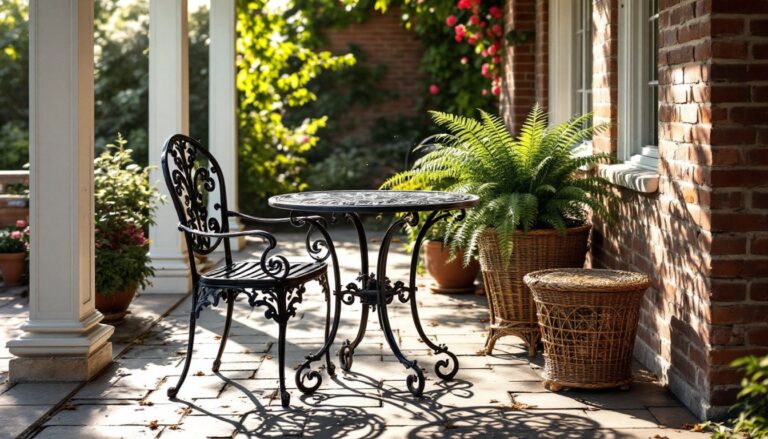
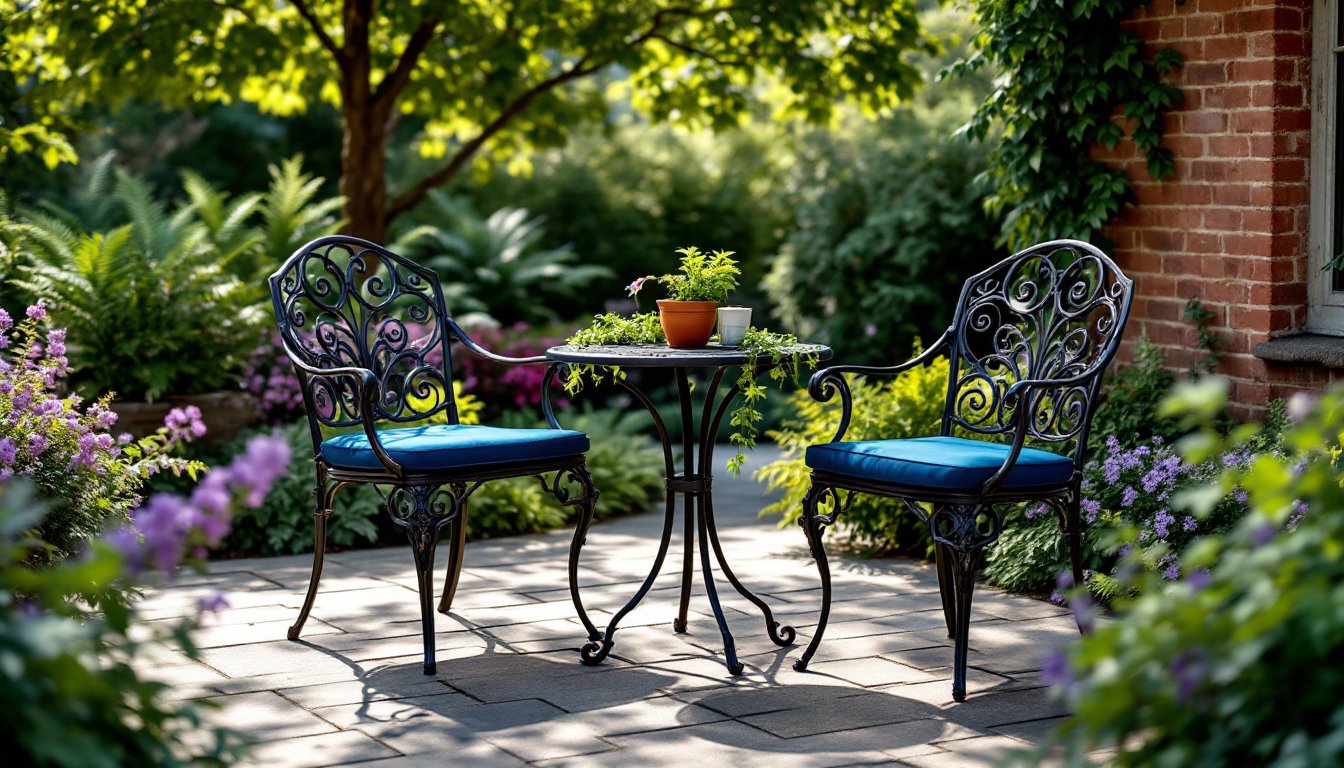
For traditional settings, look for pieces with scrollwork, curved arms, or lattice patterns, details typically found in wrought iron. These complement brick patios, flagstone walkways, and established gardens. Modern applications favor clean lines: straight-backed chairs, geometric table bases, and minimal ornamentation. Cast iron works well here because its mass reads as intentional rather than decorative.
Black iron also plays well with other materials. Pair it with teak or cedar tabletops for warmth, tempered glass for a lighter visual weight, or natural stone for a Mediterranean feel. The iron provides structure while other materials soften or accent. Many outdoor furniture configurations use black metal frames as the foundational element with interchangeable seasonal textiles.
Choosing the Right Black Iron Furniture Pieces for Your Patio
Start with function, then fit the aesthetic. Measure the space before shopping, black iron looks substantial, and pieces take up more visual and physical space than aluminum or resin equivalents.
Dining sets require planning around actual use. A 48-inch round table seats four comfortably but feels cramped with six. Rectangular tables work better for long, narrow patios: allow 24-30 inches of space per seat and at least 36 inches behind chairs for walk space. Iron dining chairs without cushions work for short gatherings but become uncomfortable after 30-45 minutes, budget for outdoor cushions with quick-dry foam if meals run long.
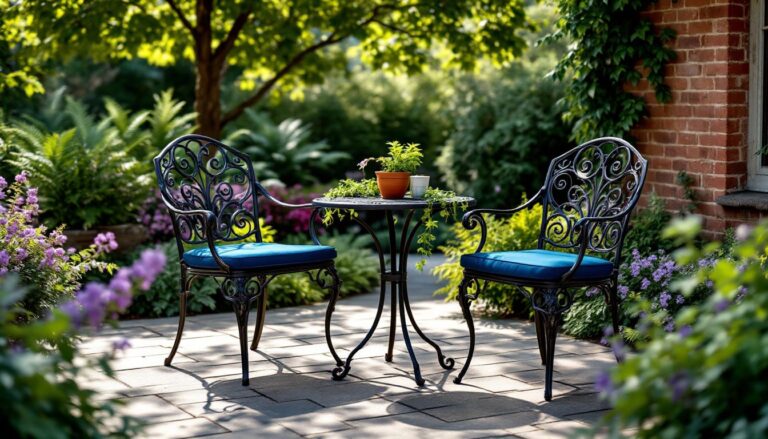
Bistro sets (two chairs, small table) excel in tight spaces: apartment balconies, courtyard corners, or alongside pools. Standard bistro tables measure 24-30 inches across, just enough for coffee and a laptop or two place settings. They’re also easy to move seasonally because even cast iron bistro pieces weigh under 50 pounds total.
Benches serve double duty as seating and visual anchors. A 48-60 inch iron bench against a fence or garden wall creates structure in sprawling yards. Look for pieces with contoured seats or plan to add cushions: flat iron benches are beautiful but punishing for anyone sitting longer than a few minutes.
Lounge chairs in black iron are less common but worth considering if the design includes sling fabric or woven supports. Solid iron loungers conduct heat in direct sun, they’ll be untouchable by midday in southern climates.
Check the finish type before buying. Powder coating is tougher than paint and resists chipping better, but it’s harder to touch up at home. Traditional enamel paint allows for easier DIY repairs with a wire brush and spray paint, though it requires maintenance every 2-3 years in harsh climates. Some higher-end pieces use hot-dip galvanizing under the topcoat for maximum rust resistance, worthwhile for coastal installations.
Weight matters for both stability and mobility. Cast iron stays put in wind but requires help to rearrange. Wrought iron pieces offer a middle ground. If furniture needs to move frequently (around pool parties, seasonal storage), consider pieces under 30 pounds per item or invest in a furniture dolly with rubber wheels to avoid scratching hardscaping.
Maintenance Tips to Keep Your Black Iron Furniture Looking New
Black iron needs less maintenance than wood but more than synthetic materials. Neglect leads to rust bloom and finish failure: a seasonal routine prevents both.
Routine cleaning: Hose down furniture monthly to remove pollen, dirt, and organic debris that trap moisture against the finish. For stubborn grime, use a soft brush and mild dish soap, avoid abrasive cleaners that scratch the topcoat. Rinse thoroughly and dry with an old towel. Standing water in crevices and joints accelerates rust, especially where welds meet decorative elements.
Rust inspection and repair: Check annually (spring is ideal) for rust spots, especially on joints, underside surfaces, and anywhere the finish has chipped. Catch rust early, it spreads under intact finish like rot under paint. When found:
- Use a wire brush or 80-grit sandpaper to remove rust down to bare metal.
- Wipe clean with mineral spirits.
- Apply a rust-converting primer (like Rust-Oleum Stops Rust) per manufacturer’s directions.
- Topcoat with oil-based enamel or matching powder coat touch-up (some manufacturers sell small bottles). Two thin coats beat one thick coat.
PPE required: Wear gloves and safety glasses when wire-brushing rust. Use a respirator rated for organic vapors when applying oil-based primers and paints in enclosed or semi-enclosed spaces like covered patios.
Seasonal prep: Before winter or extended rainy seasons, apply a thin coat of paste wax (like Johnson’s or Butcher’s Wax) over the finish. This adds a sacrificial barrier against moisture. Buff lightly with a soft cloth. If storing furniture, keep it covered but allow airflow, fully sealed tarps trap condensation. Breathable furniture covers work better than plastic sheeting.
Cushion care: Remove fabric cushions during rain. Most outdoor-rated fabrics resist mildew, but sitting water eventually overwhelms the treatment. If cushions get soaked, stand them on edge in sun to dry, laying flat keeps moisture trapped inside the foam. For winters, store cushions indoors or in a deck box with ventilation holes.
Mobility protection: If dragging furniture across concrete or pavers, install felt pads or rubber caps on legs to prevent scratching both the hardscape and the furniture’s finish. Replace pads seasonally: they compress and shed effectiveness.
Styling Your Patio with Black Iron Furniture
Black iron reads formal on its own, so softening elements prevent the space from feeling stark or institutional. The material provides structure, styling adds livability.
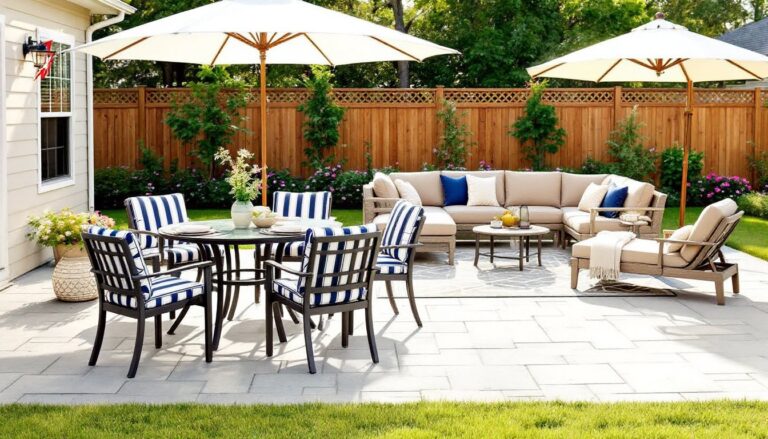
Textiles warm the look: Layer cushions and throws in colors that either contrast boldly or harmonize quietly. Jewel tones (deep greens, burgundy, navy) give a classic garden feel. Neutrals (linen, oatmeal, soft gray) lean modern. Patterns work, striped cushions and outdoor rugs break up the solid black without clashing. Many timeless patio designs rely on black iron frames as the structural base with seasonal fabrics that change the entire mood.
Greenery balances hardness: Potted plants around and on iron furniture soften edges. Trailing plants like ivy or sweet potato vine spill nicely from elevated planters on iron plant stands. Use groupings of three or five containers in varying heights, odd numbers feel more natural. Terra cotta and glazed ceramic pots complement black iron better than plastic.
Lighting sets mood: Black iron looks severe in harsh overhead light but dramatic in layered lighting. String lights overhead, solar path lights along borders, and lanterns (also black iron, if staying on theme) on tables create depth after dark. Iron candle holders and hurricane lamps add flicker without electricity.
Tables need layers: A bare iron tabletop feels cold. Add a table runner, placemats, or a tempered glass top cut to size (hardware stores cut glass to spec: bring exact measurements). Glass protects the iron finish from drink condensation and food spills while keeping the base visible. For rustic settings, a reclaimed wood plank across an iron base creates farmhouse appeal.
Scale matters: Black iron’s visual weight means it can handle bold accessories. Oversized planters, large outdoor art, or substantial outdoor lanterns don’t overwhelm the furniture. Tiny, delicate accents get lost. If the setting feels too heavy, introduce wicker baskets for texture contrast or light-colored outdoor pillows to lift the palette.
Regional considerations: In hot climates, black iron absorbs and radiates heat, position furniture where afternoon shade falls, or use patio umbrellas to create shade zones. In areas with frequent wind, iron’s weight is an asset, but lightweight accessories (napkins, small cushions) need securing. Outdoor adhesive Velcro strips keep cushions from sliding or blowing off.
Conclusion
Black iron furniture delivers what most outdoor materials promise but don’t sustain: genuine durability, design staying power, and a look that improves with care rather than fighting against time. It requires straightforward maintenance, not endless refinishing or replacement. For anyone building an outdoor space meant to last more than a season or two, black iron remains one of the most reliable foundations to build around.