
Table of Contents
ToggleA well-chosen patio umbrella transforms a sweltering outdoor space into a comfortable retreat. Beyond providing shade, the right umbrella reduces UV exposure, protects furniture from fading, and extends the usable hours of a deck or patio. With options ranging from classic center-pole designs to cantilevered models that float shade where it’s needed, selecting the right umbrella involves more than picking a color. Fabric weight, frame construction, base stability, and maintenance requirements all play a role in long-term performance. This guide walks through the practical considerations that separate a summer impulse buy from a durable outdoor investment.
Key Takeaways
- A quality patio furniture umbrella reduces surface temperatures by 10–20°F and protects outdoor furniture from UV damage, extending its usable lifespan by 5–7 years with proper maintenance.
- Market umbrellas work best for table-centered shade, while cantilever umbrellas free up table space and suit larger patios that can accommodate heavier bases of 75–150 pounds.
- Choose canopy diameter by extending 2 feet beyond your table perimeter—a 48-inch round table needs at least a 9-foot umbrella, while a 72-inch table requires 11 feet of coverage.
- Solution-dyed acrylic fabric rated UPF 50+ offers superior fade resistance and UV protection compared to polyester or olefin, delivering reliable performance for outdoor conditions.
- Base weight must be at least 50 pounds per 5 feet of canopy diameter; a 9-foot umbrella requires a 90-pound base, and proper anchoring or in-ground sleeves prevent wind damage and injury.
- Regular seasonal maintenance—including monthly debris brushing, annual hardware inspection, and canopy replacement every 5–8 years—keeps your patio furniture umbrella performing safely and looking sharp.
Why Your Outdoor Space Needs a Quality Patio Umbrella
A quality patio umbrella does more than block sunlight. It reduces surface temperatures on furniture and decking by 10 to 20 degrees Fahrenheit, making outdoor spaces usable during peak afternoon heat. UV-rated canopy fabrics protect both people and materials, preventing premature fading on cushions and deterioration of wood or composite decking.
From a practical standpoint, shade coverage extends the functional season of outdoor furniture. Without protection, direct sun accelerates wear on sling fabrics, plastic components, and even powder-coated metal frames. A properly positioned umbrella creates a microclimate that reduces the need for frequent furniture replacement.
Safety matters, too. Prolonged sun exposure increases skin cancer risk, and a fixed shade structure isn’t always feasible or permitted. Unlike permanent pergolas or awnings, which may require building permits in many jurisdictions, umbrellas are portable, adjustable, and removable for winter storage. They offer flexibility without the commitment or inspection requirements of structural additions.
For homeowners balancing budget and durability, a mid-tier umbrella with a powder-coated aluminum frame and solution-dyed acrylic fabric typically delivers 5 to 7 years of reliable service with basic maintenance. That’s a better cost-per-season ratio than replacing cheap models every other year.
Types of Patio Furniture Umbrellas to Consider
Patio umbrellas fall into two primary categories, each with distinct structural and functional characteristics.
Market Umbrellas vs. Cantilever Umbrellas
Market umbrellas feature a center pole that runs through the middle of the canopy. These are the most common and straightforward option, fitting into a hole in the center of a patio table or a freestanding weighted base. They’re available in diameters from 6 feet to 11 feet, with 9-foot models being the most versatile for standard rectangular tables seating four to six.
Market umbrellas work well when shade needs align with the table footprint. The pole does occupy table center space, which can limit centerpiece options or sightlines during meals. Tilt mechanisms, either push-button or crank-operated, allow angle adjustment as the sun moves, though the pole itself remains stationary.
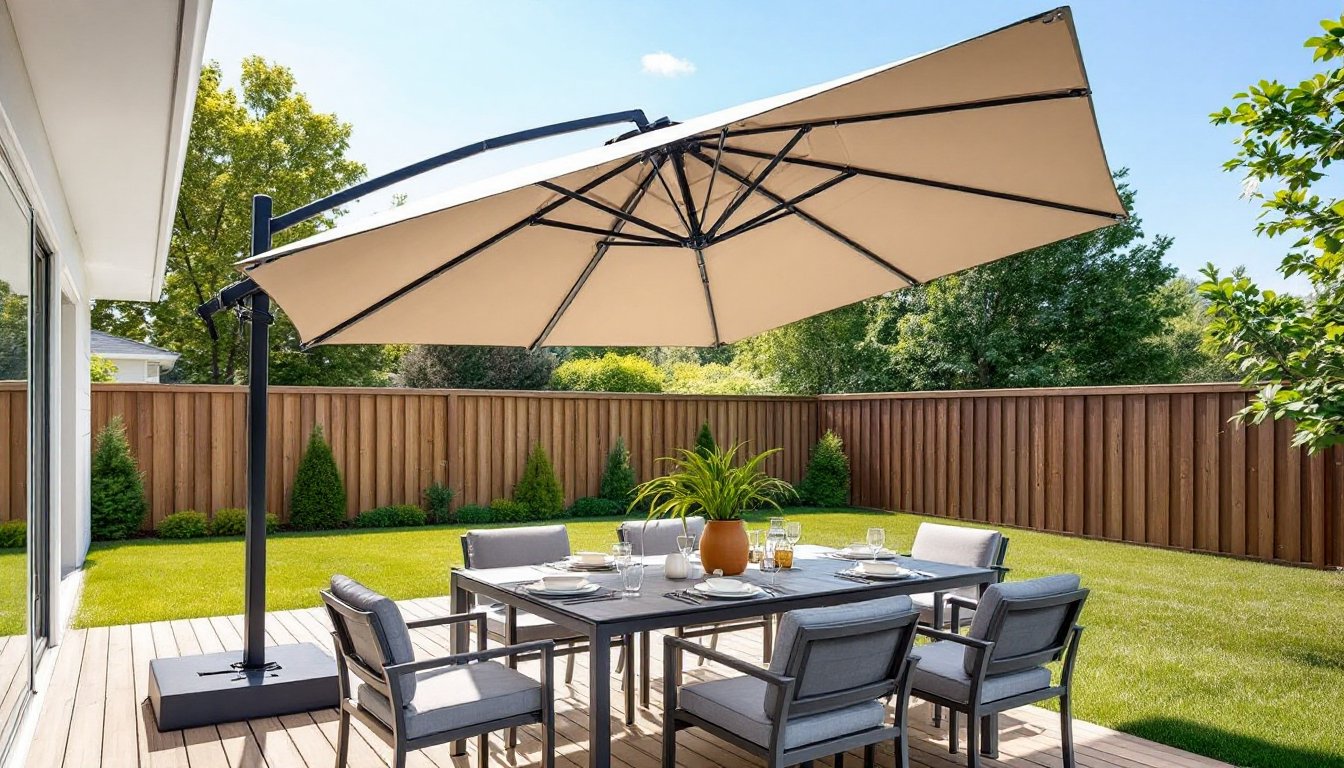
Cantilever (offset) umbrellas mount the pole to one side, suspending the canopy over the coverage area without a central obstruction. This design frees up table space entirely and allows flexible positioning around seating zones, fire pits, or lounge chairs. Cantilever models typically range from 8 feet to 13 feet in canopy span.
The tradeoff is structural complexity. Cantilever frames require heavier bases, often 75 to 150 pounds or more, and cross-bar supports that can interfere with foot traffic if not planned carefully. They’re ideal for larger patios where the base can sit off to the side. Rotation mechanisms on quality cantilever models enable 360-degree coverage adjustment without moving the base.
Both types come in manual and crank-lift versions. Crank systems reduce effort for canopies over 9 feet, but add mechanical parts that can bind if debris accumulates. For ease of seasonal setup and takedown, crank-lift is worth the modest upcharge on umbrellas 9 feet or larger.
Choosing the Right Size and Shape for Your Space
Umbrella sizing depends on the coverage area, not just the table dimensions. A common mistake is matching umbrella diameter to table width, which leaves seating exposed at the edges.
For effective shade, the canopy should extend 2 feet beyond the table perimeter on all sides. A 48-inch round table needs at least a 9-foot umbrella to cover four chairs. A 72-inch rectangular table requires 11 feet of coverage for six seats. When planning for lounge furniture or sectional seating, measure the entire footprint plus desired overhang.
Canopy shapes include round, square, and rectangular. Round canopies suit circular or square tables and offer the most even coverage from a center pole. Square models provide better corner coverage for square tables and are becoming popular in modern outdoor spaces due to clean sightlines. Rectangular canopies work best over long dining tables or paired chaise lounges, distributing shade along a linear path.
Clearance height matters as much as diameter. Standard market umbrellas open to 7 to 8 feet at the pole, but canopy slope reduces effective headroom at the edges to around 6.5 feet. Taller individuals or spaces with overhead lighting should verify clearance, especially with tilt features engaged.
Cantilever umbrellas often allow height adjustment via a sliding pole collar, offering a range of 7.5 to 9.5 feet. This adjustability is useful for adapting to seating changes or avoiding low eaves.
Finally, consider the wind profile in your location. Larger canopies catch more wind and require proportionally heavier bases. In coastal or elevated areas with frequent gusts, a 9-foot umbrella with a vented canopy and a 75-pound base will outlast an 11-foot model on a 50-pound stand.
Material and Fabric Selection for Durability
Frame material determines structural longevity and weight. Powder-coated aluminum is the most common choice for residential umbrellas. It resists rust, keeps overall weight manageable, and handles moderate wind when properly based. Aluminum frames typically use 1.5-inch diameter poles for models up to 9 feet, and 1.9-inch for larger canopies.
Fiberglass ribs flex under wind stress rather than snapping, making them a smart upgrade in areas prone to sudden gusts. Steel-framed umbrellas offer maximum strength but add significant weight and require vigilant rust prevention, unsuitable for humid or coastal climates unless the frame is stainless or heavily galvanized.
Wooden frames, usually teak or eucalyptus, deliver aesthetic warmth but demand seasonal oiling to prevent splitting and weathering. They’re best for covered patios or climates with mild, dry summers.
Canopy fabric choice affects both performance and lifespan. Solution-dyed acrylic is the gold standard for outdoor umbrellas. The dye is integrated during fiber production, not applied afterward, resulting in fade resistance that lasts years. Acrylic fabrics rated UPF 50+ block over 98% of UV rays. Expect 280 to 300 grams per square meter (gsm) fabric weight for good durability without excessive stiffness.
Polyester fabrics cost less but fade faster and offer lower UV protection unless specifically treated. Some modern outdoor fabrics now include water-resistant coatings, but fully waterproof canopies tend to trap heat and don’t breathe well.
Olefin (polypropylene) is a budget option with reasonable fade resistance and inherent mildew resistance, though it can feel less refined than acrylic. It’s worth considering for umbrellas that see limited seasonal use.
Vented canopies, those with a top vent or double-layer design, allow hot air to escape and reduce wind uplift. A two-tier vent can cut wind resistance by 20 to 30%, improving stability without sacrificing shade coverage. This feature is non-negotiable in exposed or windy locations.
Installation Tips and Stability Solutions
An undersized or improperly secured base is the leading cause of umbrella damage and injury. The base weight should be at least 50 pounds for every 5 feet of canopy diameter. A 9-foot umbrella needs a minimum 90-pound base: an 11-foot model requires 110 pounds or more.
Freestanding bases come in concrete-filled resin, cast iron, or fillable plastic. Concrete and cast iron offer the most stability but are cumbersome to move. Fillable bases use sand or water, providing adjustable weight, sand is preferable because it won’t leak or freeze.
For permanent setups, an in-ground sleeve is the most secure option. Dig a hole 18 to 24 inches deep, insert a PVC or metal sleeve, backfill with concrete, and let it cure for 72 hours. The umbrella pole slides into the sleeve and can be removed for winter. This method is ideal for poolside or embedded patio installations.
When using a table with a center hole, ensure the hole diameter matches the umbrella pole. Standard table holes are 1.5 to 2 inches. A reducer ring adapts oversized holes, but a snug fit prevents pole wobble that accelerates wear on the crank mechanism.
Cantilever umbrellas require cross-base designs or wheeled bases with locking casters. Position the base so the pole doesn’t interfere with foot traffic, and always engage wheel locks when the umbrella is open. Some cantilever models include ground anchors or tie-down straps for added wind resistance.
Regardless of umbrella type, close the canopy when winds exceed 20 mph or when leaving the patio unattended. Even with a heavy base, sustained wind can fatigue frame joints and stretch fabric over time. Tilt and rotation joints should move smoothly but not freely, tighten set screws or collar bolts if components slip under light pressure.
Maintenance and Seasonal Care for Longevity
Regular cleaning extends canopy life and prevents mold and mildew. Brush off loose debris monthly, then wash the fabric with mild dish soap and lukewarm water using a soft-bristle brush. Rinse thoroughly and let the canopy air-dry fully open, never store a damp umbrella.
For stubborn mildew, mix one cup of bleach per gallon of water (for acrylic or polyester: test on an inconspicuous spot first) and apply with a sponge. Rinse multiple times to remove all bleach residue, which can weaken fabric fibers if left behind.
Inspect frame joints and hardware before each season. Tighten screws and bolts, lubricate crank gears and tilt pins with dry silicone spray (not oil, which attracts dirt), and check for hairline cracks in ribs or pole sections. Fiberglass ribs may show surface wear but remain functional, replace only if splintering.
When winterizing, disassemble the umbrella if possible. Store the canopy indoors in a dry, ventilated space, not a damp basement or unheated garage where condensation promotes mildew. Aluminum frames can remain outdoors if protected by a breathable cover, but remove finials and other decorative elements that trap moisture.
For those in mild climates where umbrellas stay up year-round, consider investing in a protective cover designed for outdoor furniture. Even UV-resistant fabrics benefit from coverage during prolonged rainy periods.
Replace canopies every 5 to 8 years depending on sun exposure and fabric quality, even if the frame remains sound. Faded or stretched fabric loses UV protection and looks worn. Many manufacturers sell replacement canopies separately, extending the life of a quality frame without the cost of a full replacement.