
Table of Contents
ToggleFurnishing a living room from scratch can feel like staring at a blank canvas with too many paint colors. Grand Furniture living room sets simplify the process by bundling matching pieces into cohesive packages that save time, money, and decision fatigue. These sets typically include a sofa, loveseat, and accent chair, sometimes with coordinating tables, designed to work together without the guesswork. Whether someone’s moving into a first apartment or refreshing a well-worn space, understanding what makes these sets worth the investment helps avoid costly mistakes and buyer’s remorse.
Key Takeaways
- Grand Furniture living room sets eliminate decision fatigue by bundling matching pieces engineered with kiln-dried hardwood frames, 8-way hand-tied springs, and performance fabrics designed for long-term durability.
- Proper furniture selection requires measuring your room three times with a physical tape measure, accounting for doorway clearances and hallway widths to avoid expensive delivery complications.
- Maximize your budget by shopping sales events (Presidents’ Day, Black Friday) for 20-40% discounts, considering floor models at 30-60% off, and negotiating bundle deals that add 10-15% savings.
- Weekly vacuuming with a soft brush attachment, rotating cushions every three months, and immediate spill blotting preserve your living room set’s lifespan and appearance significantly.
- Arrange seating around a focal point like a fireplace or TV, maintain 36 inches of walkway space around furniture, and use the 60-30-10 color rule (60% dominant, 30% secondary, 10% accent) to style like a designer.
What Makes Grand Furniture Living Room Sets Stand Out
Grand Furniture living room sets stand out because they’re engineered for real-world use, not showroom fantasies. Most sets feature kiln-dried hardwood frames with corner-blocked construction, the kind of joinery that keeps a sofa square after five years of kids jumping on cushions. Manufacturers typically use 8-way hand-tied springs or high-density foam (1.8 lb/ft³ or higher) for seating that doesn’t sag after a season.
Upholstery options range from performance fabrics (polyester blends treated for stain resistance) to top-grain leather, with most mid-range sets using 100,000+ double-rub fabrics that handle daily wear. The stitching matters too: double-needle construction on seams prevents unraveling, and reinforced stress points at armrests add years to the lifespan.
What really sets these apart is dimensional consistency. A three-piece set from Grand Furniture maintains uniform seat heights (typically 18-20 inches), armrest profiles, and cushion firmness across all pieces. That matters when someone’s 6’2″ and their partner’s 5’4″, everyone sits comfortably without perching or sinking.
Many sets also include removable, reversible cushions. Flipping and rotating cushions every three months distributes wear evenly, which is basic maintenance most people skip. Sets with zippered cushion covers make spot-cleaning or professional upholstery work straightforward, unlike glued-on upholstery that requires full reupholstering when one section stains.
Finally, coordinated smart approaches to furnishing eliminate the “close enough” problem where a loveseat almost matches the sofa but clashes under natural light. Grand Furniture sets solve this by using consistent dye lots and fabric runs, so pieces actually match when they arrive.
Popular Grand Furniture Living Room Set Styles for Every Home
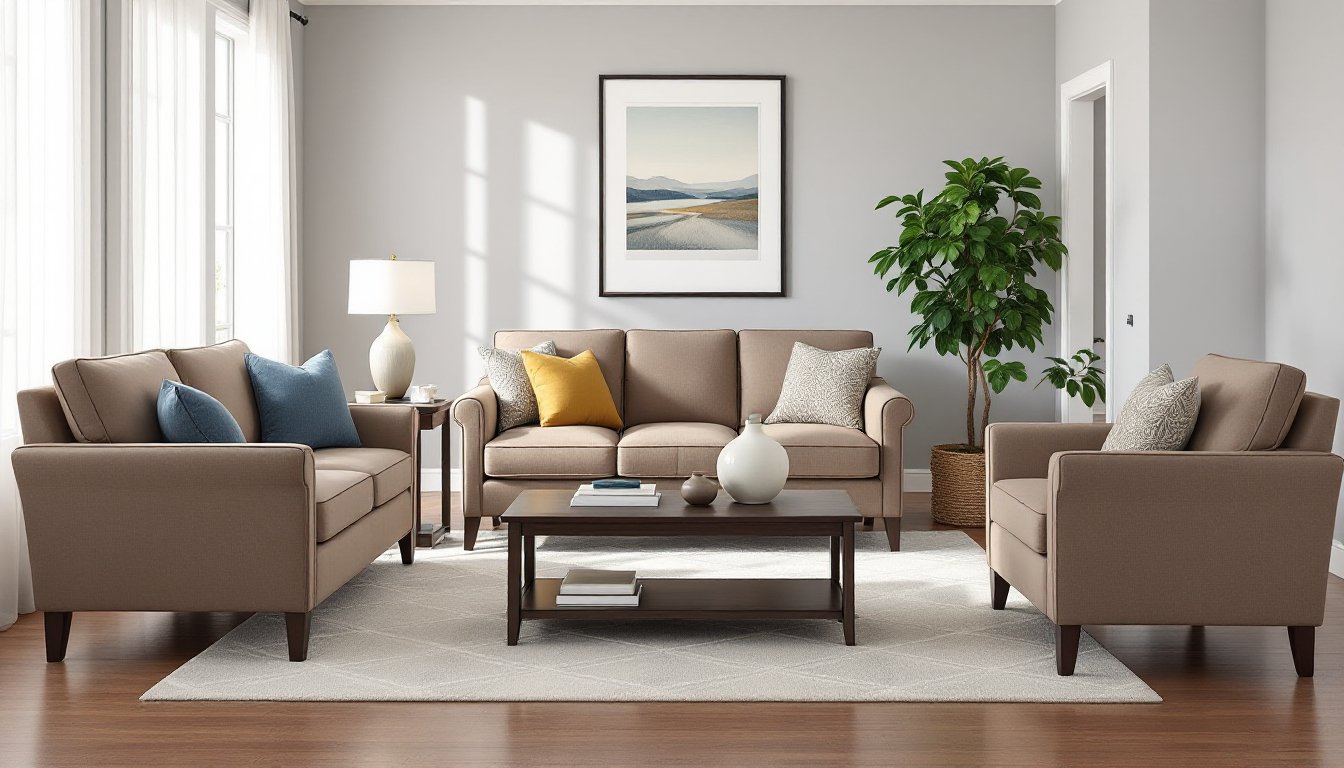
Transitional sets dominate sales because they blend traditional comfort with modern lines. Think rolled arms paired with tapered legs, or button-tufted backs on streamlined frames. These work in homes built anytime from the 1980s forward and pair well with both farmhouse and contemporary decor. Upholstery usually leans neutral, grays, taupes, soft blues, making them forgiving backdrops for accent pillows and throws.
Modern sectional sets offer modular flexibility. A typical five-piece sectional includes a corner wedge, two armless chairs, and two end pieces with arms. Most use low-profile designs (seat height around 17 inches, back height 32-36 inches) that don’t block sightlines in open-concept layouts. Look for sets with removable backs: they’re easier to move through doorways and around tight corners during delivery.
Traditional three-piece sets (sofa, loveseat, chair) appeal to formal living rooms and homes with classic architecture. These feature higher backs (38-42 inches), ornate wood trim, and fabrics like chenille or jacquard. The frames often include exposed wood bun feet or carved accents in finishes like espresso or cherry. They’re heavier, a traditional sofa can weigh 200+ pounds, so factor in floor load if placing them on older second-story floors.
Rustic or farmhouse sets use distressed leather, linen-look fabrics, and weathered wood accents. Many include nailhead trim along arms and bases. These sets pair well with reclaimed wood coffee tables and shiplap walls, but the casual aesthetic doesn’t mean low quality. Check for the same frame construction and spring systems as any other set: “rustic” shouldn’t be code for flimsy.
Regardless of style, living room design inspiration can help visualize how different sets work in real spaces before committing to a purchase.
How to Choose the Right Living Room Set for Your Space
Start by assessing traffic flow. A living room needs 36 inches of walkway space around furniture for comfortable movement, more if someone uses a walker or wheelchair. Placing a sofa perpendicular to a doorway creates a natural barrier: parallel placement opens the space but might block access to windows or electrical outlets.
Consider seating capacity honestly. A standard three-cushion sofa seats three people uncomfortably or two comfortably. If hosting extended family is common, a sectional or a sofa-plus-loveseat combo provides more realistic seating without folding chairs. Count 24 inches of seating width per adult as a rough guide.
Match the set’s scale to the room’s proportions. A 96-inch sofa overwhelms a 12×14-foot room, leaving little space for tables or movement. Conversely, apartment-sized loveseats (60-72 inches) look lost in a 20×20-foot great room. When in doubt, use painter’s tape on the floor to outline furniture dimensions before buying.
Upholstery should match the household’s reality. Light-colored linen looks stunning but shows every spill. If there are pets, kids, or a habit of eating dinner on the couch, performance fabrics or leather are smarter picks. Leather wipes clean but shows scratches: microfiber resists stains but pills with heavy use. There’s no perfect material, just the right one for the situation.
Test the furniture in person if possible. Sit for at least five minutes. Do the cushions provide lumbar support, or does the lower back start complaining? Are armrests at a comfortable height for resting elbows without hunching shoulders? Can feet touch the floor, or is the seat depth too deep for shorter users?
Measuring Your Room Before You Buy
Measure three times, buy once. Use a 25-foot tape measure, not a smartphone app, and record dimensions in a notebook. Start with overall room dimensions (length, width, and ceiling height), then note door widths, hallway widths leading to the room, and any stairs furniture must navigate.
Measure existing furniture that’s staying. A coffee table should sit 14-18 inches from the sofa edge: closer feels cramped, farther requires awkward reaching. End tables typically stand 24-26 inches tall, level with or slightly higher than sofa arms.
Account for architectural features. Measure from walls to window trim, baseboards, heating vents, and electrical outlets. A sofa pushed against a wall might block a floor outlet or a return air vent, creating HVAC inefficiencies. Note ceiling fans, chandeliers, or sloped ceilings that affect furniture placement.
Create a scaled floor plan on graph paper (¼ inch = 1 foot is standard). Cut out paper templates of furniture to scale and move them around. This reveals problems before delivery day, like a sectional that blocks the only path to the patio door.
Double-check doorway and hallway clearances. A sofa’s stated dimensions are outer dimensions: diagonal measurement (from top back corner to bottom front corner) determines if it’ll fit through a doorway. For a standard 32-inch door, the diagonal can’t exceed about 40 inches without removing the door or disassembling the sofa.
Budget-Friendly Tips for Buying Grand Furniture Sets
Buy during major sale events: Presidents’ Day, Memorial Day, Fourth of July, and Black Friday typically see 20-40% discounts on living room sets. Retailers clear inventory before new collections arrive in spring and fall, making February and August prime negotiating months.
Consider floor models. Showroom furniture sells at steep discounts (30-60% off) because it’s been gently used for display. Inspect frames carefully for loose joints, check cushions for flattening, and test all reclining mechanisms or sleeper functions. Minor scuffs on legs are cosmetic and easily touched up with furniture markers.
Bundle smartly. Many retailers offer additional discounts when buying a complete set plus accent pieces (ottoman, coffee table, rug). A 10-15% bundle discount on a $2,500 purchase saves $250-375, enough to cover delivery and setup fees.
Skip unnecessary features. Power recliners add $200-400 per seat over manual recliners. Built-in USB ports and LED accent lighting are convenient but increase cost and add failure points. Stick to proven mechanical features unless the convenience genuinely justifies the expense.
Ask about scratch-and-dent inventory. Pieces with cosmetic damage from shipping or handling sell at discounts, often with the damage on unexposed areas (back panels, underside of cushions). A $1,800 sofa marked down to $1,100 because of a 2-inch scratch on the back leg is a smart buy if that side faces a wall.
Financing isn’t always a trap, but read terms carefully. Zero-percent financing for 12-24 months can stretch payments without interest, but missing the payoff date often triggers retroactive interest at 20%+ APR. Set up auto-payments and aim to pay off well before the promotional period ends.
Implementing practical furniture tips can help stretch a budget further by avoiding common purchasing mistakes that lead to returns or replacements.
Caring for Your Grand Furniture Living Room Set
Vacuum upholstery weekly using the soft brush attachment. This removes surface dust and prevents particles from grinding into fabric fibers, which causes premature wear. For tufted or channeled cushions, use the crevice tool to clean between buttons and seams where debris collects.
Rotate and flip cushions every three months. This distributes wear across all surfaces and prevents permanent body impressions. If cushions are reversible (same fabric both sides), flip them: if not, rotate their positions (left to right, front to back).
Clean spills immediately. Blot, don’t rub, with a clean, white cloth to absorb liquid without spreading the stain. For water-safe fabrics, use a mix of 1 tablespoon dish soap in 2 cups warm water, dabbing from the stain’s edge inward. Test any cleaner on a hidden area first. Avoid over-wetting: excess moisture can mildew in foam or cause wood frames to swell.
For leather sets, wipe with a damp (not wet) microfiber cloth monthly. Use leather conditioner every 6-12 months to prevent drying and cracking. Keep leather furniture at least 2 feet from heating vents and out of direct sunlight, both of which cause fading and brittleness.
Check frame components annually. Tighten any loose screws or bolts on legs, arms, and back supports. Most sets use standard hex bolts or Phillips screws: a basic socket wrench set or screwdriver kit is all that’s needed. Loose frames stress joints and accelerate wear.
Protect high-wear areas. Arm covers or throws on armrests prevent body oil buildup and fabric abrasion. If pets are allowed on furniture, trim their nails regularly, overgrown claws snag and tear upholstery.
Professional cleaning every 12-24 months extends lifespan significantly. Upholstery cleaners use extraction methods that remove deep-set dirt and oils home methods can’t reach. Cost typically runs $100-200 for a three-piece set, which is cheap insurance against needing replacement furniture.
Styling Your Living Room Set Like a Designer
Start with a focal point. In most living rooms, that’s either a fireplace or the TV. Arrange seating to face the focal point, angling pieces slightly inward to create conversational intimacy. A sofa directly opposite the TV with flanking chairs at 45-degree angles balances media consumption and social interaction.
Layer textures for visual interest. A leather sofa paired with linen throw pillows, a wool rug, and a metal-and-glass coffee table creates depth. Stick to three to five textures in a room: more gets chaotic. Vary textures by scale, chunky knit throws with smooth velvet pillows, not all nubby fabrics competing for attention.
Use the 60-30-10 color rule: 60% dominant color (usually walls and large furniture), 30% secondary color (accent chairs, rugs, curtains), and 10% accent color (pillows, artwork, accessories). This creates balance without matchy-matchy blandness. For example, a gray sofa set (60%) with navy curtains and rug (30%) and mustard yellow pillows (10%).
Anchor the set with a properly sized area rug. The rug should be large enough that at least the front legs of all seating pieces rest on it. For a typical living room, that means an 8×10-foot or 9×12-foot rug. Too-small rugs make furniture look like it’s floating and fragment the space visually.
Add lighting at multiple levels. Overhead fixtures provide ambient light, table lamps on end tables offer task lighting for reading, and floor lamps fill dark corners. Aim for three to five light sources in a living room for flexibility. Dimmer switches let users adjust mood and reduce glare on TV screens.
Balance furniture height. If the sofa and chairs are low-profile modern pieces, add height with tall bookshelves, floor lamps, or vertical artwork. Traditional high-backed sets pair better with horizontal art or wide console tables to prevent the room from feeling too vertical.
Consulting resources on choosing the right pieces can provide additional insights into proportional design and functional layouts. Likewise, exploring interior design ideas offers practical examples of how professionals style living room sets in various spaces.