
Table of Contents
ToggleAustralian bedrooms face unique demands, scorching summers, coastal humidity, and a mix of heritage cottages and modern apartments. Choosing furniture that handles these conditions while fitting your space and budget isn’t always straightforward. Whether you’re furnishing a Queensland highset or a Melbourne terrace, the right pieces balance durability, climate resilience, and function. This guide walks through what works in Australian homes, from material choices to space-saving tricks, helping you make decisions that’ll last beyond the next heatwave.
Key Takeaways
- Bedroom furniture Australia trends in 2026 favor coastal modern and warm minimalism styles, with FSC-certified timber and sustainable locally-made pieces gaining popularity among eco-conscious buyers.
- Choose hardwoods like Tasmanian oak or jarrah for humid coastal zones, metal frames for hot inland regions, and ensure slatted bases (7-10 cm gaps) promote airflow and prevent moisture damage.
- Platform beds with built-in storage and wall-mounted nightstands maximize space in Australia’s smaller heritage homes and apartments, eliminating the need for separate furniture pieces.
- Invest in quality bed frames and mattresses since you use them daily—premium options last 10-15+ years—while saving on decorative pieces like benches and ottomans that can come from budget ranges.
- Platform beds with hydraulic lift mechanisms and sliding-door wardrobes provide storage and flexibility without consuming floor space or requiring door clearance in tight quarters.
- Buy from specialty local retailers, second-hand sources like Facebook Marketplace and estate sales, or online brands with return guarantees to balance cost, quality, and the ability to test durability in Australian climates.
Understanding Australian Bedroom Furniture Styles and Trends
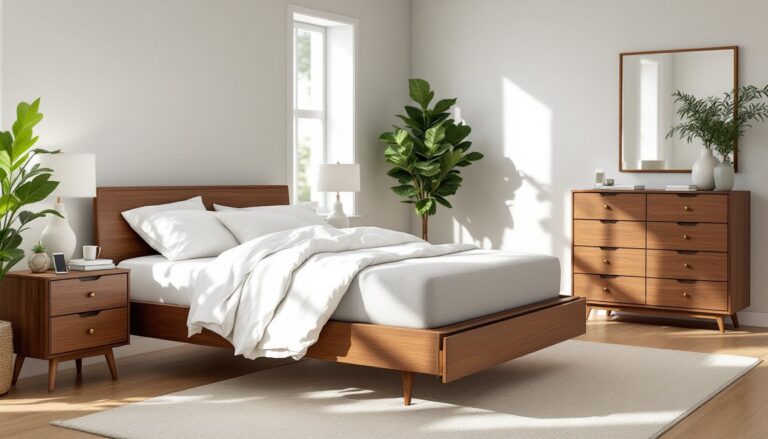
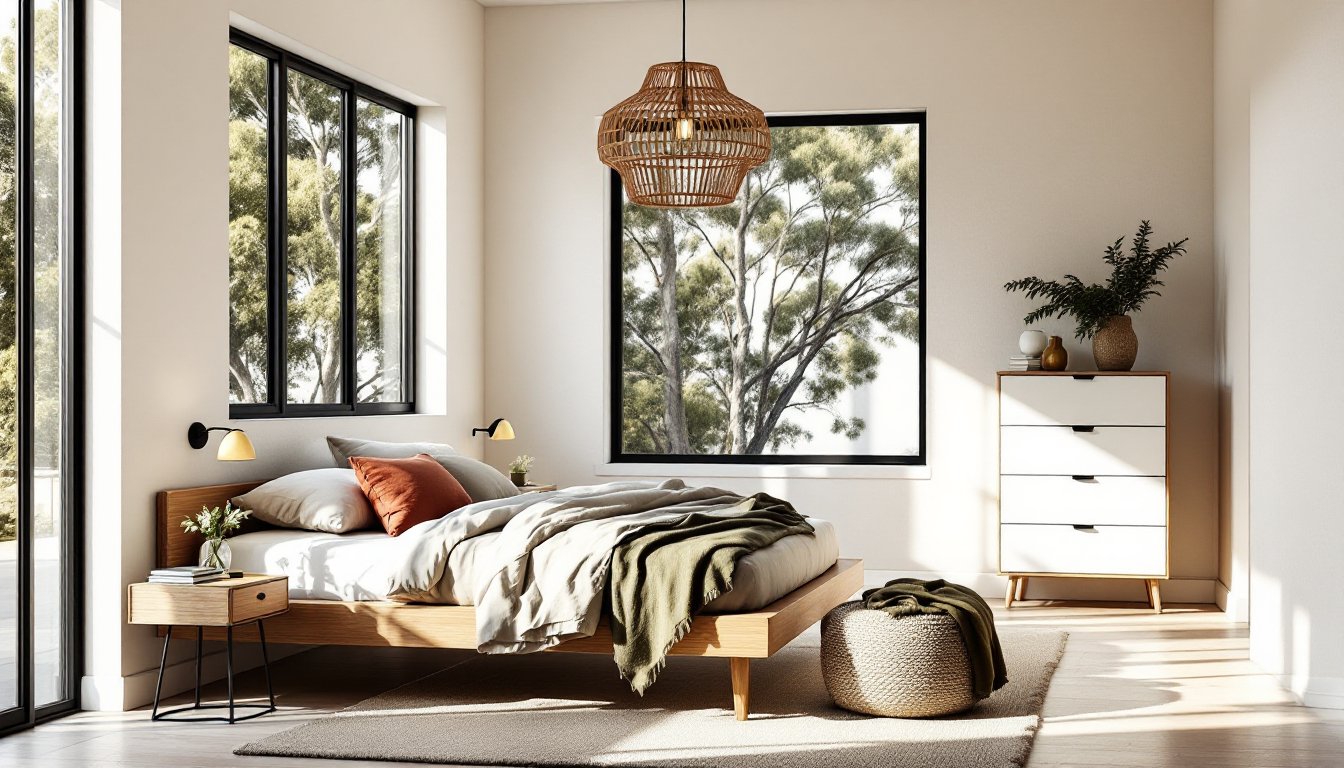
Australian bedroom furniture in 2026 leans heavily toward coastal modern and warm minimalism, light timbers, neutral palettes, and pieces that don’t overwhelm smaller rooms. Coastal styles use whitewashed timber, rattan accents, and linen textiles to reflect the beachside aesthetic many Aussies prefer. Warm minimalism brings in blonde oak, teak, and walnut with clean lines but warmer undertones than stark Scandi designs.
Mid-century modern remains popular, especially in urban areas like Sydney and Melbourne. Tapered legs, low-profile bed frames, and integrated storage fit well in apartment living. You’ll also see more modular furniture, pieces that adapt as needs change, like bed frames with interchangeable headboards or nightstands that double as desks.
Sustainability drives many purchasing decisions now. Aussies increasingly seek FSC-certified timber, low-VOC finishes, and locally made pieces to reduce shipping emissions. Plantation pine and recycled timber show up more often in budget and mid-range collections, while premium buyers look for solid hardwoods like Tasmanian oak or jarrah.
Color trends favor earthy neutrals, terracotta, olive, sand, and charcoal, over stark whites or grays. These tones pair well with Australia’s natural light and outdoor views. Brass and matte black hardware dominate over chrome or nickel finishes.
Essential Bedroom Furniture Pieces Every Australian Home Needs
Start with the core: bed frame, mattress, nightstands, and wardrobe or closet storage. These four elements handle the basics, sleep, bedside access, and clothing storage. Add a dresser if closet space is tight, especially common in older homes with shallow built-ins.
Many Australian bedrooms benefit from a bench or ottoman at the foot of the bed. It’s a practical spot for folding laundry, pulling on boots, or stashing extra blankets during winter. In larger rooms, a reading chair and small side table create a retreat zone without requiring a separate sitting room.
Don’t overlook lighting. A ceiling fixture alone rarely provides enough task lighting. Table lamps on nightstands or wall-mounted sconces free up surface space and let you read without disturbing a partner. Dimmable LEDs handle Australia’s long summer evenings when you want ambient light without heat buildup.
Storage matters more than aesthetics in most Aussie bedrooms. Under-bed drawers, hanging organizers, and wall-mounted shelves reduce clutter in homes where garages and basements aren’t standard. For those seeking furniture examples across various spaces, understanding how each piece functions within a room helps with selection.
Choosing the Right Bed Frame for Australian Climates
Australia’s climate variation, from tropical Darwin to temperate Hobart, affects bed frame choices. In humid coastal areas, solid timber frames with slatted bases promote airflow and reduce moisture buildup that can warp particle board or MDF. Opt for hardwoods like spotted gum or plantation teak, which handle humidity better than softwoods.
In hot inland regions, metal frames stay cooler than upholstered options and won’t absorb heat like dense timber. Wrought iron or powder-coated steel frames work well in western Sydney, Adelaide, or Perth bedrooms that hit 35°C+ in summer. Pair them with slatted bases rather than solid platforms to keep mattresses breathable.
Upholstered bed frames suit temperate zones like Melbourne or Canberra but require more maintenance in humid climates. If you choose fabric, look for performance textiles treated for mold resistance and easy cleaning. Leather and faux leather hold up better in coastal humidity but can feel sticky in summer without air conditioning.
Platform beds with low profiles suit modern aesthetics and work in apartments with lower ceilings (common in older buildings). Ensure the base has adequate slat spacing, 7-10 cm gaps work for most mattresses. Wider spacing can void mattress warranties or cause sagging.
For heritage homes with high ceilings, four-poster or taller frames balance room proportions. Use mosquito netting in tropical and subtropical areas, it’s functional, not just decorative, during Queensland’s humid months.
Material Matters: What Works Best in Australian Homes
Solid hardwood, Tasmanian oak, jarrah, Victorian ash, or blackwood, offers the longest lifespan but commands premium prices ($1,500–$4,000+ for a queen bed frame). These timbers handle temperature swings and resist warping. Apply a natural oil or water-based polyurethane finish: avoid lacquers that crack in dry heat.
Plantation pine and rubberwood fill the mid-range ($600–$1,500). They’re softer than hardwoods and dent more easily but hold up fine with care. Rubberwood, often imported from Southeast Asia, resists moisture better than pine. Both work well in temperate climates but may need refinishing every 5-7 years in coastal zones.
Engineered wood (plywood, MDF, particle board) dominates budget furniture under $600. Quality varies wildly. Look for E0 or E1 emission ratings for formaldehyde, especially important in small bedrooms with limited ventilation. Particle board fails quickly in humidity, avoid it for coastal homes unless it’s sealed well.
Metal frames, steel or aluminum, handle Australian conditions admirably. Powder-coated finishes resist rust better than painted steel. Check weld quality at joints: cheap frames develop squeaks and wobbles within a year. Metal works year-round but feels industrial unless softened with textiles.
Rattan and cane suit tropical and coastal aesthetics but require maintenance. Natural rattan can dry out and crack in air-conditioned rooms: synthetic rattan (UV-treated polyethylene) holds up better outdoors and in sunrooms. It’s lighter than timber, making it easier to move for cleaning.
Upholstery fabrics should be rated for 35,000+ double rubs (Martindale or Wyzenbeek test) for bedroom use. Linen blends breathe well in heat. Polyester performance fabrics resist stains and moisture, crucial for homes with kids or pets. Velvet looks rich but traps heat and shows wear faster in high-use areas.
For wardrobes and dressers, solid timber frames with veneered panels balance cost and durability. The frame bears the load: veneer keeps weight and price down. Dovetail or doweled joints outlast cam-lock fittings common in flat-pack furniture.
Budget-Friendly vs. Premium: Finding the Right Balance
Budget bedroom furniture in Australia typically runs $500–$1,200 for a queen bed frame, $300–$600 for a wardrobe, and $150–$300 per nightstand. Expect particle board construction, cam-lock assembly, and shorter lifespans (3-5 years with care). These pieces work for renters, first homes, or guest rooms that see light use.
Mid-range options, $1,200–$3,000 for a bed frame, $600–$1,500 for wardrobes, use solid timber frames, better joinery (dowels, mortise-and-tenon), and durable finishes. They handle daily use and typically last 10-15 years. This tier offers the best value for most homeowners settling into long-term housing.
Premium furniture exceeds $3,000 for bed frames and $2,000+ for wardrobes, featuring solid hardwood, hand-finished details, and heirloom-quality construction. Dovetail drawers, soft-close hardware, and customizable dimensions justify the cost if you plan to stay put or value craftsmanship. These pieces often outlast the homes they furnish.
Where to splurge: Invest in the bed frame and mattress, you use them every day for years. A well-built frame supports the mattress properly and won’t squeak or sag. Quality nightstands with solid drawer boxes also pay off: cheap ones strip screws and collapse under modest weight.
Where to save: Decorative pieces like benches, ottomans, or accent chairs can come from budget lines without sacrificing function. Dressers see less stress than wardrobes, so mid-range options often suffice. Consider mixing price points, a premium bed frame with budget nightstands you’ll upgrade later.
DIY opportunities: Refinishing secondhand timber furniture saves significantly. A solid hardwood dresser from the 1970s might cost $200 at a garage sale and $80 in sandpaper, stain, and polyurethane, total $280 versus $1,500 new. Sand with 120-grit then 220-grit, apply stain evenly, and seal with three coats of water-based poly. Wear a dust mask and work in a ventilated area.
Flat-pack assembly is manageable for most DIYers. Use a drill with a hex bit instead of the included Allen key, it’s faster and reduces hand fatigue. Don’t overtighten cam locks: they’ll strip the particle board. Check for plumb and square before tightening fully.
Space-Saving Solutions for Smaller Australian Bedrooms
Older Australian homes, workers’ cottages, terraces, and post-war bungalows, often have bedrooms under 12 m². Modern apartments frequently run even smaller. Furniture needs to earn its footprint.
Platform beds with built-in storage replace separate bed frames and dressers. Drawers along the base or a hydraulic lift mechanism (gas struts raise the mattress platform) provide storage equivalent to a four-drawer dresser. Lift systems work well for bulky items like spare duvets or seasonal clothing. Ensure the lift kit is rated for your mattress weight, memory foam and latex mattresses can exceed 50 kg for a queen.
Wall-mounted nightstands (floating shelves or small cabinets) free up floor space and make vacuuming easier. They work in rentals if you’re comfortable patching 10 mm holes when you move. Mount them 60-70 cm above the mattress top for comfortable reach from a seated position. Use a stud finder to locate framing: toggle bolts work in plasterboard but limit weight capacity to about 5 kg per bolt.
Wardrobes with sliding doors need less clearance than hinged doors, important in narrow rooms. A 2-door wardrobe typically measures 1.2-1.5 m wide: ensure you have that width free along a wall. Built-in robes (common in newer builds) maximize awkward spaces like alcoves or corners better than freestanding furniture.
Murphy beds (wall beds) remain niche in Australia but suit studio apartments or multi-use rooms. Quality mechanisms cost $1,500-$4,000 before installation. They require solid framing behind the wall, 90 x 45 mm studs at 450 mm centers minimum. Hire a carpenter for installation unless you’re confident working with structural timber. Local councils may require permits for wall modifications in units.
Multi-functional pieces: ottomans with internal storage, benches with lift-up seats, and nesting side tables. A storage ottoman can hold bed linens and serve as seating. When considering space-efficient furniture configurations, adaptability often matters more than aesthetics.
Vertical storage: Tall, narrow dressers (chest of drawers) use less floor area than wide, low ones. Wall-mounted shelving above the bed or along unused wall space holds books, decor, and everyday items. Keep shelves above the bed shallow, 15-20 cm deep, so items won’t fall on you. Use proper wall anchors: plasterboard alone won’t support loaded shelves.
Where to Buy Bedroom Furniture in Australia
Big-box retailers like IKEA, Fantastic Furniture, and Freedom offer budget to mid-range furniture with the convenience of same-day pickup or fast delivery. IKEA’s PAX wardrobe system is popular for its modularity and value, though assembly can take a full day for a large setup. Freedom leans toward contemporary styles with decent build quality in their mid-tier lines.
Specialty furniture stores, such as those found among Brisbane’s local furniture retailers, often carry higher-end Australian-made pieces and allow for customization in timber species, finishes, and dimensions. Expect lead times of 8-16 weeks for made-to-order items. Many offer in-home consultations to measure spaces and discuss configurations.
Online-only brands like Koala, Brosa, and Temple & Webster undercut showroom prices by 20-40%. You can’t test furniture before buying, but generous return policies (often 30-120 days) reduce risk. Check shipping costs, bedroom furniture is bulky, and regional delivery can add $200-$500. Many brands ship flat-pack to keep costs down.
Second-hand sources: Facebook Marketplace, Gumtree, and local auction houses offer solid timber furniture at fractions of retail prices. Look for dovetail joints, solid drawer bottoms, and real timber veneer (not vinyl wrap). Inspect for structural damage, not just cosmetic wear. Bed frames and mattresses sold together raise hygiene concerns, buy the frame, skip used mattresses unless you know the seller.
Custom makers: Local carpenters and furniture makers build to exact specifications. Expect to pay $3,000-$8,000+ for a custom queen bed frame depending on timber choice and complexity. Get at least three quotes, check references, and confirm lead times in writing. Custom work suits awkward spaces, heritage homes, or when you want unique dimensions.
Auction houses and estate sales: Lawson’s, Leonard Joel, and regional auction houses occasionally list quality furniture. Deceased estates often include well-made pieces from when furniture was still built to last. Bring a tape measure, inspect thoroughly (sales are usually final), and factor in transport costs.
When weighing top furniture options for various rooms, prioritize retailers that disclose material specs, joinery methods, and weight capacities. Australian Consumer Law requires goods to be fit for purpose and last a reasonable time based on price, keep receipts and warranty info.