

Table of Contents
ToggleItalian bedroom furniture has earned its reputation through centuries of meticulous craftsmanship and design innovation. Whether drawn to the ornate details of classic Baroque or the clean lines of modern minimalism, buyers find that Italian pieces offer a level of quality and aesthetic sophistication that’s hard to match. This isn’t about picking a bed frame off a showroom floor, it’s about investing in furniture that combines structural integrity with artistry. For anyone considering an upgrade to their bedroom, understanding what sets Italian furniture apart helps narrow down choices and ensures the investment pays off in both function and style.
Key Takeaways
- Italian bedroom furniture distinguishes itself through solid hardwood construction, hand-applied finishes, and traditional joinery techniques like dovetail joints that ensure durability across decades.
- Classic Italian styles feature carved moldings and gilded accents suited for traditional homes, while modern Italian pieces emphasize clean lines and integrated functionality for contemporary spaces.
- Proper room planning requires measuring dimensions, planning 24-30 inches of clearance on bed sides, and using floor outlines to ensure Italian furniture pieces fit proportionally without overwhelming the space.
- Authentic Italian bedroom furniture typically costs $3,000-$5,000 for a bed frame as a starting point, with full sets climbing higher; budget should include delivery and professional assembly.
- Maintaining Italian bedroom furniture requires controlling humidity at 40-50%, using finish-appropriate cleaners, and periodic oiling or scratch prevention to preserve investment and longevity.
- Inspect pieces in person to verify drawer glides, finish consistency, and upholstered quality before purchasing, as photos cannot convey the craftsmanship that differentiates genuine Italian furniture from overseas reproductions.
What Makes Italian Bedroom Furniture Unique?
Italian furniture stands out because of three core factors: materials, construction techniques, and design heritage. Manufacturers in Italy often use solid hardwoods like walnut, oak, and cherry, along with premium veneers that showcase natural grain patterns. These aren’t particle board frames wrapped in laminate, they’re joinery-based assemblies using dovetail joints, mortise-and-tenon connections, and hand-applied finishes.
The construction approach emphasizes durability. Many Italian pieces are built to last decades, not just a few years. Drawers glide on dovetailed solid wood boxes rather than stapled plywood, and bed frames often feature reinforced slat systems or solid platform bases that distribute weight evenly. That means less sagging, fewer squeaks, and better long-term support for mattresses.
Design heritage plays a major role. Italian furniture design evolved through distinct periods, Renaissance, Baroque, Neoclassical, and the mid-century modern movement. Today’s manufacturers draw from that history, whether they’re reproducing traditional styles or reinterpreting them with contemporary materials. The result is furniture that carries visual weight and cultural context, not just surface-level decoration.
Another distinguishing feature is finish quality. Italian workshops often apply multiple coats of lacquer, oil, or wax by hand, then sand and buff between layers. This creates depth and richness that factory spray finishes can’t replicate. On painted pieces, expect to see primer, base coats, and topcoats applied with attention to edge detail and surface smoothness.
Popular Italian Bedroom Furniture Styles
Classic Italian Design
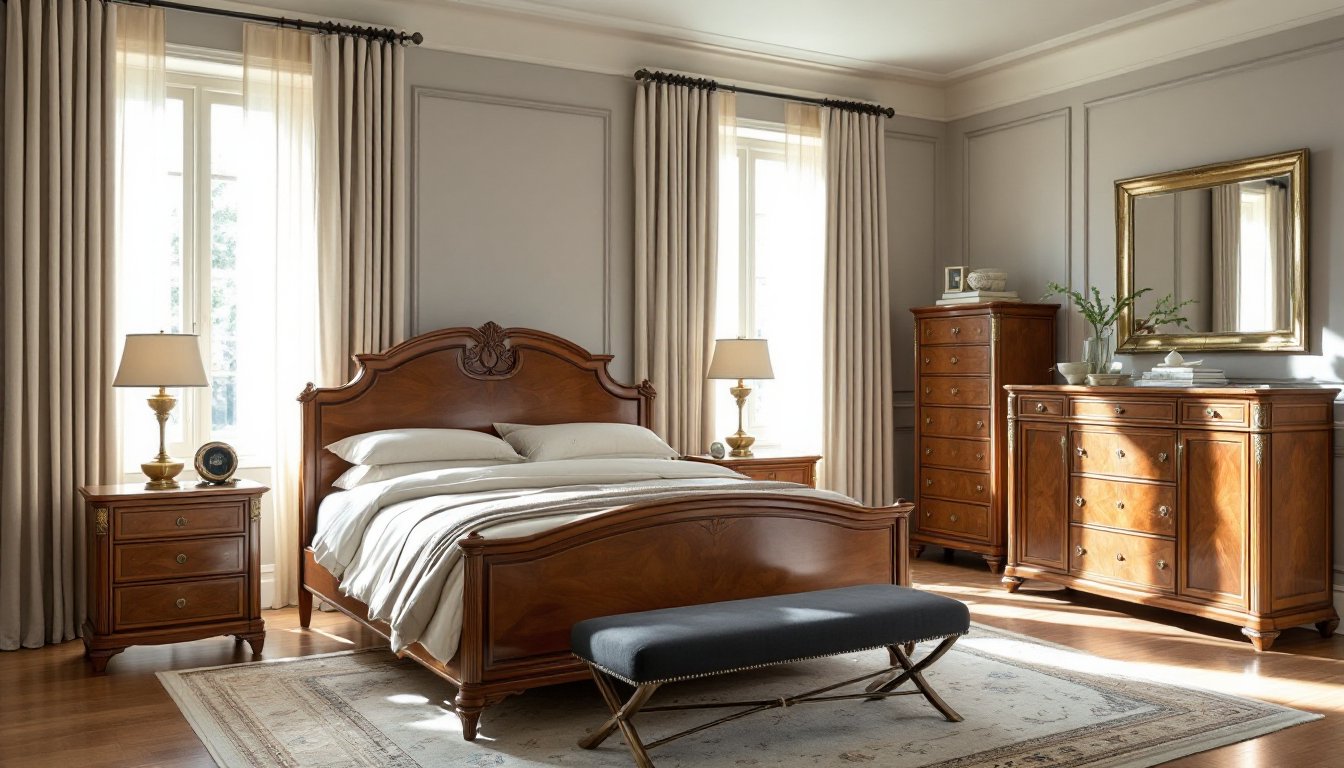
Classic Italian bedroom furniture leans into carved details, rich wood tones, and ornamental hardware. Think bed frames with turned posts, headboards featuring intricate scrollwork, and dressers with inlaid marquetry panels. These pieces often use walnut or mahogany with hand-rubbed oil finishes that darken over time.
Key characteristics include:
- Carved moldings along drawer fronts, bed rails, and panel edges
- Gilded accents on mirror frames, finials, and decorative trim
- Marble or stone tops on nightstands and dressers
- Upholstered headboards in velvet, silk, or leather with button tufting
Classic Italian furniture works best in rooms with tall ceilings and ample floor space. A carved four-poster bed can dominate a small room, so measure clearances carefully. Plan for at least 30 inches of walkway space around the bed and 18 inches between dressers and walls for drawer operation.
If you’re sourcing classic pieces, look for solid wood construction and hand-applied finishes. Reproduction furniture made overseas often uses veneer over MDF cores and lacks the joinery details that give authentic pieces their longevity. Check drawer boxes for dovetail joints and inspect finish consistency on all surfaces, including backs and undersides.
Modern and Contemporary Italian Pieces
Modern Italian bedroom furniture strips away ornament in favor of clean geometry, innovative materials, and functional simplicity. Influenced by designers like Gio Ponti and the post-war Italian modernist movement, these pieces emphasize proportion, negative space, and material honesty.
Typical features include:
- Platform beds with low profiles and integrated lighting
- Lacquered or matte finishes in neutral tones (white, gray, taupe, black)
- Metal accents in brushed nickel, stainless steel, or powder-coated aluminum
- Floating nightstands and wall-mounted storage to reduce visual clutter
- Mixed materials combining wood with glass, leather, or stone
Contemporary Italian furniture often incorporates soft-close hardware on drawers and doors, a practical upgrade that reduces wear and noise. Many modern pieces also feature integrated cable management for lamps, chargers, and other electronics, which is worth considering if you want a cleaner look.
When selecting modern Italian furniture, pay attention to finish durability. High-gloss lacquers show fingerprints and scratches easily, so they’re better suited to adult bedrooms than kids’ rooms. Matte finishes hide wear better but may require more frequent cleaning to remove smudges.
Fit and proportion matter more with modern furniture because there’s less decorative detail to distract the eye. A bed frame that’s too small for the room will look lost: one that’s too large will make the space feel cramped. Use painter’s tape on the floor to outline furniture footprints before buying, and leave space for bedside tables and lamps.
Choosing the Right Italian Bedroom Furniture for Your Home
Start with room measurements and a floor plan. Measure the room’s length, width, and ceiling height, then note door swings, window locations, and any HVAC vents or electrical outlets that might limit furniture placement. Use graph paper or a digital tool to sketch the layout, including walkway clearances.
For bedrooms, the standard recommendation is:
- 24-30 inches of clearance on both sides of the bed for easy access
- 36 inches of clearance at the foot of the bed for walking and making the bed
- 18-24 inches between dressers and opposing furniture or walls
Bed size affects everything else in the room. A king-size bed (76″ × 80″) needs at least a 12′ × 12′ room to avoid feeling cramped. A queen (60″ × 80″) works in rooms as small as 10′ × 10′, though 11′ × 12′ is more comfortable.
Consider material compatibility with your climate. Solid wood expands and contracts with humidity changes. In humid climates, expect seasonal gaps in joinery or sticking drawers if the furniture isn’t properly acclimated. Many Italian manufacturers kiln-dry lumber to 6-8% moisture content, which is suitable for climate-controlled interiors but may cause problems in drafty older homes or regions with extreme seasonal swings.
Match furniture style to architectural context. Classic Italian pieces with carved details and gilded accents pair well with traditional homes that have crown molding, wainscoting, and other period details. Modern Italian furniture complements open-plan layouts, minimalist architecture, and spaces with lots of natural light. Mixing styles can work, but it requires careful attention to scale, proportion, and material finishes to avoid a disjointed look.
Budget realistically. Authentic Italian bedroom furniture typically starts around $3,000-$5,000 for a bed frame and climbs quickly for full bedroom sets with dressers, nightstands, and armoires. Prices vary by region, retailer markup, and whether pieces are imported or domestically available. Factor in delivery and assembly costs, many Italian pieces ship knocked down and require professional assembly. For shoppers seeking more furniture ideas to transform their space, exploring multiple styles can help clarify priorities.
Don’t skip the showroom visit if possible. Photos don’t convey finish quality, drawer operation, or how upholstered pieces feel. Test drawers for smooth glides, check bed frame stability, and inspect finish consistency up close.
Caring for and Maintaining Italian Bedroom Furniture
Proper maintenance starts with controlled indoor conditions. Keep relative humidity between 40-50% year-round to prevent wood movement and finish cracking. Use a hygrometer to monitor levels and add a humidifier in winter or a dehumidifier in summer if needed.
For routine cleaning:
- Dust weekly with a microfiber cloth to prevent buildup that can scratch finishes
- Wipe spills immediately with a slightly damp cloth, then dry thoroughly
- Avoid all-purpose cleaners that contain silicone, ammonia, or harsh solvents, they can dull or damage finishes
- Use furniture-specific cleaners appropriate to the finish type (oil-based for oiled woods, pH-neutral for lacquer)
Oiled finishes (common on walnut and teak) need periodic re-oiling to maintain moisture resistance and luster. Apply a thin coat of tung oil or linseed oil once or twice a year, let it penetrate for 15-20 minutes, then buff off the excess. Too much oil leaves a sticky residue, so use sparingly.
Lacquered finishes (typical on modern pieces) are more durable but still vulnerable to scratches. Use felt pads under lamps and decor items to prevent surface abrasion. For minor scratches on lacquered surfaces, furniture touch-up markers can help, but deep scratches may require professional refinishing.
Upholstered headboards and panels require different care. Vacuum monthly with a brush attachment to remove dust and prevent it from embedding in fabric. For leather upholstery, wipe with a damp cloth and pH-balanced leather cleaner every few months, then apply a leather conditioner to prevent drying and cracking. Many design platforms offer visual references for maintaining various upholstery types.
Protect furniture from direct sunlight, which fades finishes and dries out wood. Use window treatments or UV-filtering film on windows that get strong sun exposure. Over time, even high-quality finishes will show some patina, that’s normal and often considered desirable on classic pieces, as seen in collections featured by luxury design publications.
For structural issues, loose joints, drawer problems, or finish damage, consult a professional furniture restorer rather than attempting DIY fixes. Italian joinery techniques often differ from standard American cabinetry, and improper repairs can reduce value and functionality.
Conclusion
Italian bedroom furniture offers a combination of craftsmanship, material quality, and design history that’s difficult to find elsewhere. Whether opting for classic carved pieces or streamlined modern designs, buyers should prioritize solid construction, quality finishes, and proportions that fit their space. Proper maintenance, controlled humidity, regular cleaning, and finish-appropriate care, ensures these pieces remain functional and beautiful for decades. Take the time to measure, budget realistically, and inspect finishes in person when possible. The investment pays off in furniture that doesn’t just fill a room but enhances it.