
Table of Contents
ToggleMid-century wrought iron patio furniture represents more than just a design trend, it’s a testament to craftsmanship that modern reproductions rarely match. These pieces, forged during the post-war building boom, combined durability with artistic flair in ways that still hold up today. Whether someone’s salvaging a rusted set from a garage sale or hunting for authentic pieces to anchor their outdoor space, understanding what makes 1950’s wrought iron special is the first step. This guide walks through identification, sourcing, restoration, and maintenance for anyone ready to bring these vintage beauties back to life.
Key Takeaways
- Authentic 1950’s wrought iron patio furniture is identified by solid-core forged metal construction, hand-welded joints, and heavy weight (25-35 pounds for chairs), which distinguishes it from modern reproductions.
- Estate sales, Facebook Marketplace, and regional vintage markets in Florida and California offer the best sourcing opportunities for genuine mid-century pieces, typically priced $200-$600 for restorable dining sets.
- Restoration requires proper safety equipment and a two-stage stripping process: mechanical removal (angle grinder or orbital sander) for light rust, or chemical strippers and media blasting for severe damage.
- Rust-converting primers and direct-to-metal enamel paint provide the most durable finish; allow 72 hours cure time and touch up paint chips immediately to prevent ongoing rust formation.
- Style 1950’s wrought iron with era-appropriate colors (turquoise, coral, mint green), terra cotta planters, and outdoor cushions in geometric patterns; maintain pieces every 4-6 weeks with mild soap and automotive paste wax.
- Winter storage under cover and monthly inspections catch rust early, turning potential problems into 15-minute fixes rather than full restoration cycles.
What Makes 1950’s Wrought Iron Patio Furniture So Special?
The 1950s marked a golden age for outdoor living, and wrought iron furniture rode that wave with a combination of strength and style that set it apart. Unlike today’s tubular aluminum or powder-coated steel, authentic wrought iron from this era was solid-core forged metal, heavy, dense, and built to survive decades of weather.
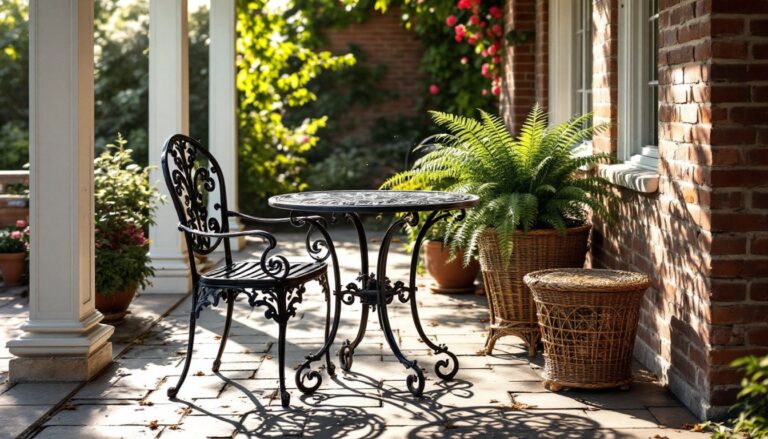
Design-wise, these pieces embraced the optimism of post-war America. Manufacturers like Woodard, Salterini, and Russell Woodard Sculptura created scrollwork, leaf motifs, and organic curves that borrowed from both Art Deco and emerging mid-century modernism. The metalwork was often hand-finished, giving each piece subtle variations that mass production can’t replicate.
Weight is a dead giveaway of authenticity. A genuine 1950’s wrought iron chair typically weighs 25-35 pounds, enough to stay put in a windstorm but a beast to move around the patio. The construction methods also matter: look for hand-welded joints and mortise-and-tenon joinery in the metal frame, not spot-welded thin tubing. Original finishes were often baked enamel over a zinc-rich primer, designed to resist rust in the humid climates where outdoor entertaining ideas became a lifestyle staple.
Identifying Authentic Mid-Century Wrought Iron Pieces
Spotting a genuine 1950’s piece requires looking past the rust and peeling paint to examine the bones of the furniture. Start with the frame construction: authentic wrought iron uses solid rods, usually 5/8-inch to 3/4-inch diameter for chair frames and 1-inch or larger for table supports. Thin-walled tubing is a red flag for later reproductions.
Check for maker’s marks on the underside of seats or table aprons. Salterini pieces often carry a stamped logo, while Woodard used metal tags riveted to the frame. Brown Jordan, another major player, marked their pieces with foil labels that rarely survive, so their identification relies more on design signature, particularly the Kantan pattern with its woven vinyl lacing.
Original cushion springs tell a story too. Mid-century sets used sinuous wire springs or coil spring units wrapped in cotton batting and covered in vinyl or canvas. Modern copies skip the springs entirely, using foam directly on metal mesh.
The patina of authentic pieces shows specific patterns: surface rust that’s uniform and fine-grained, not the flaky, chunky rust of cheap modern steel. Original welds are smooth and minimal, often ground flush, while contemporary spot-welds leave obvious dots and bumps. If the piece has feet, look for adjustable glides with a threaded brass insert, a quality detail most reproductions omit.
Where to Find Vintage 1950’s Wrought Iron Patio Furniture
Estate sales remain the most reliable hunting ground for authentic mid-century wrought iron. These pieces were expensive when new, so they tend to show up in older, established neighborhoods where homeowners invested in quality outdoor furniture. Arrive early, serious collectors and resellers know what they’re looking at.
Online marketplaces like Facebook Marketplace, Craigslist, and estate sale aggregators (EstateSales.net) turn up regular finds, but expect competition. Search terms matter: try “vintage patio furniture,” “Woodard,” “Salterini,” or “mid-century outdoor” rather than generic “wrought iron.” Photos rarely do these pieces justice under layers of rust, so don’t dismiss a set just because it looks rough.
Architectural salvage yards and antique malls specializing in mid-century goods often carry wrought iron sets, though prices run higher than private sales. The trade-off is that pieces are usually authenticated and sometimes partially restored.
Regional patterns exist. Florida, California, and parts of the Southwest see higher concentrations of surviving pieces, thanks to the outdoor living spaces culture that dominated those regions in the 1950s. Rust Belt and Northern states have fewer survivors due to harsher winters, though basement and garage storage sometimes preserves sets that never saw year-round outdoor use.
Auctions, both live and online, can deliver deals, but require assignments. Research completed listings to gauge fair market value. A complete four-chair dining set with table in restorable condition typically runs $200-$600 before any refurbishing work, though rare patterns or maker’s marks can triple that range.
Restoring and Refurbishing Your Vintage Wrought Iron Furniture
Restoration starts with honest assessment. Surface rust is manageable: structural rust that’s eaten through the metal or compromised welds requires professional welding repair or scrapping the piece. Test questionable areas by tapping with a screwdriver handle, solid metal rings clear, while compromised metal sounds dull or crumbles.
Safety gear is non-negotiable: leather gloves, safety goggles, a respirator rated for metal dust and paint removal (NIOSH N95 minimum, P100 preferred), and long sleeves. Old finishes may contain lead-based paint.
Stripping methods depend on rust severity:
Light to moderate rust:
- Wire brush attachments on an angle grinder or drill remove loose rust and paint quickly. Work in a ventilated area or outdoors, dust gets everywhere.
- Follow with 80-grit sandpaper on an orbital sander for smoothing, then 120-grit for finish prep.
- Wipe down with acetone or denatured alcohol to remove oils and dust.
Heavy rust or multiple paint layers:
- Chemical stripper (citrus-based or methylene chloride formulations) works but requires multiple applications and patience. Follow manufacturer’s dwell times.
- Media blasting (sandblasting with fine media) gives the cleanest result but requires equipment or a professional service. Cost runs $3-$8 per pound of furniture at most blast shops.
Priming and painting:
- Apply a rust-converting primer or self-etching primer (Rust-Oleum or Sherwin-Williams DTM primers work well) within a few hours of final cleaning to prevent flash rust. Two thin coats beat one heavy coat.
- Topcoat with direct-to-metal (DTM) enamel or epoxy-based outdoor paint. Spray application gives the smoothest finish: use a HVLP sprayer or aerosol cans in multiple light coats.
- Allow 72 hours cure time before reassembly or use, even if paint is dry to touch.
Cushion replacement is straightforward. Cut 2-inch high-density foam to match original dimensions, wrap in outdoor-grade fabric (Sunbrella or marine vinyl holds up best), and staple to a 1/2-inch plywood base cut to fit the seat frame. Original spring units can be reused if intact, just add a foam topper.
Styling Your Outdoor Space with 1950’s Wrought Iron Furniture
Vintage wrought iron anchors a patio with visual weight that lighter modern furniture can’t match. These pieces work best when they’re treated as focal points rather than afterthoughts, their sculptural quality deserves center stage.
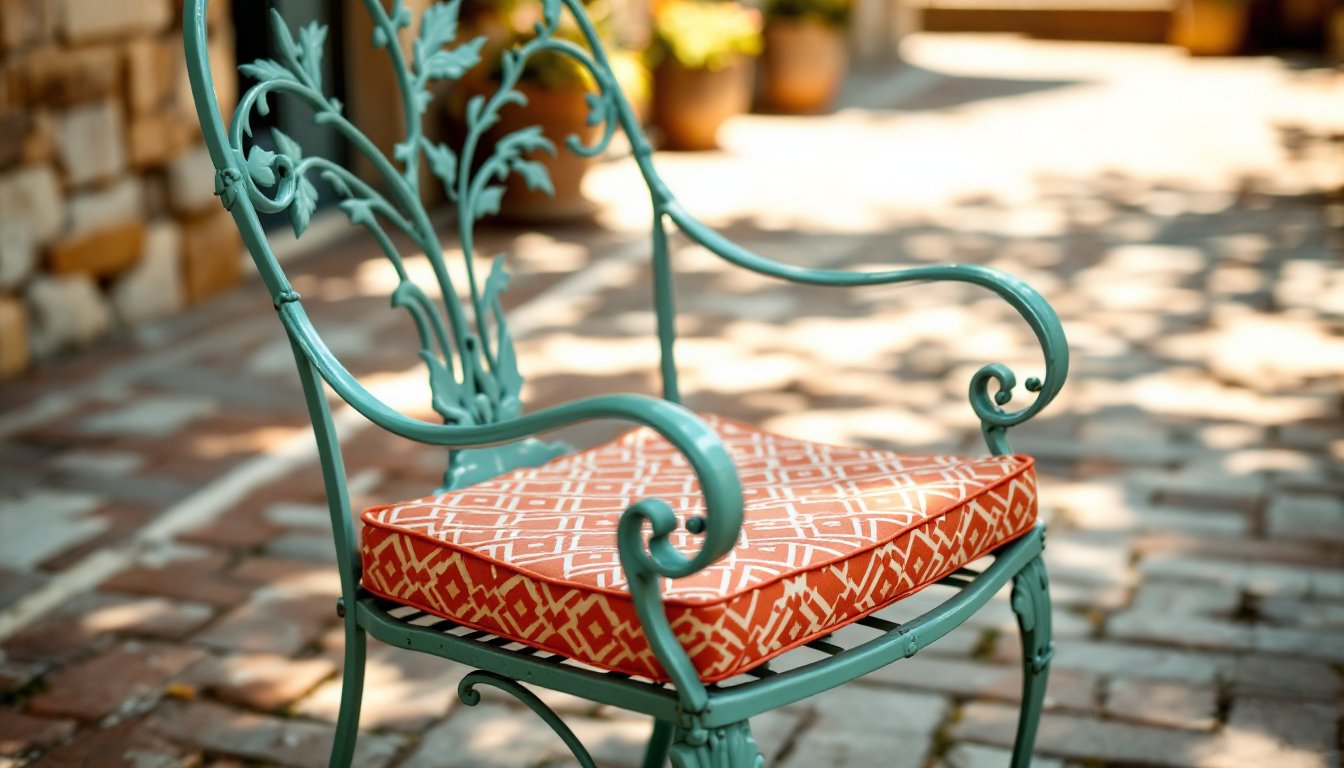
Color choices make or break the look. Authentic 1950’s palettes leaned toward turquoise, coral, mint green, sunny yellow, and classic white, though charcoal gray and black were common too. Bold colors pop against natural wood decking or brick patios, while neutrals blend with stone or concrete surfaces.
Pair wrought iron with materials that complement its era: terra cotta planters, teak or cedar side tables, and striped canvas umbrellas all hit the right notes. Avoid ultra-modern glass-top tables or contemporary wicker, the style clash is jarring.
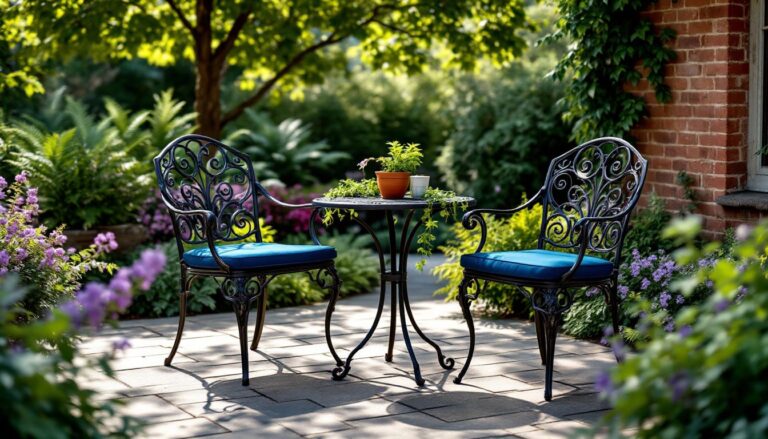
Layering textiles softens the metal’s hard edges. Outdoor cushions in geometric patterns or solid colors add comfort without overwhelming the metalwork. Vintage-inspired outdoor rugs (indoor/outdoor polypropylene versions are weatherproof) define seating areas and add warmth underfoot.
Lighting matters, especially for evening use. String lights or vintage-style lanterns enhance the nostalgic vibe without competing for attention. Skip LED spotlights or ultra-modern fixtures, they fight the aesthetic rather than supporting it.
Scale is important. A full dining set needs at least 10′ x 10′ of clear patio space to avoid a cramped feel, while a pair of chairs and a side table works in tighter quarters. The furniture’s visual heft means a little goes a long way, don’t overcrowd.
Caring for and Maintaining Vintage Wrought Iron Patio Sets
Proper maintenance extends the life of restored wrought iron indefinitely. The key is staying ahead of rust, once it starts, it spreads.
Routine care:
- Wash with mild dish soap and water every 4-6 weeks during use season. A soft brush removes pollen and debris from crevices.
- Inspect for paint chips or scratches monthly. Touch up immediately with matching paint to seal the metal. Keep a small can of touch-up paint on hand.
- Dry cushions fully before storing them. Moisture trapped against metal accelerates rust formation.
Seasonal tasks:
- Apply a automotive paste wax (Turtle Wax or equivalent) twice per season to painted surfaces. This adds a moisture barrier and makes cleaning easier.
- Tighten any bolts or fasteners. Wrought iron’s weight and outdoor temperature swings loosen connections over time. Use a thread-locking compound on chronic looseners.
- Check adjustable feet for damage. Replace worn glides to prevent moisture from wicking up through contact points.
Winter storage (regions with freeze-thaw cycles):
Ideally, move pieces under cover, a covered porch, garage, or shed. If that’s not possible, use breathable furniture covers (canvas or specially designed outdoor covers with vents). Avoid plastic tarps, which trap condensation and promote rust.
Dealing with new rust:
Catch it early and it’s a 15-minute fix. Sand the affected area with 120-grit sandpaper, wipe with acetone, prime, and touch up with topcoat. Let rust go unchecked for a season and you’re looking at a full restoration cycle.
One common maintenance mistake: pressure washing. The force can drive water into joints and seams, where it sits and rusts from the inside. Stick with garden hose pressure and hand scrubbing for cleaning.
Conclusion
1950’s wrought iron patio furniture delivers durability and character that modern pieces rarely achieve. With proper identification, patient restoration, and consistent maintenance, these vintage sets provide decades more service while adding authentic mid-century style to any outdoor space. The work is straightforward for anyone comfortable with basic DIY tools, and the results, both functional and aesthetic, justify the effort.