
Table of Contents
ToggleChoosing living room furniture means balancing durability, style, and budget, and Ashley Furniture has been solving that equation for millions of homeowners since 1945. Whether someone’s furnishing a first apartment or upgrading a family room, Ashley’s catalog covers everything from compact loveseats to sprawling sectionals. The brand’s reach, over 1,000 retail locations worldwide, makes it easy to test pieces in person before buying. This guide walks through selecting, styling, and budgeting for Ashley living room furniture that holds up to real life.
Key Takeaways
- Ashley living room furniture balances durability, style, and affordability through engineered construction like kiln-dried hardwood frames and high-resiliency foam designed to last a decade with proper maintenance.
- Choose sofa formats based on layout first—standard sofas fit traditional rooms, sectionals solve corner dead zones, and loveseats work for small spaces—then measure doorways to ensure delivery compatibility.
- Fabric durability matters more than aesthetics; prioritize microfiber for easy cleaning in high-traffic homes, and always verify residential-grade upholstery exceeds 15,000 double rubs on durability tests.
- Strategic styling through scale, texture layering, and traffic flow creates balanced living rooms; use painter’s tape to outline furniture before purchasing and maintain 30–36 inches of clear walkways between pieces.
- Ashley’s $500–$2,500 price range per major piece offers best value during Presidents Day, Memorial Day, Labor Day, and Black Friday promotions offering 20–40% discounts compared to regular pricing.
- Calculate total cost of ownership by comparing annual wear costs rather than sticker price alone; a $1,400 sofa lasting twelve years ($117/year) often delivers better value than cheaper alternatives that fail sooner.
Why Ashley Furniture Remains a Top Choice for Living Rooms
Ashley Furniture dominates the mid-range furniture market for three practical reasons: accessibility, variety, and engineered affordability.
Accessibility matters when buyers want to see construction quality firsthand. Unlike online-only brands, Ashley operates physical showrooms where customers can check frame joints, test cushion firmness, and verify fabric durability. This tactile advantage reduces return rates and buyer’s remorse.
Variety spans style categories from farmhouse to mid-century modern. A shopper looking for a tufted Chesterfield sofa and another hunting for a sleek leather sectional both find options within Ashley’s inventory. The catalog includes over 200 living room seating configurations, ensuring layout compatibility for studios, open-concept spaces, and formal parlors.
Engineered affordability means Ashley designs to a price point without sacrificing key structural elements. Frames use kiln-dried hardwood corners reinforced with corner blocks, triangular braces that prevent racking (the side-to-side wobble that kills cheaper furniture). Cushions typically contain high-resiliency foam (HR foam), which recovers shape better than standard polyurethane. This isn’t heirloom-grade construction, but it’s built to survive a decade of daily use when properly maintained.
The brand also integrates practical features furniture strategies often overlook: removable cushion covers (critical for homes with kids or pets), USB charging ports in armrests, and modular sectionals that adapt when someone moves. These details separate functional furniture from showroom-only pieces that look great but live poorly.
Essential Ashley Living Room Pieces to Anchor Your Space
Sofas and Sectionals for Every Layout
Seating dictates traffic flow, so choosing the right sofa format comes before color or fabric.
Standard sofas (typically 84–96 inches long) fit traditional living rooms where furniture floats in the center or flanks a fireplace. Ashley’s Darcy Sofa (a perennial bestseller) measures 86 inches and seats three adults comfortably, crucial for hosting without cramming. Look for sinuous spring suspension (S-springs) rather than webbing: springs distribute weight evenly and prevent sagging.
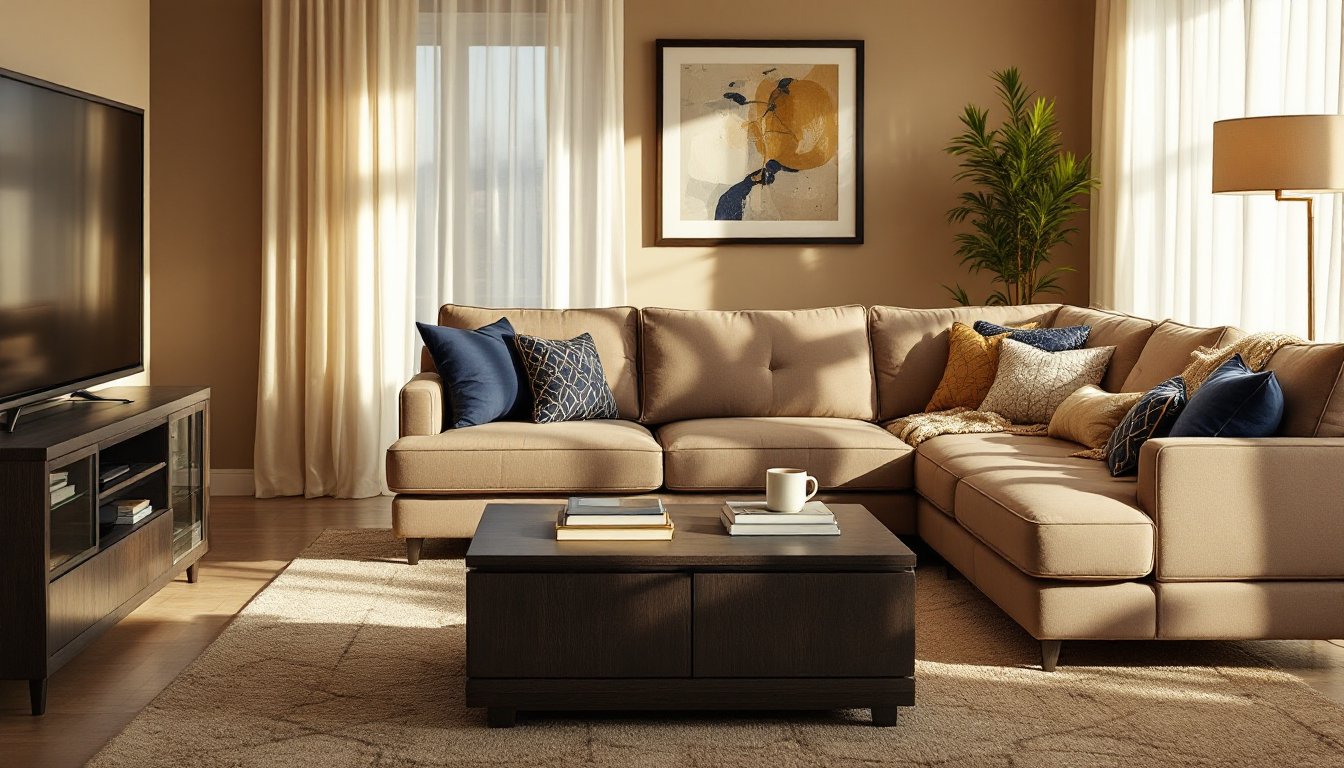
Sectionals solve corner dead zones and open-concept challenges. An L-shaped sectional (two pieces: sofa + chaise) typically spans 110–130 inches along two walls, creating natural room division without blocking sightlines. Ashley’s modular sectionals let buyers reconfigure pieces when moving or redecorating, a major advantage over fixed-frame designs.
For small spaces, a loveseat (58–64 inches) paired with an accent chair provides seating without overwhelming square footage. Measure doorways before buying: many sectionals arrive in boxes, but one-piece sofas need at least 30 inches of clearance to navigate hallways and stairwells.
Fabric choice impacts longevity:
- Microfiber/polyester: Budget-friendly, stain-resistant, easy to clean (works for families).
- Linen blends: Breathable but prone to wrinkling and fading in direct sunlight.
- Leather/faux leather: Durable and wipeable, but requires conditioning to prevent cracking.
Ashley rates upholstery durability using double rubs (Wyzenbeek tests). Residential-grade fabric should exceed 15,000 double rubs: performance fabrics hit 30,000+. Always check the tag.
Coffee Tables and Entertainment Centers
Coffee tables anchor seating groups and must balance height, clearance, and surface area.
Height: Standard coffee tables sit 16–18 inches tall, about level with sofa cushions. This keeps drinks stable and remote controls within easy reach. Lower tables (12–14 inches) work for floor-cushion setups or modern low-profile sofas.
Clearance: Leave 14–18 inches between the table edge and sofa front. Less space creates shin-banging hazards: more feels disconnected.
Surface area: Match table length to about two-thirds the sofa width. For an 84-inch sofa, a 48–56 inch coffee table feels proportional. Round tables (36–42 inches diameter) improve traffic flow in tight spaces.
Ashley’s lift-top coffee tables (like the Bynderman series) hide storage and raise to dining height, ideal for small homes without formal dining rooms. The mechanism uses gas pistons (similar to car tailgates), so test the lift action in-store: wobbly hardware fails within months.
Entertainment centers need precise measurements. Measure TV width (not screen size) and add 3–6 inches for clearance. A 65-inch TV typically spans 57 inches wide, so the stand should be at least 60 inches. Weight capacity matters: tempered glass shelves hold 50–75 pounds: MDF with laminate manages 100+ pounds if properly braced.
Cable management built into Ashley’s TV stands (grommet holes, rear cutouts) keeps cords organized. Run power strips inside the cabinet rather than daisy-chaining behind the unit, loose cables are fire hazards and fail inspections.
Styling Your Living Room with Ashley Furniture
Styling means creating visual balance without sacrificing function. Start with scale, not color.
Scale refers to how furniture size relates to room dimensions. A 96-inch sectional overwhelms a 12×12 room but gets lost in a 20×20 great room. Use painter’s tape on the floor to outline furniture footprints before buying, this reveals clearance issues photos can’t show.
Many design trends from sources like House Beautiful emphasize layering textures and mixing materials. Pair Ashley’s fabric sofas with wood coffee tables and metal accent tables to avoid monotony. A room full of matching wood tones (all espresso or all oak) feels flat: contrast creates depth.
Color coordination doesn’t mean matching, it means repeating accent tones. If throw pillows feature navy and gold, echo those hues in artwork, rugs, or curtains. Ashley sells coordinated collections (matching sofa, loveseat, chair), but mixing collections often produces more personalized results. Just keep wood finishes within the same tone family (warm vs. cool) to avoid clashing.
Traffic flow requires 30–36 inches of walkway between furniture pieces. Measure high-traffic paths (entry to kitchen, hallway to bathroom) and keep them clear. Floating furniture away from walls (even 6–12 inches) makes rooms feel larger and improves airflow behind pieces.
Popular furniture layouts often center around focal points: fireplaces, windows, or TVs. Angle chairs toward the focal point rather than lining them against walls. This creates conversation zones and makes large rooms feel intentional.
Lighting completes the space. Overhead fixtures provide ambient light, but floor lamps (60–72 inches tall) and table lamps on side tables add task lighting for reading. Ashley’s furniture-integrated lighting (LED strips under shelves, backlit headboards) works well in media rooms but can look gimmicky elsewhere, use sparingly.
Rugs define zones in open-concept spaces. A rug should extend 12–18 inches beyond furniture edges, all front legs of sofas and chairs should rest on the rug, or all legs should sit off it. Half-on, half-off creates a disjointed look. Standard living room rugs run 8×10 feet or 9×12 feet: measure before shopping to avoid returns.
Budgeting and Shopping Tips for Ashley Living Room Sets
Ashley’s pricing strategy targets the $500–$2,500 range per major piece, positioning it between big-box discount retailers and luxury boutiques.
Sofas typically cost $700–$1,500. A basic three-seater with polyester upholstery starts around $700: leather sectionals with power recliners reach $2,500+. Expect to pay more for:
- Solid wood frames vs. engineered wood
- Top-grain leather vs. bonded leather (which peels within years)
- Eight-way hand-tied springs vs. sinuous springs (rare in Ashley’s price range)
Coffee tables range $200–$600, with lift-top and storage models at the higher end. Entertainment centers span $300–$800 depending on size and material: solid wood costs more than veneered particleboard.
Buying complete sets (matching sofa, loveseat, tables) often unlocks 10–20% discounts. But, sets lock buyers into one aesthetic. Mixing individual pieces offers flexibility but requires more planning.
Financing: Ashley offers 0% APR financing for 12–60 months on qualifying purchases (typically $999+). Read terms carefully, deferred interest plans charge retroactive interest if not paid off by the deadline. A $2,000 purchase financed at 0% for 24 months becomes manageable at $83/month, but missing the payoff date can trigger 20%+ interest on the original balance.
Sales cycles: Ashley runs major promotions during Presidents Day (February), Memorial Day (May), Labor Day (September), and Black Friday (November). Discounts hit 20–40% during these events. Avoid buying in January or August when inventory refreshes but sales lag.
Floor models: Showroom pieces sell at 30–50% off to clear space for new stock. Inspect for stains, frame damage, and missing hardware. Floor models lack full warranties, so check return policies, some stores offer 7-day returns, others sell as-is.
Applying smart furniture-buying approaches means calculating total cost of ownership, not just sticker price. A $700 sofa lasting five years costs $140/year: a $1,400 sofa lasting twelve years costs $117/year. Upfront savings evaporate when furniture fails prematurely.
Delivery and assembly: Ashley charges $100–$200 for white-glove delivery (inside placement, assembly, box removal). Standard delivery ($50–$100) drops items at the door, manageable for tables, challenging for sectionals. Budget extra if stairs are involved: many carriers charge $50+ per flight.
Warranties cover manufacturing defects but exclude normal wear. Extended warranties ($100–$300) rarely justify the cost unless covering high-use items in commercial settings. Save receipts and warranty cards: claims require proof of purchase.
Conclusion
Ashley living room furniture delivers reliable mid-range quality when buyers prioritize construction details over brand prestige. Focus on frame materials, spring systems, and fabric durability rather than surface styling. Measure twice, buy once, returns cost time and restocking fees. Combining proven furniture selection methods with hands-on showroom visits reduces costly mistakes and creates spaces built for real life.