
Table of Contents
ToggleCommercial-grade patio furniture doesn’t just outlast residential pieces, it’s engineered to survive daily abuse in restaurants, hotels, and resorts. When these pieces hit clearance, they offer homeowners an opportunity to snag restaurant-quality durability at basement prices. But shopping clearance isn’t as simple as grabbing the first discounted chaise lounge. Understanding when to buy, what to inspect, and how to restore weathered pieces can mean the difference between scoring a decade-long investment and hauling junk to the curb. Here’s how to shop smart and outfit a backyard that’ll outlast the neighbors’ flimsy box-store sets.
Key Takeaways
- Commercial patio furniture clearance offers restaurant-quality durability at basement prices because businesses replace pieces for aesthetic reasons, not structural failure.
- Late August through October delivers the deepest discounts on commercial patio furniture clearance as hotels and resorts liquidate inventory before winter storage.
- Inspect frames for flex, check welds at stress points, verify hardware is stainless steel, and assess cushion foam density—these details separate decade-long investments from disposable furniture.
- Commercial-grade pieces typically weigh 12-18 lbs compared to residential versions at 6-8 lbs, providing superior wind resistance and structural integrity for high-use outdoor spaces.
- Budget $45-90 per cushion for professional foam and fabric replacement to transform weathered clearance finds into like-new furniture that serves 10-15 years.
- Schedule monthly pressure washing, annual hardware retightening, and proper off-season storage to maximize the lifespan of commercial patio furniture and prevent corrosion or UV damage.
Why Commercial Patio Furniture Is Worth the Investment
Commercial patio furniture is built to withstand conditions that would shred residential pieces in a single season. Manufacturers use powder-coated aluminum frames (not painted steel), marine-grade fabrics rated for 1,000+ hours of UV exposure, and stainless steel hardware that won’t rust in coastal climates. The welds are thicker, the cushion cores use high-density foam (typically 1.8 lbs/cu ft or higher), and the joinery is designed for constant use.
Restaurants and hotels replace outdoor furniture for aesthetic reasons, style trends shift, branding changes, or management wants a refresh, not because the pieces failed. That means clearance commercial furniture often has years of functional life left. A cast aluminum dining chair that seated hundreds of diners might show surface wear but retain structural integrity far beyond a consumer-grade equivalent.
The weight difference alone tells the story. A commercial stacking chair typically weighs 12-18 lbs compared to 6-8 lbs for residential versions. That extra mass comes from thicker gauge materials and reinforced stress points. For homeowners in windy areas or those tired of replacing cushions every two years, commercial pieces solve problems before they start.
Clearance pricing can drop commercial furniture to near-residential costs. A commercial-grade teak chaise that retails for $800 might hit $250 during end-of-season sales, putting professional-quality materials within reach of most renovation budgets.
When and Where to Find the Best Clearance Deals
Seasonal Sale Cycles You Need to Know
Commercial patio furniture follows predictable markdown patterns tied to hospitality industry cycles. The deepest discounts hit in late August through October, when hotels and restaurants close outdoor spaces for winter. Properties in seasonal markets (beach towns, ski resorts, northern climates) liquidate inventory rather than pay for storage.
Spring clearance runs March through early May as businesses refresh for peak season. These sales offer smaller discounts (20-40% off) but better selection since retailers are clearing last year’s models, not weathered floor stock. For homeowners planning a summer setup, spring sales balance price and condition.
Post-holiday sales in January and February target commercial buyers restocking after New Year’s wear and tear, but savvy homeowners can score deals on overstocked items. Retailers clearing warehouse space before spring inventory often bundle pieces, six dining chairs or multiple lounge sets, at steep per-unit discounts.
Many design enthusiasts find inspiration in publications covering outdoor living trends, which often highlight when commercial-quality pieces become accessible to residential buyers during these seasonal shifts.
Top Retailers and Online Marketplaces for Clearance Finds
Restaurant supply liquidators offer the deepest commercial discounts. Companies like Restaurant Furniture 4 Less and Bargreen Ellingson run clearance sections year-round, selling overstock and discontinued hotel-grade pieces. Expect 40-70% off retail, but limited warranty coverage.
Contract furniture dealers (those serving hotels, resorts, country clubs) maintain outlet sections for floor models and prior-season inventory. Brands like Tropitone, Brown Jordan, and Telescope Casual operate factory outlets with 30-50% markdowns on first-quality commercial stock.
Online marketplaces require more digging but occasionally yield gold. Restaurant auctions on BidSpotter and Kaupp liquidation sales move entire patio inventories when establishments close. Buyers handle shipping (often freight-only) but can negotiate bulk pricing. Regional listings on Facebook Marketplace and Craigslist sometimes feature hotels offloading furniture during renovations, bringing cash and a pickup truck can save 60% compared to retail.
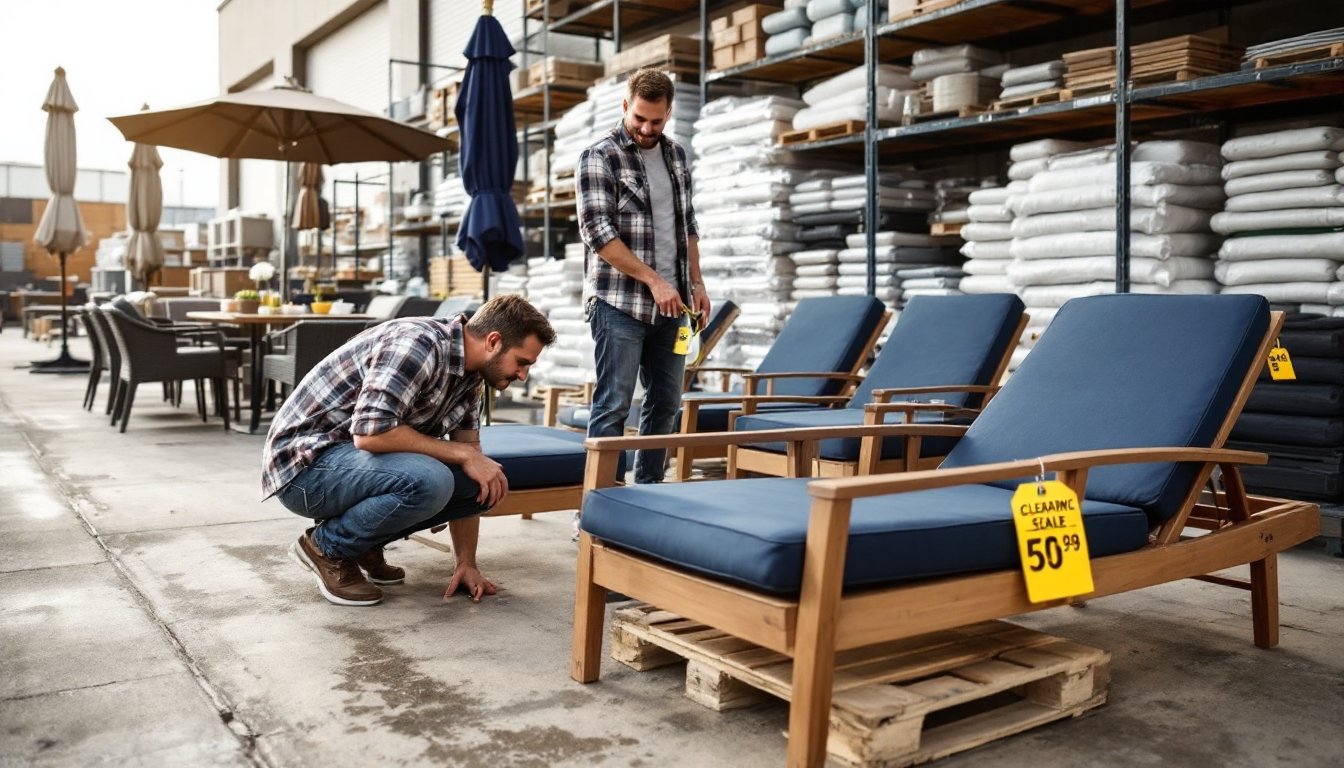
Big-box home improvement stores occasionally carry commercial lines (Costco’s seasonal commercial pool furniture, for example) and mark them down aggressively when they don’t move. Check in-store clearance sections in September: online inventory doesn’t always reflect local overstock.
What to Look for When Shopping Commercial Clearance Sales
How to Inspect Quality and Assess Value
Start with the frame. Lift each piece and check for flex or wobble. Aluminum frames shouldn’t bend under pressure: teak and eucalyptus should feel dense, not pithy. Inspect welds on metal furniture, commercial pieces use full-penetration welds at stress points, not just tack welds. Run a finger along joints: you shouldn’t catch on rough edges or gaps.
Check powder coating for chips and scratches that expose bare metal. Surface scratches are cosmetic, but coating failure near joints or on horizontal surfaces invites corrosion. Touch up is possible with appliance epoxy or matching powder coat paint, but extensive damage means ongoing maintenance. Cast aluminum and resin wicker hold up better to neglect than steel or wrought iron.
Fabric condition matters more than most buyers realize. Commercial-grade Sunbrella or Phifertex mesh can be cleaned and treated, but check for UV damage, fabric that tears easily or shows white stress lines along seams is past recovery. Remove cushion covers (they should zip off) and inspect foam cores. Compressed foam that doesn’t spring back or shows mildew staining needs replacement. Budget $40-80 per cushion for new commercial-grade foam and covers.
For wicker or resin weave, tug individual strands. Commercial synthetic rattan uses thicker (3-5 mm) strands that shouldn’t snap with firm pressure. Natural rattan and wicker dry out and become brittle: unless you’re committed to restoration (involving boiling water and glycerin treatments), stick to synthetic.
Hardware inspection separates amateur buyers from pros. Bring a Phillips and flathead screwdriver to clearance shopping. Tighten loose screws and check whether stripped threads or corroded fasteners are causing wobbles. Stainless steel hardware (stamped 304 or 316) is worth paying extra for: zinc-plated or plain steel will rust. Replacement hardware runs $10-30 per chair but adds years of life.
Measure before you buy. Homeowners often underestimate commercial furniture’s footprint, restaurant dining tables designed for four can be 36″ square versus 30″ residential versions. Lounge chairs with 8″ cushions won’t fit through standard 32″ doorways without tilting. Bring a tape measure and note your patio dimensions, doorway widths, and vehicle cargo space.
Many homeowners planning outdoor entertaining spaces prioritize commercial durability after experiencing how quickly residential furniture degrades in high-use settings.
Restoring and Maintaining Your Clearance Furniture
Most clearance commercial furniture needs light restoration. Start with a pressure wash (1,500-2,000 PSI using a 25-degree nozzle) to remove surface grime, mildew, and salt deposits. For teak or eucalyptus, follow with an oxalic acid brightener to lift gray weathering, products like Nautical Teak Cleaner restore original color without sanding. Let wood dry 48-72 hours before applying teak oil or sealer.
Aluminum and powder-coated frames need thorough cleaning with TSP substitute (trisodium phosphate alternative) to remove oxidation and chalking. Rinse completely and dry before touching up chips with appliance epoxy in matching colors. Major coating damage warrants professional powder coating (typically $15-30 per linear foot), which effectively resets the furniture’s lifespan.
Cushion replacement transforms clearance finds. Commercial foam fabricators (search “outdoor cushion foam” plus your city) cut high-density foam to exact dimensions for $25-50 per cushion. Pair with Sunbrella or Solution-Dyed Acrylic fabric (available by the yard from outdoor fabric suppliers) and either sew covers yourself or pay $20-40 per cushion for professional work. Total cost: $45-90 per cushion versus $80-150 for pre-made replacements.
For resin wicker, clean with a stiff brush and soapy water, then treat with 303 Aerospace Protectant to restore UV resistance and prevent cracking. This step is critical, untreated commercial resin dries out and shatters within two seasons of sun exposure.
Ongoing maintenance for commercial furniture is minimal but non-negotiable. Hose down frames monthly during use season. Store cushions in deck boxes or indoors during extended rain (even Sunbrella mildews if stored wet). Cover furniture during winter or off-season, using breathable covers that vent moisture, plastic tarps trap condensation and accelerate corrosion.
Retighten hardware annually. Commercial furniture’s mechanical fasteners (bolts and screws rather than glued joints) make repairs straightforward but require periodic attention. Keep a small bottle of stainless steel anti-seize compound for threads in high-salt environments.
For design-conscious homeowners, resources like Gardenista’s outdoor space guides demonstrate how restored commercial pieces integrate into cohesive landscape designs, often anchoring entire outdoor rooms with their durability and professional finish.
With proper restoration and basic maintenance, clearance commercial patio furniture delivers 10-15 years of service, a return on investment that no residential-grade alternative can match. The work upfront pays off every season the furniture survives what would’ve destroyed lesser pieces.