
Table of Contents
ToggleContemporary bedroom furniture strips away the fuss. No ornate carvings, no heavy drapes, just clean lines, functional design, and breathing room. Whether you’re renovating a master suite or outfitting a rental property, understanding what makes a bedroom “contemporary” helps you make smart buying decisions. This guide walks through the defining traits, must-have pieces, material choices, styling strategies, and shopping tips you need to build a modern bedroom that’s both practical and polished. Expect straight talk, not design-blog fluff.
Key Takeaways
- Contemporary bedroom furniture prioritizes clean lines, neutral palettes, and functional design—rejecting ornate details in favor of minimalist aesthetics that feel both modern and practical.
- Platform beds with low-profile frames (12–18 inches high) form the backbone of contemporary design, creating an open feel while often incorporating built-in storage for space efficiency.
- High-quality engineered wood with solid edge banding and powder-coated metal frames offer durability and value, while avoiding cheap particle board and vague ‘wood-look’ finishes protects your investment.
- Contemporary bedroom styling relies on neutral base colors, layered textures, and minimal accessories—keeping surfaces uncluttered and allowing matte finishes and simple lighting to define the space.
- Measure your room dimensions, compare materials in person, and budget 2–4 hours for assembly before purchasing contemporary bedroom furniture to avoid costly mistakes and installation issues.
- Timing your purchase around January, July, and Black Friday sales can yield 20–40% discounts on floor models while white-glove delivery services simplify setup for larger pieces.
What Defines Contemporary Bedroom Furniture?
Contemporary furniture isn’t the same as “modern” in the mid-century sense. Contemporary means now, furniture that reflects current tastes, which in 2026 leans toward simplicity, neutral palettes, and multi-function design.
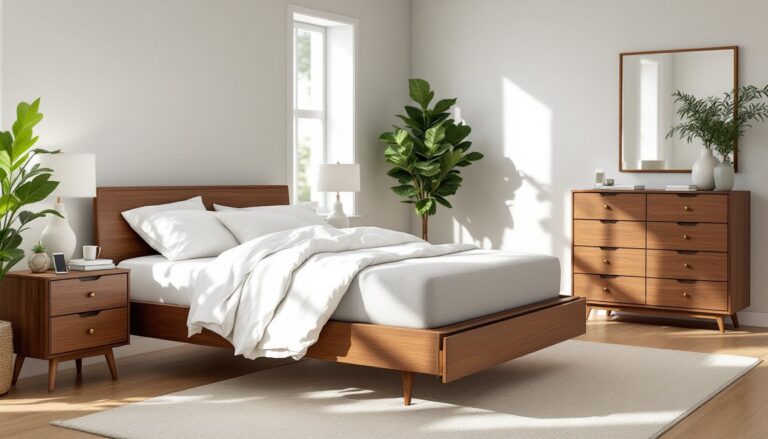
Key characteristics include low-profile silhouettes (platform beds, streamlined dressers), neutral or monochrome color schemes (whites, grays, taupes, blacks), and minimal ornamentation. Hardware is understated or hidden. Legs are either slim and angled or absent altogether, with pieces sitting flush to the floor.
Materials trend toward smooth finishes: engineered wood with veneer, laminate, metal frames, and upholstered panels in linen or faux leather. You won’t find carved details or turned spindles. Instead, design interest comes from texture contrast, matte wood against polished metal, woven fabric against glass.
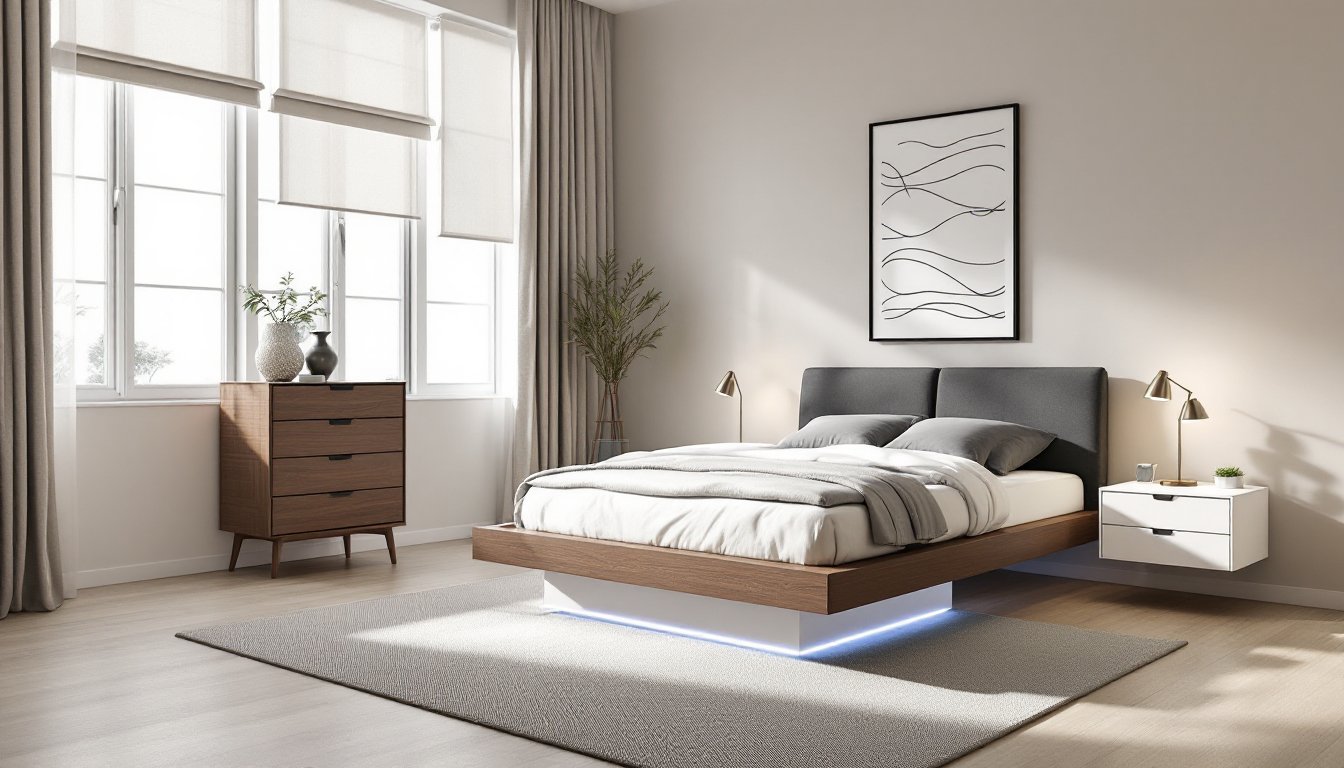
Contemporary style also prioritizes function. Built-in USB ports, integrated LED strips, and hidden storage compartments are common. If a piece doesn’t earn its footprint, it doesn’t belong in a contemporary bedroom. This isn’t about trends that age badly: it’s about restraint and adaptability.
Essential Contemporary Bedroom Furniture Pieces
Platform Beds and Low-Profile Frames
Platform beds are the backbone of contemporary bedroom design. They sit low to the floor and support a mattress without a box spring. Most use slat systems, horizontal wood or metal slats spaced 2–3 inches apart, that provide ventilation and support.
Typical platform bed heights measure 12–18 inches from floor to mattress top, compared to 24–30 inches for traditional beds with box springs. This lower profile makes the room feel more open. Many designs include built-in storage drawers on hydraulic lifts or glide rails, ideal for smaller bedrooms where a separate dresser won’t fit.
Materials vary. Solid wood frames (oak, walnut, or ash) offer durability but add weight. Metal tube frames with powder-coat finishes keep the look airy and industrial. Upholstered platform beds with linen or velvet wrapped around MDF cores add softness without bulk. Curated collections of modern bedroom designs often showcase these low-profile frames as focal points.
If you’re assembling a platform bed yourself, expect 1–2 hours for most flat-pack models. Pre-drill pilot holes if you’re attaching slats to side rails to prevent splitting. Use a power drill with a Phillips bit and keep an Allen wrench set handy, metric hardware is common on imported frames.
Minimalist Nightstands and Storage Solutions
Contemporary nightstands prioritize surface area and simple storage. Look for pieces with one or two drawers, open cubbies, or floating wall-mount designs. Standard nightstand dimensions are 20–24 inches tall, 18–22 inches wide, and 16–18 inches deep, sized to sit level with or slightly below mattress height.
Floating nightstands mount directly to wall studs using keyhole brackets or French cleat systems. They free up floor space and simplify cleaning underneath. Mount them 24–28 inches above the floor for comfortable reach from bed. Always locate studs with a stud finder, drywall anchors won’t support the combined weight of the nightstand, a lamp, and books.
For storage-heavy needs, consider tall dressers (5–6 drawers) or low credenzas (3–4 drawers with a long horizontal profile). Contemporary dressers often use soft-close drawer glides and push-to-open mechanisms to eliminate visible hardware. Top surfaces in lacquered MDF or solid wood with matte sealer resist water rings and scratches better than unfinished wood.
Skip particle board unless it’s rated for furniture use. Cheap composites sag under load and strip screw threads easily. If you’re shopping budget options, check that drawer boxes are dovetailed or at least stapled and glued, not just friction-fit.
Choosing the Right Materials and Finishes
Material choice affects durability, maintenance, and cost. Solid hardwood, oak, walnut, maple, outlasts engineered alternatives but costs 30–50% more. Nominal dimensions don’t apply to furniture the way they do to framing lumber, so a “1-inch thick” tabletop is usually a full inch.
Engineered wood (MDF, plywood, particleboard) with wood veneer offers a middle ground. High-quality veneer looks nearly identical to solid wood. Check edge banding, the thin strip covering raw edges, should be heat-sealed or glued, not just pressed on. Peeling edge banding is a hallmark of low-grade furniture.
Metal frames (steel, aluminum, or iron) work well for beds and accent tables. Powder-coated finishes resist rust and scratches better than spray paint. Welded joints are stronger than bolted ones, though bolted frames are easier to disassemble for moving.
Upholstered pieces, headboards, benches, platform bed sides, use foam over plywood or MDF cores. Performance fabrics (polyester blends, solution-dyed acrylics) resist stains better than natural linen or cotton. If you have pets or kids, skip light grays and whites unless the fabric is labeled cleanable with water and mild detergent.
Finishes in contemporary furniture lean toward matte or satin. High-gloss lacquer shows fingerprints and scratches. Water-based polyurethane or hard wax oils offer durable, low-sheen protection on wood. For metal, look for electrostatic powder coating, it’s tougher than liquid paint.
When comparing online listings, watch for vague terms like “wood-look” or “wood-grain finish.” That usually means printed laminate over particleboard, not actual wood. Exploring diverse furniture ideas can help clarify what materials best suit your project and budget.
How to Style Your Contemporary Bedroom
Contemporary styling relies on restraint. Start with a neutral base, white, gray, or beige walls, and layer in texture through bedding, rugs, and a few accent pieces. Avoid clutter. If a surface holds more than three objects, pare it down.
Bedding should be simple: solid colors or subtle textures like linen weaves, waffle knits, or quilted coverlets. Skip busy patterns and ruffles. A duvet cover in cotton or linen over a down-alternative insert is easier to wash than a traditional comforter. Use euro shams (26×26 inches) or king shams as back layers, then add sleeping pillows in front. Two or three pillows total, no need for a decorator pile.
Lighting plays a key role. Swap builder-grade ceiling fixtures for flush-mount or semi-flush designs in brushed nickel, matte black, or brass. Add table lamps or wall-mount sconces with drum shades or geometric bases. LED bulbs in 2700K–3000K (warm white) create a comfortable glow without the harsh blue tint of daylight bulbs.
Wall art should be oversized and minimal, one large canvas or framed print per wall, not a gallery cluster. Black-and-white photography, abstract line drawings, or monochrome prints fit the aesthetic. Hang art so the center sits 57–60 inches from the floor (standard gallery height). Use a laser level or painter’s tape to mark placement before driving nails.
Window treatments lean toward simplicity: roller shades, panel track blinds, or simple drapery panels in linen or cotton. Skip valances and tiebacks. If privacy isn’t a concern, leave windows bare, contemporary design embraces natural light. Publications like Design Milk regularly feature these streamlined styling approaches in real-world bedroom setups.
Shopping Tips for Contemporary Bedroom Furniture
Measure first. Know your room dimensions, doorway widths, and ceiling height before you shop. A king-size platform bed measures 76×80 inches, add at least 24 inches of clearance on each side for movement and nightstands. Sketch a floor plan on graph paper or use a free room planner app.
Check assembly requirements. Most contemporary furniture ships flat-pack. Read reviews for mentions of missing hardware, unclear instructions, or alignment issues. Budget 2–4 hours for bed frame assembly, 30–60 minutes for a dresser. If you’re not comfortable with a drill and Allen wrenches, hire a handyman, poorly assembled furniture wobbles, squeaks, and wears out faster.
Inspect materials in person when possible. Online photos don’t show veneer seams, drawer glide quality, or finish texture. Run your hand over surfaces to check for rough spots. Open and close drawers, they should glide smoothly without rattling. Press down on tabletops to test for flex.
Compare warranties. Reputable manufacturers offer 1–5 year warranties covering defects in materials and workmanship. Avoid retailers with vague “30-day return” policies and no warranty. Read the fine print, some warranties exclude normal wear, stains, or damage from improper assembly.
Buy sets cautiously. Bedroom sets (bed, nightstands, dresser) save you from mix-and-match guesswork, but you’re locked into one look. If budget is tight, start with the bed and one nightstand, then add pieces over time. Cross-referencing furniture types helps identify which pieces deliver the most value for your specific room layout.
Watch for sales cycles. Furniture retailers typically discount floor models and older inventory in January, July, and around Black Friday. You can save 20–40% if you’re flexible on exact finishes. Ask about floor model discounts, minor scuffs are easy to touch up with furniture markers or wood filler pens.
Delivery and setup fees add up. White-glove delivery (unpack, assemble, haul away boxes) costs $100–$300 depending on the retailer. Standard delivery drops boxes at your door. If you’re ordering online, confirm whether delivery includes room of choice or just curbside. Moving a boxed king bed frame up stairs solo isn’t fun.
For more inspiration on pairing contemporary bedroom furniture with other design elements throughout your home, resources like Homedit offer practical room-by-room guides and product recommendations.