
Table of Contents
ToggleFrench Provincial dining room furniture brings the refined charm of 18th-century French countryside estates into modern homes. This style balances ornate craftsmanship with rustic warmth, creating dining spaces that feel both elegant and inviting. Unlike the gilded excess of Parisian palace furniture, French Provincial pieces were designed for rural nobility, functional, graceful, and built to last generations. For homeowners looking to add character without veering into formal stuffiness, this style hits the sweet spot. It works equally well in farmhouse kitchens, traditional dining rooms, and even updated spaces that need a dose of Old World soul.
Key Takeaways
- French provincial dining room furniture combines 18th-century French countryside elegance with rustic practicality, offering a balanced alternative to overly formal or minimal dining styles.
- Authentic pieces feature solid hardwood construction with traditional joinery methods like mortise-and-tenon connections, with quality tables typically ranging from $1,500 to $3,000 depending on wood species and craftsmanship.
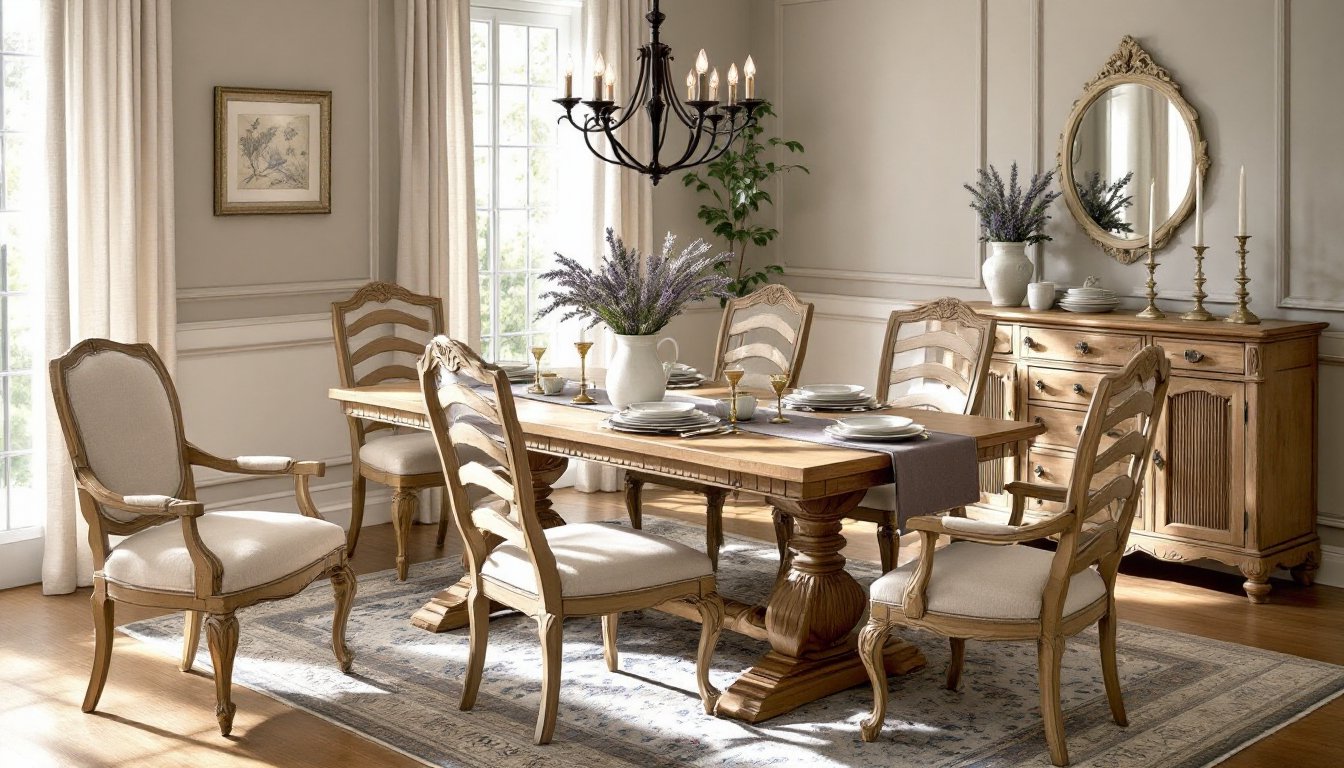
- Signature design elements include cabriole legs, restrained hand-tooled carvings of shells and acanthus leaves, and soft muted color palettes in creams, grays, and natural wood tones that avoid high-gloss finishes.
- Measure your dining room carefully to allow 36 to 48 inches of clearance around the table, and choose a size based on regular guest count—a 72-inch table comfortably seats six, while 96-inch seats eight.
- Layer textures with linen runners and placemats, warm wall colors, vintage-style chandeliers, and simple window treatments to enhance the French provincial aesthetic without overwhelming the space.
- Maintain your investment through regular care routines like immediate spill cleanup, annual tightening of hardware, periodic waxing of natural wood, and touching up painted finishes to ensure these heirloom-quality pieces last generations.
What Is French Provincial Dining Room Furniture?
French Provincial furniture originated in the provinces outside Paris during the 1700s, where local craftsmen adapted the high-style Louis XV and Louis XVI designs for country estates. These pieces retained the curved lines and decorative details of court furniture but simplified the materials and construction.
Authentic French Provincial dining furniture features solid wood construction, usually oak, cherry, walnut, or fruitwood, rather than veneers or composite materials. Regional artisans used what grew locally, which is why you’ll see variation in wood species across pieces. The joinery relied on mortise-and-tenon and dovetail connections, not pocket screws or dowels.
Modern reproductions range from budget particle-board imports to high-quality hardwood pieces that honor traditional joinery methods. When shopping, check the underside of tables and the back of chairs. Quality indicators include dovetailed drawer boxes, hand-rubbed finishes, and hardware that’s attached with screws (not glue). Expect to pay more for genuine hardwood, a solid oak table with proper construction starts around $1,500 to $3,000, depending on size and finish quality.
This style differs from French Country furniture, which leans more rustic and distressed. Provincial pieces maintain a polished, refined appearance even when they show age. They also differ from Louis XIV furniture, which is heavier and more baroque. Think graceful, not grandiose.
Key Characteristics of French Provincial Style
Recognizing authentic French Provincial style comes down to a handful of signature details. Look for cabriole legs, those S-curved legs that taper toward the floor, often ending in a simple foot or subtle carved detail. They’re a hallmark of Louis XV influence and show up on tables, chairs, and sideboards.
Carvings appear, but they’re restrained. Common motifs include shells, flowers, wheat sheaves, and acanthus leaves. These details typically show up on chair backs, table aprons, and drawer fronts. The carvings should look hand-tooled, not stamped or mass-produced. Run your fingers over them, you’ll feel depth and variation in genuine pieces.
Color palettes stick to soft, muted tones: creamy whites, pale grays, weathered blues, and natural wood tones. Provincial furniture avoids high-gloss finishes in favor of matte or satin sheens that highlight wood grain. Distressing, when present, should look naturally aged, worn edges, subtle crackling, not artificially beaten up.
Upholstery fabrics lean toward linen, toile, damask, and velvet in neutral or pastel shades. Stripes and checks work, too. Avoid busy florals or synthetic microfibers: they clash with the period aesthetic. Many homeowners reupholster vintage chairs with modern performance fabrics in traditional colors, a smart compromise for households with kids or pets.
Proportions stay balanced. French Provincial furniture isn’t oversized or chunky. A dining table might measure 30 inches tall, 40 to 48 inches wide, and 72 to 96 inches long for standard rectangular shapes. Chairs sit around 18 inches high at the seat, with backs reaching 38 to 42 inches. These dimensions hold up well in modern dining rooms, which typically measure 12 by 14 feet or larger.
Essential French Provincial Dining Room Pieces
Dining Tables
The table anchors the room. Rectangular shapes dominate, though round pedestal tables work well in smaller spaces. Look for apron detailing, the horizontal board beneath the tabletop often features carved or shaped edges. Pedestal bases might show reeded or fluted columns, or a turned central post with four curved feet.
Solid wood tops in oak or cherry age beautifully and can handle refinishing if they get scratched or stained. Thickness matters: expect 1-inch to 1.5-inch tops on quality pieces. Thinner tops can warp over time, especially in climates with humidity swings. Some reproductions use plank-style tops with visible seams between boards, mimicking old farmhouse tables. That’s fine as long as the planks are genuine hardwood, not laminate.
Extension leaves add flexibility. Older tables used pull-apart designs with removable leaves stored separately. Modern versions often include self-storing leaves or butterfly mechanisms. Test the extension hardware before buying, it should glide smoothly and lock firmly. A wobbly extension defeats the purpose.
Finish options range from natural wood stains to painted bases with stained tops. Two-tone tables (cream base, walnut top) have become popular and stay true to provincial aesthetics. Skip high-gloss lacquers: they look too contemporary. Instead, choose oil-rubbed, hand-waxed, or low-sheen polyurethane finishes that protect the wood without hiding its character.
Chairs and Seating Options
Upholstered seats provide comfort for long dinners, while ladder-back or spindle-back designs keep the look lighter. French Provincial chairs typically feature upholstered seats and carved wood backs, sometimes fully upholstered, sometimes just a padded seat with an open wooden back.
Arm chairs (fauteuils) belong at the table ends. They’re wider, usually 24 to 26 inches, compared to 20 to 22 inches for side chairs. Make sure your table width accommodates them: a 40-inch-wide table leaves little elbow room with armchairs on each end.
Many dining sets include a bench as an alternative to chairs on one side. Benches work well for families with young kids and tuck completely under the table to save floor space. Upholstered bench tops add comfort but require occasional cleaning. Performance fabrics like furniture-grade linens resist stains better than traditional cotton.
When mixing and matching, stick to consistent wood tones and carving styles. Pairing a French Provincial table with mid-century modern chairs rarely works, the design languages clash. But combining a provincial table with simpler rush-seat or cane-back chairs in the same wood tone can lighten the look without losing cohesion.
Beyond the table and chairs, a buffet or sideboard provides storage and serving space. These pieces often stretch 60 to 84 inches long and stand 36 inches tall, with cabinets below and sometimes open shelving or glass-front hutches above. They’re ideal for stashing linens, flatware, and serving dishes. Look for working drawers with dovetail joints and adjustable shelving inside cabinets.
How to Choose the Right French Provincial Dining Furniture for Your Home
Start by measuring your dining room. Allow at least 36 inches of clearance around the table so chairs can pull out without hitting walls or other furniture. For rooms with a buffet or hutch along one wall, bump that clearance to 42 to 48 inches to allow passage behind seated diners.
Table size depends on how many people you regularly seat. A 72-inch rectangular table fits six comfortably (three per side), while a 96-inch table seats eight. Round tables measuring 48 to 60 inches in diameter seat four to six. If you host larger gatherings occasionally, choose a table with extension leaves rather than buying an oversized table that dominates the room daily.
Wood species affects both appearance and durability. Oak offers strength and prominent grain patterns: cherry darkens beautifully with age and shows finer, more uniform grain. Walnut brings rich, dark tones but costs more. Painted finishes hide wood species, so scrutinize construction quality, vendors sometimes use softer woods like poplar or pine under paint, which dents more easily than hardwood.
Budget realistically. Quality French Provincial dining sets start around $2,000 for a table and four chairs. Individual pieces, an armoire, a hutch, can run $1,200 to $3,000 depending on size and craftsmanship. Vintage or antique pieces vary wildly in price based on condition, provenance, and local market. Estate sales and auctions sometimes yield bargains, but factor in refinishing or reupholstering costs. Stripping old finish and applying new stain or paint runs $300 to $600 for a table, depending on size and regional labor rates.
Decide whether you want a matched set or a collected look. Matched sets provide instant cohesion but can feel stiff. Mixing pieces, say, a table from one maker and chairs from another, adds character as long as wood tones and styles align. Some homeowners anchor the room with one standout piece, like a carved buffet, then choose simpler dining furniture to support it.
Consider care requirements. Natural wood finishes need periodic oiling or waxing, every six to twelve months, depending on humidity and use. Painted finishes chip more easily but touch up with matching paint. Upholstered seats stain, so choose fabrics with stain-resistant treatments or plan to use slipcovers for everyday use. Removable seat cushions simplify cleaning: just unscrew the seat frame from the chair base, remove the cushion, and wash or replace the fabric.
Styling Your French Provincial Dining Room
French Provincial style thrives on layered textures and subtle contrasts. Pair the furniture with linen table runners or placemats in soft neutrals, ivory, taupe, or pale blue. Avoid plastic or vinyl: they cheapen the look. Instead, invest in washable linen or cotton blends that age gracefully.
Lighting makes or breaks the ambiance. A chandelier with candelabra bulbs and wrought-iron or distressed-wood detailing reinforces the provincial aesthetic. Hang it 30 to 36 inches above the table surface, centered over the table. For tables longer than 72 inches, consider two smaller pendants or a linear chandelier instead of one centered fixture. Dimmer switches let you adjust brightness for different occasions.
Wall treatments can enhance the style without overwhelming it. Soft paint colors, warm whites, pale grays, muted sage, provide a neutral backdrop. Wallpaper with subtle damask or toile patterns works in moderation: accent one wall rather than wrapping the entire room. Wainscoting or board-and-batten paneling painted white or cream adds architectural interest and nods to French country homes featured in classic design magazines.
Window treatments should feel substantial but not heavy. Floor-length linen drapes in natural tones soften the space and filter light without blocking it completely. Avoid heavy velvets or ornate swags, they skew too formal. Simple rod-pocket or tab-top panels work well. If privacy isn’t a concern, skip curtains altogether and let natural light pour in.
Accessorize with purpose. A carved wooden mirror above the buffet reflects light and expands the space visually. Ceramic or stoneware pitchers, wooden dough bowls, and brass or pewter candlesticks add authentic touches. Fresh flowers or potted herbs in simple containers bring life to the table. Avoid clutter, French Provincial style values breathing room over dense displays.
Flooring choices include hardwood, wide-plank oak or pine, often in natural or weathered finishes. Area rugs anchor the dining set and muffle chair scrapes. Choose flat-weave or low-pile rugs in muted patterns, stripes, checks, or faded Persian-style designs. Make sure the rug extends at least 24 inches beyond the table on all sides so chairs remain on the rug when pulled out.
If your home leans modern, introduce French Provincial furniture gradually. Start with one statement piece, a carved buffet or an upholstered bench, and see how it interacts with your existing decor. Designers often recommend blending styles by keeping walls and floors neutral, letting furniture from different periods coexist without clashing. Resources like Elle Decor’s French Country guide offer visual examples of successful style mixing.
For those uncertain about committing to a full Provincial dining room, test the waters with accessories first. Swap out modern lighting for a vintage-style chandelier, or reupholster existing chairs with toile fabric. Small changes reveal whether the style suits your home before investing in large furniture pieces. Additional design inspiration can help refine your vision and identify which elements resonate most.
Maintenance stays straightforward if you establish a routine. Wipe spills immediately to prevent water rings on wood. Use coasters and placemats. Dust carved details with a soft brush attachment on your vacuum or a microfiber cloth. Tighten chair screws and table bolts annually, wood movement from humidity changes can loosen joints over time. For painted finishes, touch up nicks with matching paint before they expand. Treat natural wood with appropriate oils or waxes per the manufacturer’s recommendations.
French Provincial dining room furniture rewards attention to detail. It’s not a style for those who prefer minimalist or ultra-contemporary spaces, but for homeowners drawn to history, craftsmanship, and a bit of romance in their everyday surroundings, it delivers enduring beauty. Choose well, care for it properly, and these pieces will serve your family, and possibly the next generation, with grace.