
Table of Contents
ToggleMetal patio furniture takes a beating. Rain, pollen, bird droppings, and UV exposure turn last season’s gleaming chairs into dull, streaked eyesores. Left unchecked, that grime becomes rust, and rust becomes structural damage. The good news? Most metal furniture, whether it’s aluminum, wrought iron, or steel, cleans up fast with the right approach and basic supplies. This guide walks through the complete cleaning process, from tackling surface dirt to dealing with rust and mildew, plus how to protect your furniture so it stays cleaner longer.
Key Takeaways
- Regular cleaning of metal patio furniture twice per season prevents rust, corrosion, and extends the lifespan of your investment by removing contaminants before they damage finishes.
- Start with a rinse and mild dish soap wash, then address rust with baking soda paste or white vinegar for light rust, or rust converters and primer for heavy rust buildup.
- Stubborn mildew and mineral deposits respond quickly to white vinegar solutions, while aluminum oxidation can be treated with baking soda paste or dedicated aluminum cleaners.
- Protect cleaned metal furniture with automotive paste wax every 3-4 months and use breathable covers during off-season storage to prevent moisture from restarting the corrosion cycle.
- Monthly wipe-downs with a damp cloth and immediate touch-ups to paint chips stop rust from spreading, making your metal patio furniture maintenance routine faster and less expensive long-term.
Why Regular Cleaning of Metal Patio Furniture Matters
Metal patio furniture isn’t maintenance-free, even if it’s powder-coated or galvanized. Dirt and organic matter trap moisture against the surface, accelerating corrosion. Aluminum oxidizes into a chalky white film. Steel and wrought iron rust through paint if water finds a chip or scratch.
Regular cleaning, ideally twice per season, or monthly in humid climates, removes contaminants before they bond to the finish. It also gives homeowners a chance to spot problem areas: flaking paint, loose fasteners, or early rust that’s easy to address now but costly to fix later.
Beyond durability, clean furniture just looks better. Outdoor spaces are extensions of the home, and grimy seating undermines the effort put into landscaping or deck staining. A quick scrub restores curb appeal and makes the space more inviting.
Finally, some finishes degrade faster when dirty. Powder coating can lose its UV resistance if covered in a film of pollen and algae. Cast aluminum develops pitting if acidic debris sits too long. Cleaning isn’t just cosmetic, it’s preventive maintenance that extends the life of the investment.
What You’ll Need to Clean Metal Patio Furniture
Gather supplies before starting. Most metal furniture cleans with household items, but having everything on hand saves trips mid-project.
Cleaning Supplies:
- Mild dish soap (Dawn or similar degreasing formula)
- White vinegar (for rust spots and mineral deposits)
- Baking soda (gentle abrasive for stubborn grime)
- Warm water (garden hose or buckets)
- Soft-bristle brush (nylon deck brush or old toothbrush for crevices)
- Microfiber cloths or sponges
- Spray bottle (for vinegar solutions)
- Garden hose with spray nozzle
For Rust Removal:
- Naval jelly or rust converter (phosphoric acid-based products)
- Fine steel wool (0000 grade) or rust eraser sponge
- Sandpaper (120-220 grit) for heavier rust
- Wire brush (for wrought iron with thick rust buildup)
For Protection and Finishing:
- Automotive paste wax or furniture-grade paste wax
- Rust-inhibiting primer (oil-based, if repainting)
- Exterior metal paint (spray or brush-on, matching original finish)
Safety Gear:
- Rubber gloves (protect hands from cleaners and rust)
- Safety glasses (when scrubbing or using wire brushes)
- Dust mask (if sanding rust or old paint)
Work in a shaded area if possible. Direct sun dries soap too quickly, leaving streaks. A driveway or lawn works fine: just avoid hosing soapy water into storm drains if local codes restrict it.
Step-by-Step Cleaning Process for Metal Patio Furniture
Start by removing cushions, pillows, and any fabric components. Shake off loose debris, leaves, dirt, cobwebs, or use a dry brush to sweep surfaces.
Step 1: Rinse the furniture.
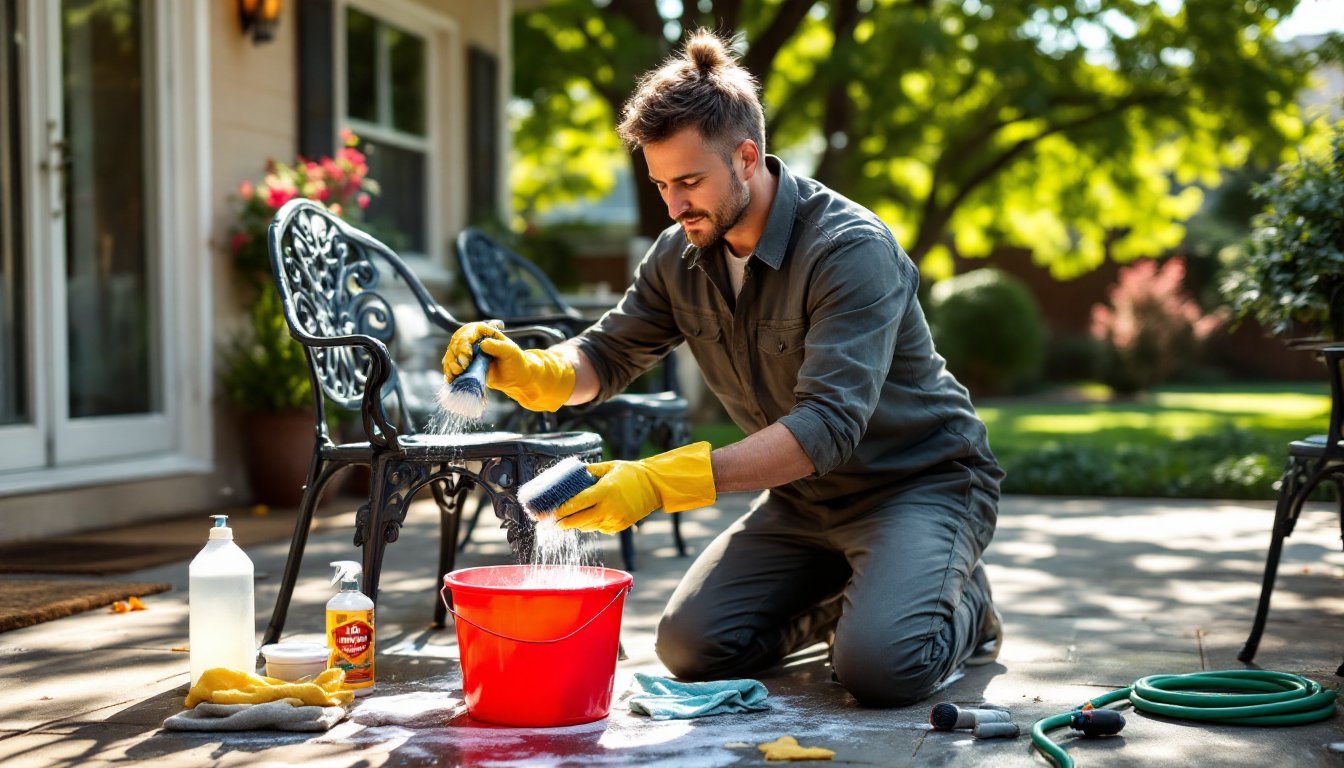
Use a garden hose to wet down all surfaces. This loosens caked-on dirt and prepares the metal for soap. Pay attention to joints, welds, and undersides where grime collects.
Step 2: Apply soapy water.
Mix 2-3 tablespoons of dish soap in a bucket of warm water. Dip a soft-bristle brush or sponge and scrub the furniture in sections, frame, seat, backrest, legs. Dish soap cuts through grease, pollen, and bird droppings without damaging finishes. For intricate scrollwork or mesh seating, an old toothbrush gets into tight spots.
Step 3: Rinse thoroughly.
Hose off all soap residue. Soap left to dry leaves a film that attracts more dirt. Check crevices and drainage holes to make sure no suds remain.
Step 4: Dry the furniture.
Wipe down with microfiber cloths or let air-dry in the sun. Standing water in joints or hollow tubing can lead to rust, so tip chairs and tables to drain trapped moisture.
This basic wash handles most seasonal grime. For furniture that hasn’t been cleaned in years, or pieces with rust and stains, continue to the subsections below.
Removing Rust from Metal Outdoor Furniture
Rust is the enemy of steel and wrought iron. Aluminum doesn’t rust, but it oxidizes into a white, chalky coating that’s similarly unsightly.
For light surface rust:
Make a paste of baking soda and water (3:1 ratio). Apply to rust spots and scrub with fine steel wool or a rust eraser sponge. The mild abrasive lifts rust without gouging the underlying metal. Rinse and dry completely.
Alternatively, spray or soak the area with white vinegar. Let it sit for 10-15 minutes, vinegar’s acidity dissolves rust. Scrub with a brush, rinse, and dry. This method works well on cast aluminum and won’t scratch powder coating.
For moderate to heavy rust:
If rust has pitted the metal or flaked away paint, use a wire brush to remove loose rust and paint. Follow with 120-grit sandpaper to smooth the area down to bare metal. Wipe clean with a damp cloth.
Apply a rust converter (available at hardware stores) per label directions. These products chemically transform rust into a stable, paintable surface. After it cures, usually 24 hours, prime with an oil-based rust-inhibiting primer, then topcoat with exterior metal paint. Spray paint gives the smoothest finish on ornate pieces: brush-on works for flat surfaces.
For aluminum oxidation:
Aluminum’s white oxidation isn’t structural, but it looks bad. Scrub with a paste of baking soda and water, or use a dedicated aluminum cleaner (Bar Keeper’s Friend works). Rinse and dry. For ongoing protection, apply a coat of automotive paste wax, it seals the surface and makes future cleaning easier.
Safety note: Wear gloves and eye protection when scrubbing rust. Fine rust particles are irritating. If sanding, use a dust mask to avoid inhaling metal dust.
Dealing with Stubborn Stains and Mildew
Metal furniture in shaded or humid areas grows mildew, black or green spots that soap alone won’t budge.
For mildew:
Mix 1 part white vinegar to 1 part water in a spray bottle. Spray affected areas and let sit for 15 minutes. Scrub with a brush, rinse, and dry. Vinegar kills mildew spores and is safer than bleach around plants and grass. Avoid using bleach on powder-coated or painted finishes: it can discolor or damage the coating.
If mildew persists, make a paste of baking soda and hydrogen peroxide (3% household strength). Apply, let sit for 10 minutes, scrub, rinse, and dry.
For hard water stains and mineral deposits:
Spray with undiluted white vinegar and let sit for 20 minutes. The acid dissolves calcium and lime buildup. For especially stubborn areas, homeowners can consult cleaning advice from experts who recommend similar methods for outdoor surfaces. Scrub with a sponge, rinse, and dry.
For tree sap or sticky residue:
Rub with a cloth dampened in rubbing alcohol or WD-40. These solvents break down sap without harming most finishes. Follow with soapy water to remove any oily residue, then rinse and dry.
For paint drips or overspray:
Use a plastic scraper to gently lift dried paint without scratching the metal. For latex paint, warm soapy water often softens it enough to scrub off. Oil-based paint may need mineral spirits applied with a cloth, test on an inconspicuous spot first to ensure it doesn’t damage the finish.
Protecting and Maintaining Your Metal Furniture After Cleaning
Clean furniture won’t stay that way without a protective layer and a maintenance routine.
Apply a protective coating:
Once the furniture is completely dry, apply automotive paste wax or a furniture-grade wax. Wax creates a barrier against moisture, UV, and dirt. Rub a thin, even coat over all surfaces with a soft cloth, let it haze (5-10 minutes), then buff to a shine. Reapply wax every 3-4 months, or after heavy rain.
For wrought iron or steel that’s been repainted, the new paint is the protection. Let paint cure per label directions (often 7 days) before exposing it to moisture or heavy use.
Cover or store furniture off-season:
Furniture covers (breathable, water-resistant fabric) shield pieces from rain, snow, and UV during winter or extended periods of disuse. Make sure covers fit snugly but allow airflow, trapped condensation promotes rust. Alternatively, store furniture in a shed or garage if space allows.
Routine maintenance:
Wipe down furniture monthly with a damp cloth to remove surface dust and pollen. This quick touch-up prevents buildup and makes deep cleaning less frequent. Inspect joints, welds, and painted areas for early signs of rust or damage. Touch up chips or scratches immediately with matching paint or a rust-inhibiting primer to stop corrosion before it spreads.
Keep furniture elevated off direct ground contact where possible. Legs sitting in pooled water or damp soil rust faster. Rubber or plastic leg caps (available at hardware stores) provide a moisture barrier and protect deck surfaces from scratches.
Seasonal deep clean:
Plan on a full wash and wax twice a year, spring and fall are ideal. This rhythm keeps finishes intact and metal looking new for years. For homeowners seeking additional home organization and maintenance strategies, a regular schedule prevents small issues from becoming expensive replacements.
When to call a pro:
If rust has compromised structural welds, or if powder coating is peeling extensively, professional refinishing may be more cost-effective than DIY touch-ups. Welders can repair broken joints: powder coating shops can strip and recoat furniture for a factory-fresh finish. Get estimates, sometimes it’s worth restoring a quality piece rather than buying new.
Conclusion
Metal patio furniture lasts for decades with regular cleaning and simple upkeep. A few hours spent scrubbing, treating rust, and applying wax translates to years of reliable outdoor seating. Stay ahead of the grime, tackle rust when it’s still surface-level, and protect finishes before winter hits. The payoff is furniture that looks sharp and functions well season after season.