
Table of Contents
ToggleIndustrial living room furniture brings the grit and character of old factories and warehouses into modern homes. It’s a design style rooted in exposed materials, think raw steel, reclaimed wood, and visible hardware, that skips the fussy details for clean lines and honest construction. This aesthetic works equally well in urban lofts and suburban homes, offering durability and timeless appeal. Whether someone’s furnishing a brand-new space or refreshing an existing room, understanding the core elements of industrial design helps in selecting pieces that deliver both function and style.
Key Takeaways
- Industrial living room furniture combines exposed metal frames, reclaimed wood, and visible hardware to create a durable, timeless aesthetic that works in urban lofts and suburban homes alike.
- Quality industrial furniture uses solid wood, welded steel (typically 16-gauge or heavier), and proper joinery like mortise-and-tenon construction, not screws or thin framing.
- Essential anchor pieces include coffee tables with 1.5 to 2-inch thick wood tops, leather sofas with kiln-dried hardwood frames, and accent chairs that showcase visible construction details.
- Measure your space carefully and leave at least 30 inches of walkway space around furniture—industrial pieces tend to be bulky, so accurate proportions prevent overwhelming the room.
- Layer textures with rugs, throw blankets, and plants to soften raw materials, balance distressed pieces with sleek elements, and stick to 3–4 neutral colors (charcoal, brown, black, plus one accent) for a cohesive look.
- Focus on functional design with open shelving and multi-purpose pieces, embrace exposed architectural elements like brick or ductwork, and use strategic layered lighting with Edison bulbs and metal fixtures.
What Defines Industrial Living Room Furniture?
Industrial furniture draws inspiration from the utilitarian design of early 20th-century factories and warehouses. The style emerged when artists and urban dwellers repurposed commercial buildings into living spaces, bringing along the rugged fixtures and raw materials that defined those environments.
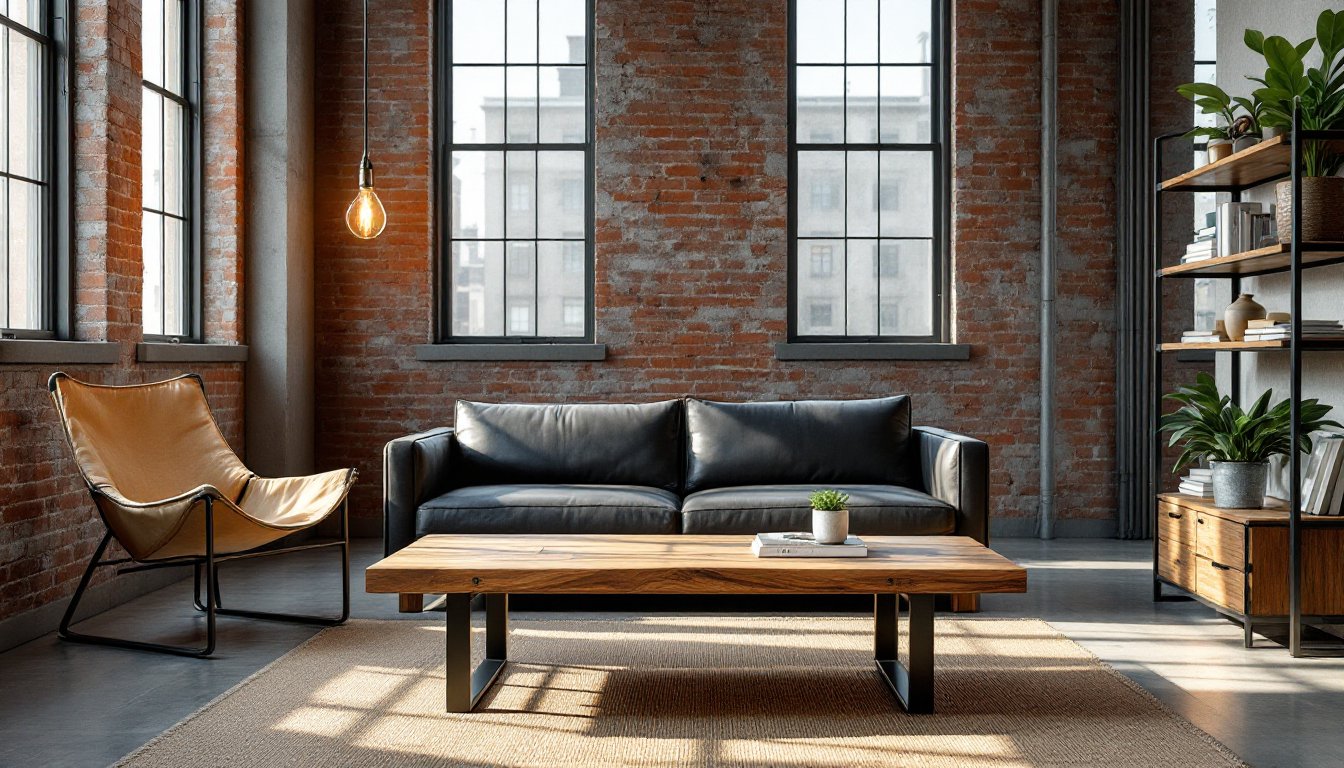
Key characteristics include exposed metal frames, often in steel or iron with a matte black, brushed nickel, or distressed finish. Wood components typically feature reclaimed or distressed surfaces, barn wood, salvaged oak, or pine with visible grain and imperfections. Hardware remains visible rather than concealed: bolts, rivets, welds, and metal corner brackets become design elements rather than hidden fasteners.
Color palettes lean neutral and earthy. Grays, blacks, browns, and warm metallics dominate, with occasional pops of leather tan or deep rust. Finishes tend toward matte or satin rather than high gloss, reinforcing the understated, no-nonsense aesthetic.
Construction quality matters in industrial pieces. Authentic designs use solid wood (not veneered particleboard) and welded steel rather than thin tube framing. Joints should be either mortise-and-tenon in wood sections or properly welded in metal frames, not just screwed together. Weight is a good indicator: quality industrial furniture feels substantial because it uses thicker gauge steel (typically 16-gauge or heavier for table frames) and hardwood lumber.
The style also embraces functional design that prioritizes practicality. Furniture often includes open shelving, visible storage, and multi-purpose features, like coffee tables with built-in magazine racks or side tables doubling as small tool carts.
Essential Industrial Furniture Pieces for Your Living Room
Building an industrial living room starts with selecting anchor pieces that establish the style without overwhelming the space. Focus on foundational furniture first, then layer in accents.
Coffee Tables and Side Tables
Coffee tables in industrial style typically combine a thick wood top with a metal frame. Look for tables using 1.5 to 2-inch thick solid wood planks, reclaimed pine, oak, or walnut work well. The metal base should use square or rectangular tubing (not round pipes, which read more farmhouse than industrial) in a powder-coated black or gunmetal finish.
Common dimensions for coffee tables range from 48 to 54 inches long, 24 to 30 inches wide, and 16 to 18 inches tall, standard proportions that work with most sofa heights. Some designs incorporate a lower shelf for storage, using either wood slats or expanded metal mesh.
Side tables follow similar construction: metal frames with wood or metal tops. Nesting tables work particularly well in industrial spaces, offering flexibility for entertaining. For smaller rooms, consider tables with caster wheels, they add authentic factory character while improving mobility.
When selecting tables, check the joinery. Wood tops should be secured with bolts running through the metal frame, not just screws into the wood grain. Metal welds should be clean and ground smooth, especially on visible corners.
Seating Options: Sofas and Accent Chairs
Sofas anchor the seating area. Industrial-style sofas typically feature leather or heavy canvas upholstery rather than plush fabrics. Top-grain leather in brown, tan, or charcoal ages well and fits the aesthetic. If leather exceeds the budget, look for polyester blends with a matte finish in similar tones.
Frame construction matters more than surface style. Quality sofas use kiln-dried hardwood frames (maple, oak, or ash) with corner blocks glued and screwed at joints. Avoid sofas with frames made from softwoods or engineered lumber, they won’t support years of use. The legs and exposed frame elements often incorporate metal or wood with a dark stain.
Cushion fill affects both comfort and longevity. High-density foam (1.8 to 2.0 pounds per cubic foot) holds up better than standard foam. Some industrial sofas use down-wrapped foam for a slightly softer feel while maintaining structure.
Accent chairs provide visual interest and additional seating. Classic options include leather club chairs with nailhead trim or metal-framed chairs with canvas sling seats. Bar-height stools with metal frames and wood seats work well for spaces with open floor plans. Look for chairs with visible construction details, exposed bolts, welded joints, or riveted corners reinforce the industrial theme.
For rooms where curating furniture involves mixing styles, one strong industrial chair can anchor an eclectic collection without requiring a full room overhaul.
How to Choose the Right Industrial Furniture for Your Space
Selecting industrial furniture requires balancing style with practical considerations like room size, existing architecture, and daily use patterns.
Start by measuring the room carefully. Sketch a basic floor plan with dimensions, marking door swings, windows, radiators, and electrical outlets. Industrial furniture tends to be bulky, a metal-framed sofa might be 38 inches deep compared to 34 inches for a standard sofa, so accurate measurements prevent buying pieces that overwhelm the space.
Proportion matters. In a 12-by-14-foot living room, a 90-inch sectional leaves little room to move. A 72-inch sofa with a pair of accent chairs often works better. Leave at least 30 inches of walkway space around furniture groupings and 18 inches between a coffee table and seating.
Consider weight and floor load. Solid wood and steel furniture is heavy. A large industrial coffee table can weigh 80 to 120 pounds. This isn’t a concern for most modern construction, but upper-floor apartments in older buildings might have limitations. If moving furniture frequently, look for pieces with integrated casters or opt for lighter designs.
Match the finish to existing elements. If the room has warm wood floors in oak or cherry, furniture with walnut or reclaimed pine tops creates cohesion. For spaces with painted wood or tile, darker finishes like espresso-stained wood or charcoal metal work well. Avoid mixing more than two metal finishes in one room, stick with black and one metallic accent (brushed nickel, antique brass, or copper).
Assess daily wear. Leather and metal clean easily and stand up to kids and pets better than light-colored fabrics. If the living room doubles as a workspace or dining area, look for furniture with stain-resistant finishes. Many industrial pieces use polyurethane-sealed wood tops that resist water rings and minor scratches.
For homes with varied furniture types already in place, introducing industrial pieces gradually works better than a complete overhaul. Swapping a coffee table or adding one metal-and-wood bookshelf tests the aesthetic without full commitment.
Styling Tips: Creating a Cohesive Industrial Living Room
Industrial living rooms succeed when the style feels intentional rather than accidental. A few deliberate choices prevent the space from looking like a warehouse clearance sale.
Layer textures to add warmth. Industrial materials, metal and wood, can feel cold without softening elements. Add a wool or jute area rug (8-by-10-foot minimum for most living rooms) to define the seating area and absorb sound. Throw blankets in chunky knits or faux fur introduce tactile contrast. Leather or canvas pillows in earth tones keep the look grounded.
Balance raw and refined. Too much distressed metal and reclaimed wood creates visual clutter. Pair rough-hewn pieces with cleaner elements: a sleek metal floor lamp next to a chunky wood coffee table, or a smooth leather sofa beside a weathered side table. This contrast keeps the style from feeling one-note.
Control the color palette. Stick with three to four main colors. A common scheme uses charcoal gray, warm brown, black, and a single accent like rust orange or deep teal. Walls in off-white, light gray, or even exposed brick provide a neutral backdrop. Avoid pastels and overly bright colors, they clash with the industrial aesthetic’s inherent moodiness.
Expose architectural elements when possible. If the space has brick walls, consider leaving them unpainted or applying a clear sealant. Exposed ductwork, pipes, or wooden beams reinforce the industrial theme without adding furniture. In homes without these features, large-scale black-and-white photography or metal wall art mimics the look.
Use lighting strategically. Industrial spaces benefit from layered lighting: overhead fixtures (think Edison bulbs in cage pendants or track lighting), task lighting (adjustable metal desk lamps or floor lamps with articulated arms), and ambient lighting (wall sconces with exposed bulbs). Dimmer switches help adjust mood. Many top furniture choices for industrial rooms include integrated lighting or wire channels for lamps.
Keep it functional. Industrial design celebrates utility, so embrace practical storage. Open metal shelving units display books and objects while reinforcing the aesthetic. Vintage toolboxes or metal storage trunks serve as side tables with hidden storage. Avoid overly decorative items, stick with objects that have clear purpose or visual weight.
Mix in greenery. Plants soften hard edges and add life to neutral palettes. Large-leaf varieties like fiddle-leaf figs or rubber plants work well in industrial spaces. Display them in simple terra-cotta pots or galvanized metal planters rather than ornate ceramics.
For those exploring design inspiration, industrial rooms benefit from restraint. One standout furniture piece, a dramatic steel-and-wood bookshelf or a vintage leather sofa, often makes a stronger impression than filling every corner. Let the furniture breathe, and the style will speak for itself. Many designers emphasize that cohesive spaces balance function with aesthetic, as seen in advice from interior styling resources focused on room-by-room design.
Conclusion
Industrial living room furniture offers a durable, stylish foundation that adapts to various tastes and lifestyles. By focusing on quality materials, honest construction, and thoughtful styling, homeowners can create spaces that feel both rugged and refined. The key lies in balancing raw elements with warmth, selecting pieces that fit the room’s scale, and letting the furniture’s inherent character shine without overloading the space.