
Table of Contents
ToggleWalnut bedroom furniture brings a distinct warmth and sophistication that’s tough to match with other wood species. Its rich, chocolate-brown tones and prominent grain patterns make it a natural fit for modern design, clean lines get elevated by material quality rather than ornate detailing. If you’re furnishing or refreshing a bedroom, walnut offers durability and visual weight without overwhelming a space. Unlike trendy finishes that date quickly, solid walnut or quality veneer pieces age gracefully and hold resale value. This guide walks through why walnut works, which pieces matter most, how to style them effectively, and what maintenance they actually require.
Key Takeaways
- Modern walnut bedroom furniture combines durability with sophisticated aesthetics, offering rich chocolate-brown tones and natural grain patterns that pair seamlessly with contemporary design elements like steel and glass.
- Essential pieces include a low-profile walnut platform bed frame with solid joinery, a horizontal dresser with dovetail drawers, and proportional nightstands—all anchors for a cohesive modern bedroom layout.
- Styling walnut furniture effectively requires restraint with one or two accent colors, warm neutral wall tones, and layered textures like linen, wool, and concrete to prevent a cold appearance.
- Walnut’s natural durability (Janka hardness of 1,010 lbf) and FSC-certified sourcing from managed forests make it both a practical and environmentally responsible choice for long-term investment.
- Maintenance is straightforward—dust weekly with microfiber cloth, apply furniture oil or wax every 6–12 months depending on finish type, and protect surfaces with coasters and felt pads to prevent water rings and heat marks.
- Warm LED lighting (2700K–3000K) enhances walnut’s natural tones, while pairing the wood with lighter species like white oak or maple creates visual contrast without clashing with competing dark woods.
Why Walnut Is the Perfect Choice for Modern Bedrooms
Walnut stands out for its natural color variation, you’ll see everything from golden sapwood to deep purplish-brown heartwood in a single board. That organic variation keeps modern pieces from looking sterile or monotonous. The Janka hardness rating sits around 1,010 lbf for American black walnut, making it harder than cherry or mahogany but softer than maple or oak. It’s durable enough for daily bedroom use without being brittle.
The grain structure runs straight to slightly wavy, and walnut takes oil and clear finishes exceptionally well. Modern manufacturers often use oil-rubbed or matte lacquer finishes to highlight the natural figure rather than hiding it under heavy stain. That’s a key difference from traditional furniture that might obscure wood character with dark, opaque coatings.
Walnut pairs cleanly with materials common in contemporary design: steel hairpin legs, tempered glass tops, leather upholstery, and linen textiles. The wood’s neutral-warm tone bridges cool grays and warm beiges, so it adapts to shifting decor without clashing. It also photographs well under both warm and cool LED lighting, a practical consideration if you’re documenting projects or resale.
From a sustainability angle, American black walnut (Juglans nigra) is typically harvested from managed forests in the Midwest and Appalachia. Responsible manufacturers source from suppliers certified by the Forest Stewardship Council (FSC) or Sustainable Forestry Initiative (SFI). Veneer-core plywood with walnut face veneer is a cost-effective and resource-efficient alternative to solid walnut for case goods like dressers, provided the core is quality hardwood plywood (not particleboard).
Essential Walnut Furniture Pieces for Your Bedroom
Walnut Bed Frames and Headboards
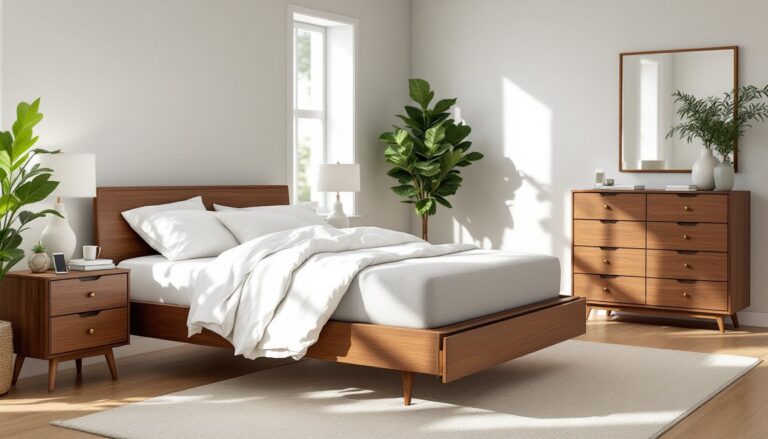
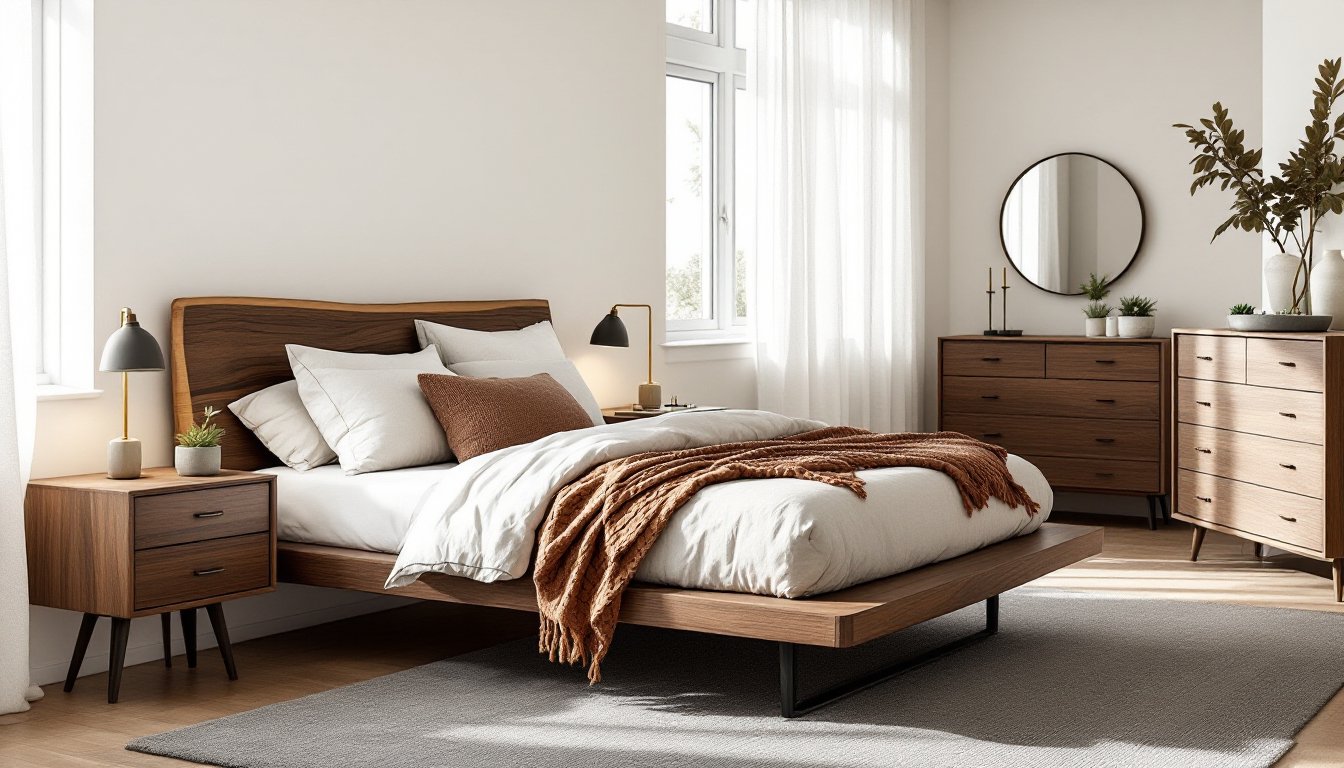
A platform bed frame in walnut is the anchor piece. Modern designs typically feature a low profile, 12″ to 16″ from floor to mattress top, which emphasizes horizontal lines and makes ceilings feel higher. Look for frames with solid walnut rails and legs: the platform deck itself can be walnut-veneered plywood or slats, which is structurally sound and lighter than solid panels.
Headboard options range from simple live-edge slabs (typically 1.5″ to 2″ thick) to paneled designs with inset upholstery. Live-edge headboards showcase the tree’s natural contour and work well in Scandinavian or Japandi interiors. Upholstered panels in linen or leather add comfort for sitting up in bed and soften the look if the room has multiple hard surfaces. Floating headboards mounted directly to the wall eliminate floor footprint and simplify cleaning underneath.
For couples or taller individuals, verify the frame supports a queen (60″ × 80″) or king (76″ × 80″) mattress without overhang. Most modern walnut frames use mortise-and-tenon or dowel joinery for the rails, skip frames that rely solely on metal brackets, which loosen over time. Designs incorporating midcentury-inspired tapered legs remain popular because they reduce visual bulk.
Walnut Dressers and Nightstands
Dressers in walnut should feature dovetail drawer construction, through dovetails or half-blind dovetails, at front and back corners. This joint handles the racking stress of daily opening better than butt joints with screws or staples. Drawer boxes are typically maple or birch (lighter and more stable than walnut for moving parts), with full-extension ball-bearing slides rated for 75–100 lbs.
Modern dressers often have a horizontal orientation (wider than they are tall) to keep sight lines low. Six- to eight-drawer models measuring roughly 60″ W × 30″ H × 18″ D provide ample storage without dominating wall space. Integrated pulls, routed finger grooves or edge reveals, maintain clean faces, though discrete bar pulls in brushed brass or matte black add a jewelry-like detail.
Nightstands should be proportional to the bed height. The top surface typically lands 2″ to 4″ above the mattress for easy reach. Two-drawer or single-drawer-plus-shelf configurations work well: avoid overly small stands (less than 18″ W) that tip easily if you lean on them. Soft-close drawer glides are worth the upcharge, they reduce slamming and extend hardware life.
Design Tips for Styling Modern Walnut Bedroom Furniture
Walnut’s inherent richness means restraint pays off elsewhere. Stick to one or two accent colors in textiles, muted terracotta, slate blue, or forest green work well, and keep wall colors neutral. Warm whites (with a slight cream or gray undertone) prevent the room from feeling too dark, especially in spaces with limited natural light.
Layering textures prevents a modern bedroom from reading as cold. Pair smooth walnut surfaces with chunky knit throws, linen duvet covers, wool area rugs (8′ × 10′ minimum for a queen bed), and matte ceramic lamps. Mixing materials, a walnut dresser topped with a round concrete tray or a steel-framed mirror, adds depth without clutter.
Pay attention to negative space. Modern design relies on breathing room, so leave at least 24″ of clearance on each side of the bed for traffic flow, and avoid crowding dressers with too many decorative objects. Three to five curated items (a table lamp, a small plant, and a tray for jewelry) look intentional: ten items look chaotic.
For lighting, consider warm LED bulbs (2700K–3000K) in bedside lamps and overhead fixtures. Cooler color temperatures (4000K+) can make walnut look washed out. Adjustable swing-arm wall sconces save nightstand space and provide task lighting for reading. Many interior design resources emphasize the importance of lighting temperature when showcasing natural wood tones.
If you’re mixing wood tones, walnut pairs better with lighter species (white oak, ash, or maple) than with competing dark woods like mahogany or espresso-stained pieces. A white oak accent chair or maple picture frames create contrast without clashing. Keep metal finishes consistent, if your bed frame has matte black hardware, repeat that in drawer pulls and light fixtures.
Caring for and Maintaining Your Walnut Furniture
Walnut’s natural oils give it some built-in moisture resistance, but regular maintenance keeps it looking sharp. Dust weekly with a microfiber cloth, never use feather dusters, which just redistribute particles. For deeper cleaning, dampen (not soak) a cloth with water and a drop of mild dish soap, wipe in the direction of the grain, then dry immediately with a separate cloth.
Every six to twelve months, apply a furniture oil or wax depending on the factory finish. Oil-finished walnut (Danish oil, tung oil, or linseed oil) benefits from a fresh coat of the same product. Rub a thin layer along the grain with a lint-free cloth, let it penetrate for 15–20 minutes, then buff off excess. Wax-finished pieces should get paste wax (like Renaissance Wax or Howard Feed-N-Wax) applied sparingly and buffed to a low sheen. Polyurethane or lacquer finishes need no oil, just clean and occasionally polish with a product designed for sealed wood.
Protect surfaces from heat and moisture. Use coasters under drinks, trivets under hot items, and felt pads under lamps or decor. Water rings and heat marks are repairable on oil finishes (light sanding with 320-grit followed by re-oiling), but they’re permanent on lacquer unless you strip and refinish.
Sunlight will darken walnut over time, shifting the color from chocolate-brown toward a richer amber or honey tone. It’s a natural aging process, not damage, but it can create uneven patina if furniture is partially covered. Rotate decor items occasionally and use window treatments to diffuse direct sun during peak hours. Understanding how design trends evolve helps anticipate how your walnut pieces will look as they age in different lighting conditions.
Scratches are inevitable with daily use. Fine surface scratches often blend in as the wood develops patina. Deeper gouges can be filled with color-matched wax sticks (available at hardware stores) or walnut sawdust mixed with wood glue, then sanded flush once dry.
Conclusion
Walnut bedroom furniture delivers lasting style without demanding constant upkeep. Focus on well-constructed pieces with solid joinery, pair them with restrained color palettes and mixed textures, and commit to simple seasonal maintenance. The material’s natural warmth and durability make it a practical foundation for a bedroom that grows with your tastes rather than against them.