
Table of Contents
ToggleStriped patio furniture brings a timeless nautical charm that works whether you’re steps from the shore or landlocked in the suburbs. The clean lines, crisp contrast, and visual rhythm of stripes can turn a bland deck into a space that feels curated without looking fussy. But choosing the right patterns, fabrics, and colors takes more than eyeballing what looks good in a catalog. This guide covers everything from fabric performance to pattern mixing, so your outdoor seating area stands up to UV, rain, and years of summer barbecues.
Key Takeaways
- Striped patio furniture combines timeless nautical style with practical design benefits, forgiving patterns that hide dirt and visually lighten bulky seating pieces.
- Stripe pattern width matters: cabana stripes work best on large loungers and sofas, while ticking stripes suit smaller furniture like dining chairs and ottomans.
- Solution-dyed acrylic fabric (like Sunbrella) is the gold standard for striped outdoor cushions, offering 1,000+ hours of UV resistance despite costing more than polyester alternatives.
- Navy and white remains the most versatile color combination for striped patio furniture, pairing seamlessly with most outdoor settings, though black-and-white offers a modern edge and earth tones blend with natural landscaping.
- Layer striped furniture with solid-colored pillows, complementary patterns at different scales, and natural textures like wood and jute to create visual depth without overwhelming the space.
- Regular maintenance including weekly debris removal, immediate spot-cleaning, and seasonal deep-cleaning keeps striped cushion fabrics looking fresh for multiple years of outdoor use.
Why Striped Patio Furniture Never Goes Out of Style
Stripes have been a staple of outdoor decor since the mid-century boom in casual patio living, and they’ve outlasted countless design trends for good reasons. The pattern is rooted in maritime and awning traditions, which means it’s inherently tied to outdoor functionality, not just aesthetics.
First, stripes are forgiving. Minor dirt, pollen smudges, or slight fading blend into the pattern better than they do on solid fabrics. Second, they visually break up large cushion surfaces, making bulky seating feel less heavy. A deep sofa with thick cushions can look imposing in solid navy: add white stripes and it suddenly feels approachable.
Third, stripes scale. Narrow pinstripes work on small bistro chairs without overwhelming the frame, while wide cabana stripes hold their own on oversized loungers or sectionals. This flexibility means you’re not locked into a specific furniture size or style.
Finally, the pattern reads as intentional. Even budget furniture looks more pulled-together with striped cushions. That doesn’t mean stripes are a shortcut, cheap fabric will still fade and sag, but the pattern itself carries an inherent sense of design confidence that plain colors often lack.
Popular Stripe Patterns for Outdoor Furniture
Not all stripes are created equal, and the pattern width and orientation make a big difference in how your patio reads visually.
Classic cabana stripes feature wide bands (typically 3 to 5 inches each) in two contrasting colors. These bold, even stripes are the most traditional choice and work best on larger pieces like chaise lounges, daybeds, or deep-seat sofas. They make a strong statement but can overwhelm small chairs or narrow benches.
Ticking stripes are narrower, usually ½ inch to 1 inch wide, and often appear in a 2:1 ratio (one wide stripe, one narrow). They’re subtler than cabana stripes and adapt well to smaller-scale furniture like dining chairs or ottomans. Ticking tends to skew more farmhouse or cottage in style.
Awning stripes are similar to cabana but often include a slightly irregular hand or a third neutral accent color. These mimic commercial awning fabric and add a European café vibe. Many outdoor spaces showcased in garden design publications feature this type for its relaxed elegance.
Horizontal vs. vertical orientation matters more than most people think. Horizontal stripes widen a piece visually, making a narrow loveseat feel more substantial. Vertical stripes add perceived height, which can be useful on low-slung modern frames. On chair backs, vertical stripes often look more tailored: on seat cushions, horizontal is more common and easier to align during installation.
Choosing the Right Fabric for Striped Outdoor Cushions
A great stripe pattern means nothing if the fabric can’t handle your climate. Outdoor cushion fabrics need to resist UV degradation, mildew, and moisture, and not all do it equally well.
Solution-dyed acrylic (brands like Sunbrella are common examples) remains the gold standard. The color is embedded into the fiber before it’s woven, so fading is minimal even after years of full sun. Expect 1,000+ hours of UV resistance and excellent water repellency. These fabrics typically cost $25–$45 per yard, but the longevity justifies the expense for most climates.
Polyester blends are cheaper ($12–$20 per yard) but fade faster, especially in intense sun. They’re fine for covered patios or regions with mild UV exposure, but don’t expect them to last more than two to three seasons in direct Southern or Southwestern sun.
Olefin (polypropylene) sits in the middle. It’s naturally resistant to moisture and mildew, and it’s colorfast, but it can feel slightly rougher than acrylic. It’s a solid budget-friendly choice for humid climates where mildew is the bigger enemy than UV.
Always check the fabric weight. Outdoor cushion fabric should be at least 9 ounces per square yard to resist sagging and tearing. Lighter fabrics might look fine initially but won’t hold up to regular use or wind.
Finally, make sure the fabric is water-resistant, not just water-repellent. Repellent coatings wear off. Resistant fabrics are engineered at the fiber level to shed water, which keeps the cushion core (foam or fill) from becoming a mildew sponge.
Best Color Combinations for Striped Patio Pieces
The stripe pattern gets attention, but the color palette sets the mood and dictates how well the furniture integrates with the rest of your outdoor space.
Navy and white is the default nautical choice for good reason: it’s crisp, high-contrast, and pairs with nearly any secondary color. It works in coastal settings but also holds up in suburban backyards where you want a clean, classic look. Navy hides dirt better than lighter blues.
Black and white or charcoal and white offer a more modern, graphic punch. These combinations read as contemporary rather than beachy and work especially well with metal or teak frames. Be aware that black stripes can show dust and pollen more readily in dry climates.
Gray and white tones down the contrast for a softer, more transitional look. Light gray with off-white is forgiving and versatile, fitting into western outdoor living schemes as easily as East Coast porches.
Jewel tones with white, emerald and white, sapphire and white, or coral and white, add personality without going full tropical. These work if your home’s exterior or hardscaping already has a color anchor (say, coral trim or a blue front door).
Earth tones like tan and cream, or olive and sand, bring in a more organic, garden-focused palette. They’re less about the beach and more about blending with surrounding greenery. This approach works if your patio is heavily planted or overlooks natural landscaping.
Avoid mixing too many stripe colors in one seating area unless you’re confident in your eye. Stick to one dominant stripe combo and vary it through solids or different patterns (like a geometric pillow) rather than competing stripes.
Mixing Striped Furniture with Other Outdoor Decor
Stripes are bold, so layering them with other patterns and textures requires a light touch. Done right, it adds depth. Done wrong, it’s visual chaos.
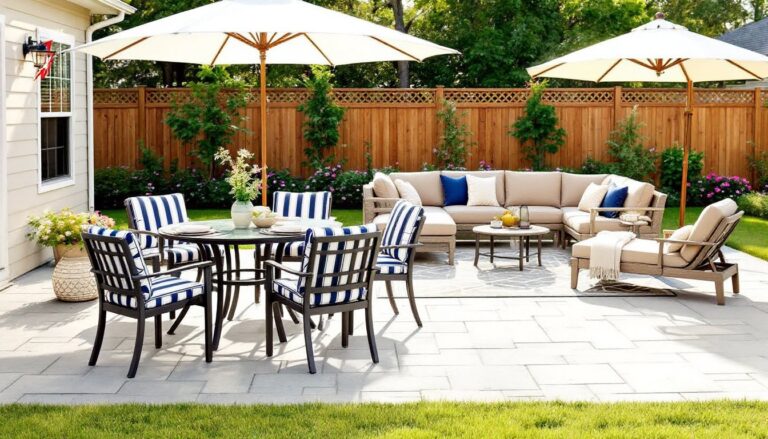
Start with a foundation. If your main seating, sofa, loveseat, or lounge chairs, features stripes, keep your dining chairs or side chairs in a solid that pulls one color from the stripe. This grounds the space and prevents pattern overload.
Layer in one complementary pattern, and make sure it’s at a different scale. A large cabana stripe on the sofa pairs well with a small-scale geometric or lattice print on throw pillows. Avoid mixing two stripe patterns unless one is significantly finer (like pairing wide cabana with narrow ticking).
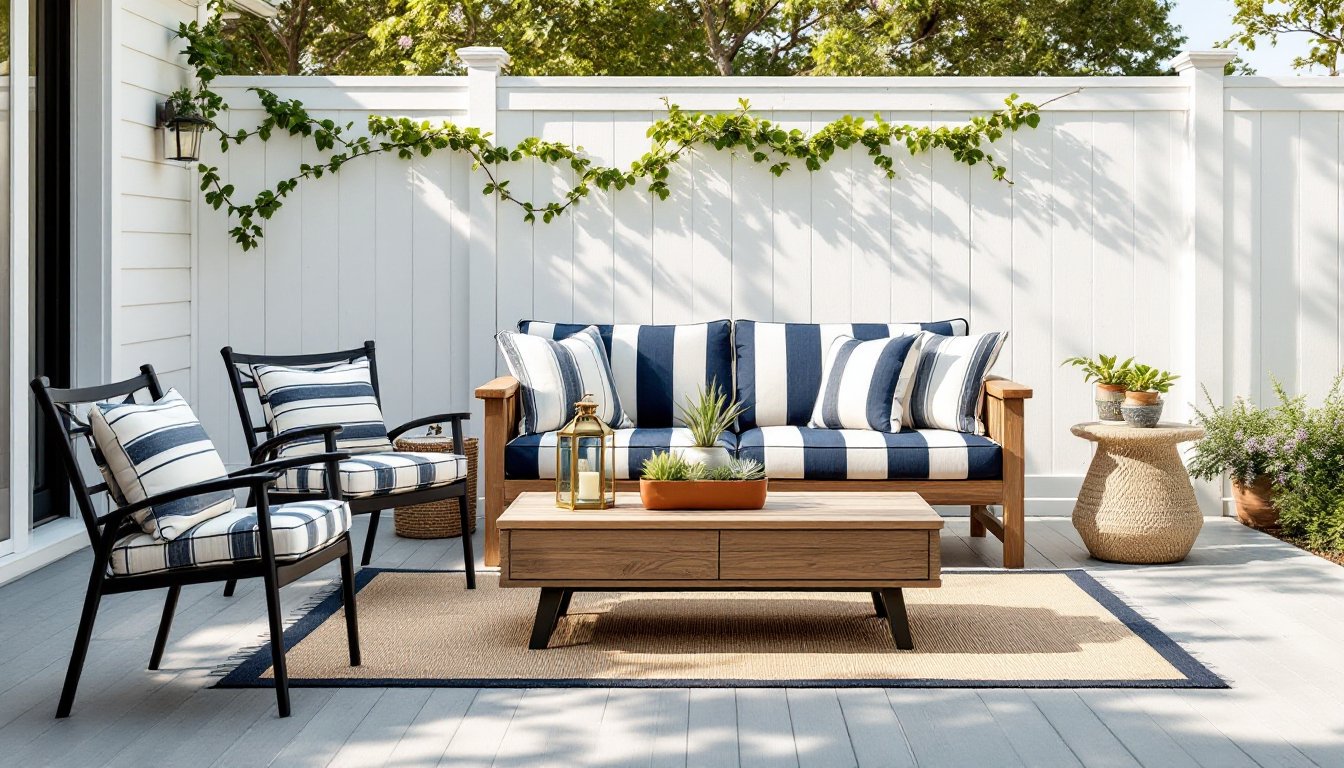
Use solids strategically. Solid-colored throw pillows in the stripe’s accent color tie everything together without adding visual noise. A solid navy pillow on a navy-and-white striped sofa, for example, gives the eye a place to rest.
Texture matters as much as pattern. Pair smooth striped cushions with chunky knit throws, woven jute rugs, or raw wood side tables. The textural contrast makes the whole setup feel more intentional and layered. Collections like those featured in curated outdoor galleries often lean on this principle.
Outdoor rugs should either be solid or feature a pattern that doesn’t compete. A simple border rug or a subtle geometric in neutral tones works. Avoid striped rugs under striped furniture unless the orientations differ (horizontal stripes on furniture, vertical on the rug).
Metallic and natural accents, brass lanterns, terracotta planters, galvanized steel drink tubs, help break up the pattern and add warmth. Without these elements, an all-striped setup can feel flat or too themed.
Maintenance Tips to Keep Your Striped Furniture Looking Fresh
Striped fabrics hide some wear, but they’re not maintenance-free. Regular care extends the life of your investment and keeps colors crisp.
Brush off debris weekly. Use a soft brush or vacuum with an upholstery attachment to remove pollen, leaves, and dust before they embed into the weave. This is especially important in spring and fall.
Spot-clean spills immediately. Blot (don’t rub) with a clean cloth and mild soap solution (a few drops of dish soap in warm water). Most solution-dyed acrylics can handle this without staining, but letting spills sit invites mildew.
Deep-clean cushions twice a season in high-use areas. Remove covers if possible and wash according to fabric guidelines, most solution-dyed acrylics tolerate machine washing on gentle cycle with mild detergent. Air-dry only: heat can shrink or warp the fabric. If covers don’t come off, scrub with a soft brush, soapy water, and rinse thoroughly with a hose.
Store cushions during winter if you’re in a freeze-thaw climate. Even high-quality outdoor fabric degrades faster when exposed to snow, ice, and months of moisture. Use a deck box or indoor storage. If you leave frames outside, cover them with breathable furniture covers, never plastic tarps, which trap moisture.
Rotate cushions monthly. Flip and rotate seat and back cushions to ensure even sun exposure and wear. This prevents one side from fading faster than the other.
Check for mildew early. If you see dark spots forming, mix 1 cup bleach per gallon of water (for colorfast fabrics only, test a hidden spot first), apply with a sponge, let sit for 15 minutes, then rinse thoroughly. For non-bleach-safe fabrics, use a commercial mildew remover designed for outdoor textiles.
Avoid pressure washers on cushions. The force can break down fabric fibers and delaminate any backing. A garden hose with a spray nozzle provides enough pressure for rinsing without damage.
Conclusion
Striped patio furniture delivers lasting style when you choose the right pattern scale, invest in quality outdoor fabric, and commit to basic seasonal maintenance. It’s not about chasing a trend, it’s about building an outdoor space that feels finished and holds up to real use. Match your stripe choice to your furniture size, pick colors that tie into your home’s exterior, and don’t skip the fabric specs. Done right, those cushions will still look sharp three summers from now.