
Table of Contents
ToggleTall patio furniture has become a go-to solution for homeowners looking to maximize their outdoor living space without sacrificing comfort or style. Bar-height tables, elevated chairs, and pub-style sets create a natural gathering spot that feels more sophisticated than standard-height furniture. They also offer practical benefits: better sightlines across the yard, easier conversation flow, and less bending when serving food and drinks. Whether working with a compact balcony or a sprawling deck, tall furniture options provide functional flexibility that standard patio sets can’t match.
Key Takeaways
- Tall patio furniture with bar-height seating (28-30 inches) improves sightlines, reduces physical strain when standing, and creates a sophisticated entertaining zone that standard-height furniture can’t match.
- Bar-height tables must be paired with chairs or stools featuring integrated footrests positioned 8-10 inches below the seat to ensure comfort after extended use.
- Pedestal-base designs offer better stability and legroom for tall patio furniture on uneven surfaces compared to four-leg tables, making them ideal for outdoor entertaining setups.
- Material selection is critical for tall furniture durability—powder-coated aluminum resists rust but may tip in wind, while steel offers stability and synthetic wicker combines aesthetics with low maintenance.
- Position bar-height sets along the patio perimeter and mix them with lower-height seating to create distinct zones without cramped layouts or obstructed sightlines.
- Monthly cleaning with mild soap, annual wood sealing, spring hardware inspections, and proper off-season storage significantly extend the lifespan of tall patio furniture exposed to wind and weather.
What Is Tall Patio Furniture and Why Choose It?
Tall patio furniture typically refers to seating and table combinations with a seat height of 28 to 30 inches (bar height) or 24 to 26 inches (counter height), compared to standard patio chairs at 16 to 18 inches. The elevated design serves multiple purposes beyond aesthetics.
First, it creates vertical visual interest on a patio or deck, drawing the eye upward and making spaces feel larger. This is especially useful for small balconies or narrow decks where horizontal spread is limited. Second, the elevated seating position improves sightlines, guests can see over railings, landscaping, and low walls without standing.
From a practical standpoint, bar-height furniture reduces the physical strain of sitting down and standing up, a feature appreciated by older adults or anyone with mobility considerations. It also pairs naturally with outdoor kitchen islands, built-in bars, and serving counters, creating a cohesive entertaining zone.
One trade-off: tall furniture requires footrests or footbars on the chairs or stools. Without proper foot support, seating becomes uncomfortable after 20 to 30 minutes. Look for designs with integrated footrests positioned 8 to 10 inches below the seat.
Types of Tall Patio Furniture for Every Outdoor Area
Bar-Height Dining Sets
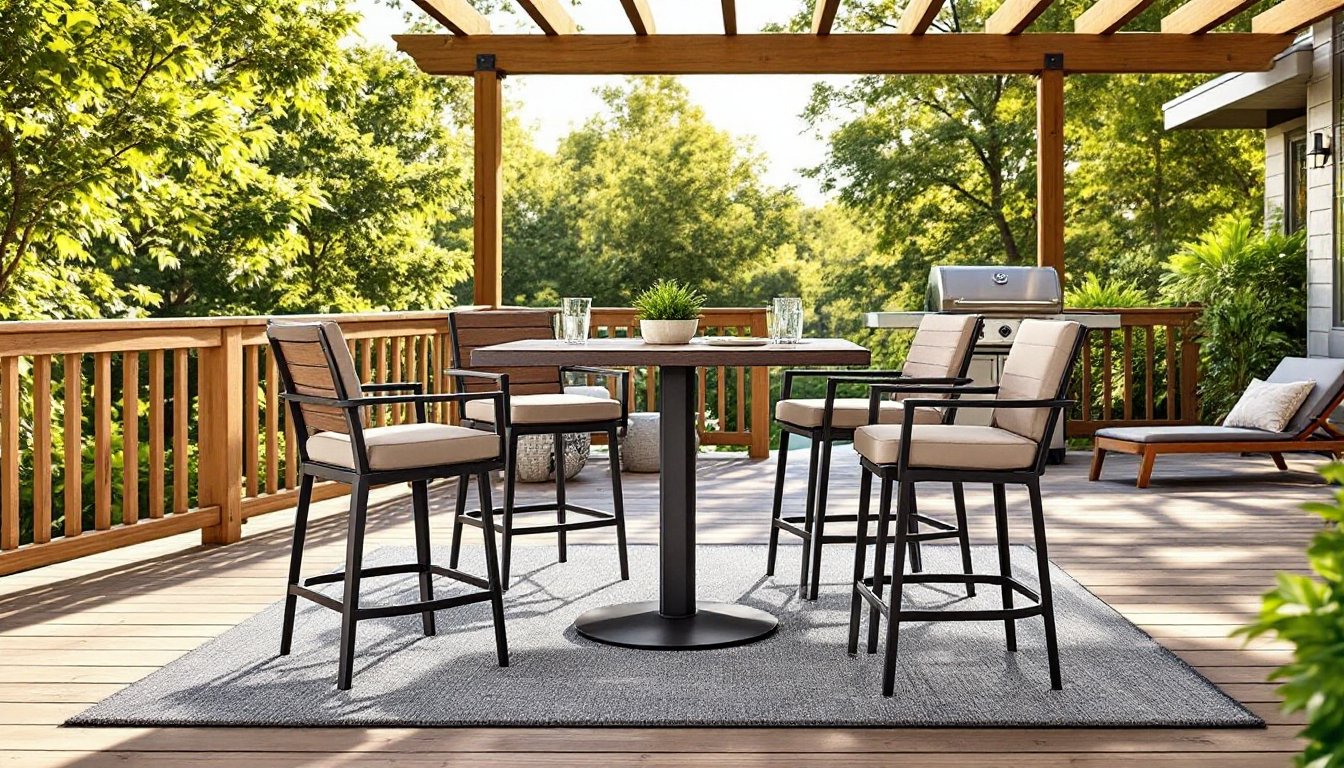
Bar-height dining sets feature tables at 40 to 42 inches tall paired with stools or chairs at 28 to 30 inches. These sets work well for patios used primarily for entertaining rather than long, seated meals. They’re ideal alongside outdoor kitchens, grills, or poolside bars.
Sets typically come in 3-piece, 5-piece, or 7-piece configurations. A 3-piece set (one table, two stools) fits tight corners or balconies. A 7-piece set (one table, six stools) handles larger gatherings but requires at least 8 feet by 8 feet of clearance to allow comfortable movement around all sides.
Most bar-height sets use either a pedestal base or four-leg design. Pedestal bases offer better legroom and stability on uneven surfaces like pavers or gravel. Four-leg tables provide a classic look but can wobble if the patio surface isn’t level. Many outdoor entertaining setups lean toward pedestal designs for this reason.
Pub Tables and High-Top Bistro Sets
Pub tables are smaller, often 36 inches tall with a 24- to 30-inch diameter tabletop. These are counter-height, not full bar-height, and pair with stools in the 24- to 26-inch range. Bistro sets in this category usually seat two, making them a practical choice for breakfast nooks, balcony corners, or beside a fire pit.
High-top bistro sets take up minimal floor space, typically a 3-foot by 3-foot footprint, and many models fold flat for seasonal storage. They’re a good option for renters or anyone who wants the flexibility to reconfigure their layout frequently.
Pub tables work well as secondary seating zones. Pair a standard dining set for meals with a pub table nearby for drinks or appetizers. This creates flow during parties and prevents bottlenecks around a single table.
Choosing the Right Materials for Durability and Style
Material choice determines how long tall patio furniture will last and how much maintenance it requires. The elevated design of bar-height furniture exposes it to more wind stress than low-profile seating, so structural integrity matters.
Powder-coated aluminum is the lightest and most rust-resistant option. It won’t corrode in coastal environments and requires no seasonal refinishing. But, lightweight aluminum can tip in high winds unless anchored or weighted. Look for frames with cross-bracing or thicker-gauge tubing (at least 1.2mm wall thickness).
Steel frames with weather-resistant coatings offer more heft and stability. Steel furniture stays put in gusty conditions but will rust if the coating chips or scratches. Inspect welds and joints annually and touch up any exposed metal with rust-inhibiting primer and matching paint.
Synthetic wicker (resin wicker) over aluminum or steel frames combines durability with a softer, textured look. Quality resin wicker uses high-density polyethylene (HDPE) that resists UV fading and won’t crack in freezing temperatures. Avoid low-end resin wicker that feels brittle or has visible seams, it’ll degrade within two to three seasons.
Natural wood (teak, eucalyptus, acacia) brings warmth and a traditional aesthetic. Teak is the gold standard for outdoor use due to its natural oils, which repel water and resist rot. Eucalyptus and acacia cost less but require annual sealing with a UV-protective wood oil or sealant. Untreated wood will gray and splinter within one season.
For tabletops, tempered glass is common on metal frames. It’s easy to clean and doesn’t fade, but it can shatter on impact. Slatted wood or composite tops drain water better and feel less industrial. Composite materials like polywood (recycled HDPE) mimic wood grain without the maintenance.
Design Tips for Incorporating Tall Furniture into Your Patio Layout
Tall furniture changes the visual weight and traffic flow of an outdoor space. Thoughtful placement prevents the layout from feeling top-heavy or cramped.
Position bar-height sets near the perimeter of the patio rather than the center. This keeps sightlines open and reserves central floor space for movement. Placing tall furniture against a railing, wall, or hedge also provides a visual anchor and reduces tipping risk.
Mix heights to create zones. Pair a bar-height dining set with low lounge chairs around a fire pit. The height variation defines distinct areas, one for eating and talking, another for relaxing, without requiring physical barriers like planters or screens.
Use an outdoor rug to ground the furniture. A rug at least 6 inches wider than the table on all sides unifies the set and protects the patio surface from chair leg scuffs. Choose polypropylene or solution-dyed acrylic rugs rated for outdoor use: they resist mildew and fade slowly in direct sun.
Consider an umbrella or pergola overhead. Tall furniture benefits from vertical shelter, especially if positioned in full sun. A 9-foot cantilever umbrella provides coverage without a center pole interfering with the table. Pergolas with retractable canopies offer adjustable shade and work well over permanent bar installations.
For outdoor living designs that integrate landscaping, plant tall grasses or shrubs alongside bar-height sets to soften the hard lines of metal or wood frames. Ornamental grasses like miscanthus or fountain grass grow 4 to 6 feet tall and provide privacy without blocking views.
Leave at least 36 inches of clearance behind each seat for pulling stools in and out comfortably. On smaller patios, this often means choosing a 3-piece set instead of a 5- or 7-piece configuration.
Maintenance and Care for Long-Lasting Tall Patio Furniture
Elevated furniture collects more windblown debris and is more exposed to rain and sun than low seating, so regular maintenance extends its lifespan significantly.
Clean frames monthly during the season. Use a mild dish soap solution and a soft-bristle brush. Avoid abrasive cleaners or steel wool on powder-coated finishes, they’ll scratch the protective layer and invite rust. Rinse thoroughly to prevent soap residue buildup, which can dull the finish over time.
Inspect joints and hardware every spring. Tall furniture experiences more lateral stress than standard-height pieces, especially in windy areas. Tighten loose bolts and screws with a socket wrench or Allen key. Apply a drop of thread-locking adhesive (like Loctite) to fasteners that repeatedly loosen.
Protect cushions and fabric by storing them indoors or in a weatherproof deck box when not in use. Even “waterproof” outdoor fabrics will mildew if left damp for days. If mildew appears, scrub with a solution of one part white vinegar to four parts water, then rinse and air-dry completely.
Seal wood annually if using teak, eucalyptus, or acacia. Apply a penetrating oil sealer (not a film-forming varnish) in late spring after cleaning. Film-forming finishes trap moisture underneath and peel within a season. For those maintaining garden furniture alongside plantings, coordinate sealing with early-season garden prep to streamline outdoor tasks.
Cover or store furniture during the off-season in climates with freezing winters. Tall furniture is more prone to tipping in heavy snow or ice storms. If storing isn’t possible, use fitted furniture covers with tie-down straps and ventilation panels. Covers without vents trap condensation, which accelerates rust and mildew.
Anchor lightweight sets in high-wind areas. Use sandbags, weighted bases, or ground anchors designed for patio furniture. A sudden gust can send an aluminum bar stool tumbling into a window or across the yard. Anchor systems are inexpensive and save costly damage or injury.