
Table of Contents
ToggleClassic bedroom furniture never goes out of style. Unlike trendy pieces that look dated in five years, timeless furniture builds value through craftsmanship, materials, and design that endures decades. A solid wood sleigh bed or a hand-dovetailed dresser outlasts particleboard alternatives and improves with age. Choosing classic pieces means investing in furniture that works with multiple design changes, survives moves, and often becomes family heirlooms. This guide covers what defines classic bedroom furniture, which pieces are essential, and how to select quality items that deliver lasting value.
Key Takeaways
- Classic bedroom furniture builds lasting value through solid construction methods like dovetail joints and mortise-and-tenon joinery, unlike trend-driven pieces that become outdated within years.
- Essential classic bedroom furniture includes a quality bed frame, dresser, paired nightstands, and vertical storage like a chest of drawers or armoire—each serving specific functional purposes.
- When selecting classic furniture, inspect wood quality by checking for continuous grain patterns, verify drawer operation with full-extension slides, and confirm hardware uses bolts rather than small screws for durability.
- Classic bedroom furniture styles like Traditional, Victorian, and French Provincial each offer distinct characteristics—from ornate carved details to lighter painted finishes—that suit different architectural settings and room sizes.
- Proper furniture arrangement with the bed as a focal point, symmetrical nightstands, and adequate clearance (24–40 inches) for traffic flow creates balanced layouts that maximize both function and visual appeal.
What Defines Classic Bedroom Furniture?
Classic bedroom furniture shares specific characteristics that separate it from contemporary or trend-driven designs. These pieces prioritize solid construction, natural materials, and timeless proportions over novelty.
Construction methods matter. Dovetail joints in drawers, mortise-and-tenon joinery in bed frames, and solid wood frames indicate furniture built to last. Particleboard or MDF cores covered with veneer don’t qualify as classic construction, though quality veneers over solid wood substrates do.
Material choices lean traditional. Hardwoods like oak, cherry, maple, and walnut dominate classic furniture. These species develop patina over time and withstand refinishing. Upholstery uses natural fabrics, linen, cotton, wool, rather than synthetics.
Proportions follow established design principles. Classic pieces maintain balanced dimensions that suit human scale. A nightstand typically stands 24–28 inches tall to align with mattress height. Dressers offer depth around 18–20 inches to accommodate folded clothing without protruding awkwardly into the room.
Details include subtle ornamentation. Think turned legs, carved drawer fronts, or inlaid wood accents, not heavy embellishment. Hardware uses metal pulls in brass, bronze, or iron rather than plastic or chrome. These design choices work across decorating eras because they respect material and craft rather than chasing fashion.
Essential Classic Bedroom Furniture Pieces Every Room Needs
A functional classic bedroom requires specific furniture pieces, each serving clear purposes. Start with these core items before adding accent pieces.
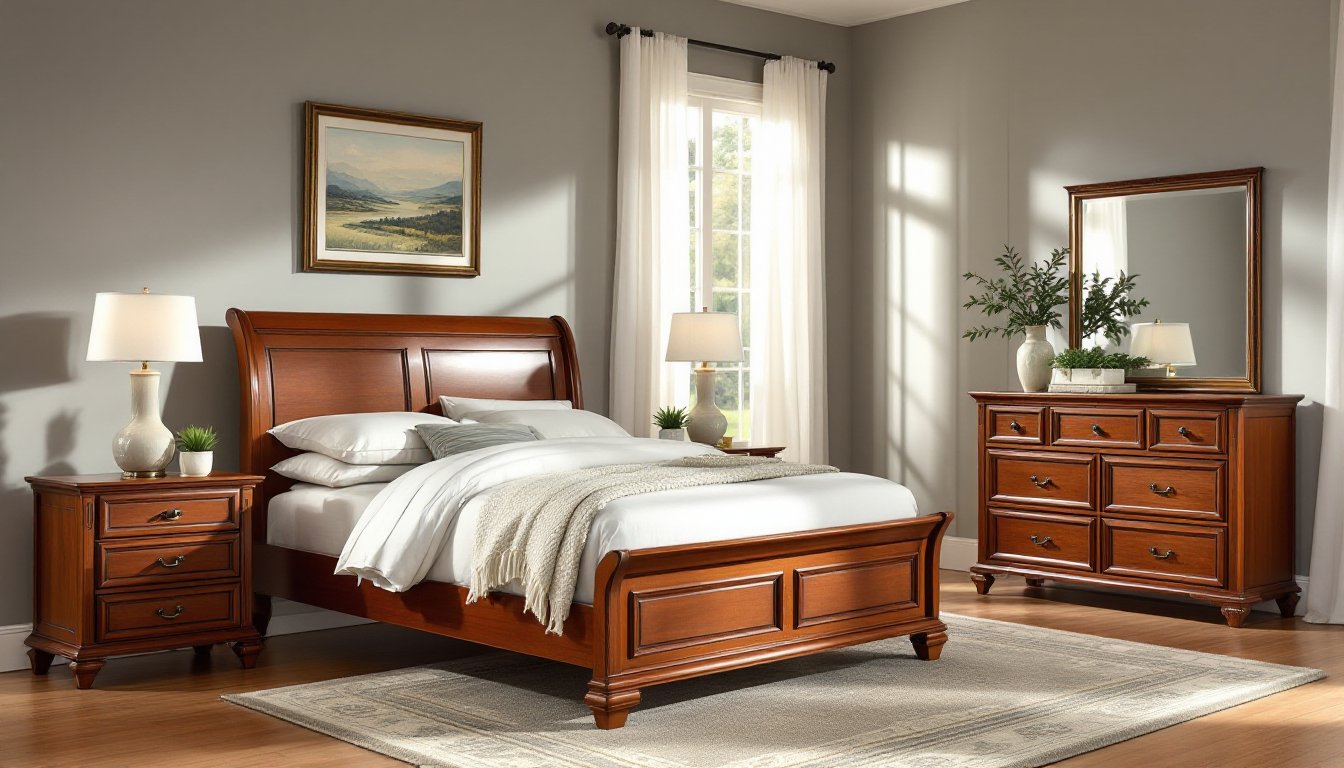
Bed Frame: The room’s anchor piece. Classic frames use solid wood construction with either a sleigh design, panel headboard, or simple platform base. Full mortise-and-tenon joinery where the headboard meets side rails prevents wobbling. Standard dimensions accommodate mattress sizes, 54 × 75 inches for full, 60 × 80 inches for queen, 76 × 80 inches for king. Check that side rails use proper center support beams for mattresses queen-size and larger.
Dresser: Stores folded clothing in multiple drawers. Classic dressers stand 30–36 inches tall and 48–72 inches wide. Look for dovetail drawer construction and full-extension glides rated for 75+ pounds. Drawer bottoms should use solid wood or quality plywood, not thin hardboard that sags under weight. A quality dresser includes a dust panel between drawers to prevent contents from shifting.
Nightstands (Two): Flank the bed for symmetry and function. Classic nightstands provide one or two drawers plus a flat top surface measuring at least 18 × 18 inches, enough space for a lamp, phone, and water glass. Match nightstand height to mattress top, typically 24–28 inches, so reaching items doesn’t require awkward stretching.
Chest of Drawers: Adds vertical storage when wall space is limited. These taller pieces (48–60 inches high) offer five to seven drawers. Many consider choosing pieces that balance horizontal (dresser) and vertical (chest) storage when planning furniture arrangements for bedrooms.
Wardrobe or Armoire: Provides hanging storage when closet space falls short. Classic wardrobes include a hanging rod rated for 50+ pounds and adjustable shelving. Units typically measure 36–48 inches wide and 72+ inches tall. Check door hardware, soft-close hinges prevent slamming and extend hardware life.
Popular Classic Bedroom Furniture Styles to Consider
Classic furniture encompasses several distinct styles, each with recognizable characteristics. Understanding these differences helps narrow choices based on personal preference and existing home architecture.
Traditional and Victorian Elegance
Traditional furniture draws from 18th and 19th-century English and American designs. Pieces feature rich wood tones in mahogany, cherry, or walnut, often with subtle carving on drawer fronts or bed posts. Profiles include gentle curves, no harsh angles or geometric shapes.
Victorian style takes ornamentation further with more pronounced carved details, tufted upholstery, and darker finishes. Bed frames often include tall headboards (60+ inches) with carved crests. Furniture legs use turned designs or cabriole curves.
These styles suit homes with architectural details like crown molding, wainscoting, or coffered ceilings. The formality matches traditional home design. Expect furniture dimensions on the larger side, Victorian dressers often exceed 66 inches in width.
Hardware uses brass or bronze pulls, sometimes with ornate backplates. Drawer fronts may include burl wood veneers or inlay work. The overall effect communicates craftsmanship and permanence. Many interior design approaches favor these styles for primary bedrooms in historic homes.
French Provincial and Cottage Charm
French Provincial furniture originated in rural France, adapting formal Paris designs for country homes. The style uses lighter woods like oak or fruitwoods with painted or whitewashed finishes. Details include curved legs (often cabriole), scalloped aprons on case pieces, and carved floral motifs.
Cottage style simplifies these elements further. Furniture uses painted finishes in soft whites, creams, or pastels. Construction remains solid but ornamentation stays minimal, perhaps a bead board panel on a dresser front or slightly curved drawer faces.
Both styles work well in smaller bedrooms. Pieces tend toward more compact dimensions than traditional furniture, dressers around 48–54 inches wide rather than 66+ inches. The lighter finishes reflect more light, making rooms feel larger.
Hardware typically uses ceramic or glass knobs rather than metal pulls. Distressing adds character, light sanding through paint at edges creates an aged appearance. These styles pair naturally with farmhouse design elements and rooms with whitewashed shiplap or exposed beams.
How to Choose Quality Classic Bedroom Furniture
Evaluating furniture quality requires looking past surface appearance to construction details and materials. These inspection points separate well-built pieces from inferior alternatives.
Check joinery: Open drawers and look for dovetail joints, interlocking fingers of wood at corners. Hand-cut dovetails vary slightly in spacing: machine-cut ones are uniform. Both are acceptable, but avoid stapled or glued-only corners. On bed frames, mortise-and-tenon joints where rails meet posts indicate proper construction. Metal bracket systems work but offer less long-term stability.
Test drawer operation: Pull drawers fully open. They should glide smoothly on ball-bearing slides or quality wooden runners. Full-extension slides (allowing 100% drawer access) make reaching items easier. Check that drawer bottoms use 1/4-inch plywood or solid wood panels in grooves, not thin hardboard tacked to the bottom.
Examine wood quality: Solid wood furniture shows grain patterns that continue around corners and edges. Veneer over particleboard has printed grain that doesn’t wrap naturally. Solid wood isn’t automatically superior, quality plywood cores with hardwood veneers create stable panels less prone to warping. Avoid furniture using particleboard or MDF as primary structure.
Assess finish: Quality finishes use multiple coats with sanding between applications. Run your hand across surfaces, they should feel smooth without rough spots or drips. Stained pieces should show consistent color without blotchy areas. Water-based finishes offer low VOCs: oil-based finishes provide traditional durability.
Verify hardware: Metal drawer pulls should mount with bolts through the drawer front, not small screws into the face. Hinges need at least two attachment points per side. Test any moving parts, doors, drawers, tilt mechanisms, for smooth operation without binding. Understanding quality indicators across furniture types helps when comparing options.
Consider weight: Well-built furniture feels substantial. A solid wood dresser weighs 150–250+ pounds depending on size. If a piece feels surprisingly light, it likely uses engineered wood or thin panels. Weight alone doesn’t guarantee quality, but combined with other factors, it’s a useful indicator.
Arranging Classic Furniture for Maximum Impact
Furniture placement affects both function and visual balance. These guidelines help create layouts that work with room dimensions and traffic flow.
Start with the bed: Position the bed as the room’s focal point, typically centered on the longest wall. Leave 24 inches minimum clearance on sides for bed-making and movement. In smaller rooms, consider floating the bed away from walls, leaving 6–10 inches creates visual breathing room and simplifies cleaning.
Flank with nightstands: Place matching or coordinating nightstands on both sides. For balanced proportions, nightstands shouldn’t exceed one-third the bed’s width. A queen bed (60 inches wide) pairs with nightstands up to 20 inches wide each.
Position the dresser: Place dressers opposite the bed or on perpendicular walls. Allow 36–40 inches of clearance in front for drawer operation and standing room. In tight spaces, a chest of drawers needs less floor space than a wide dresser. Many room furnishing approaches prioritize vertical storage in compact bedrooms.
Create symmetry: Classic furniture benefits from balanced arrangements. Match nightstands, center the bed, and align furniture parallel or perpendicular to walls. Symmetry creates calm, which suits a bedroom’s purpose.
Maintain traffic paths: Keep primary walkways (doorway to bed, bed to closet) clear with 30+ inches width. Don’t block window access or force awkward navigation around furniture corners.
Consider ceiling height: Tall furniture (armoires, four-poster beds) requires adequate ceiling clearance. In rooms with 8-foot ceilings, limit furniture height to 72 inches maximum to prevent a cramped feeling. Higher ceilings accommodate taller pieces that add drama.
Account for door swings: Map door arcs, both bedroom entry and closet doors. Furniture placement shouldn’t block doors from opening fully. Measure before moving heavy pieces into position.
Use area rugs to define space: A rug under the bed and nightstands unifies the grouping. Size the rug so it extends 18–24 inches beyond the bed on three sides. In large rooms, rugs help define the sleeping zone from other areas like seating or dressing spaces.
Test arrangements before committing. Use painter’s tape on the floor to mark furniture footprints, then live with the layout for a day before moving heavy pieces.