
Table of Contents
ToggleA poorly arranged living room can make even a spacious home feel cramped and awkward. Furniture shoved against walls, blocked walkways, and seating that forces people to shout across the room, these aren’t just aesthetic problems. They’re functional failures that undermine how a family actually uses the space. The right living room layout does more than look good in photos. It creates natural conversation zones, maintains clear traffic flow, and adapts to how homeowners actually live, whether that means movie nights, assignments sessions, or hosting friends. This guide covers seven proven strategies for arranging living room furniture that balance style and function.
Key Takeaways
- A strategic living room layout improves both aesthetics and functionality by maintaining clear traffic flow, defining conversation zones, and supporting how families actually use the space.
- Accurate measurements of your room, furniture dimensions, doorways, and electrical outlets are essential before arranging a living room layout to ensure pieces fit and function properly.
- Establish a clear focal point—such as a fireplace, window, or media console—and build your entire living room furniture arrangement around it to create a cohesive, intentional design.
- Choose between symmetrical layouts for traditional balance or asymmetrical arrangements for modern flexibility, avoiding the common mistake of pushing all furniture against walls.
- Optimize traffic flow by maintaining 36–48 inches of clearance for main pathways and positioning seating 8–10 feet apart for comfortable conversation without routing traffic through gathering areas.
- Define functional zones using area rugs and multipurpose furniture, ensuring each zone serves its purpose without compromising overall room flow or sight lines.
Why Your Living Room Layout Matters More Than You Think
Most homeowners treat furniture arrangement as an afterthought. They pick pieces they like, then struggle to make them work together. But layout impacts everything from daily comfort to resale value.
A well-planned living room furniture layout plan improves traffic flow by maintaining 36–48 inches of clearance for main pathways. Anything narrower forces people to turn sideways or squeeze past furniture, a clear sign the arrangement isn’t working.
Functional zones matter too. Conversation areas work best when seating faces each other within 8–10 feet. Beyond that distance, people strain to hear or feel disconnected. The layout also defines how the room supports different activities, reading, watching TV, entertaining, or just passing through to other spaces.
Ignoring these fundamentals leads to rooms that look fine in photos but feel awkward in real life. Chairs that face walls instead of people. Coffee tables too far from sofas to be useful. These mistakes waste square footage and make the space less inviting.
Measure Your Space Before You Move a Single Piece
Guessing dimensions is the fastest way to end up with furniture that doesn’t fit. Accurate measurements are non-negotiable for any living room furniture layout.
Start with the room itself. Measure wall lengths, noting windows, doors, radiators, outlets, and architectural features like fireplaces or built-ins. Don’t assume walls are perfectly square, older homes especially can have variations of several inches.
Next, measure every piece of furniture: length, width, and height. Include clearance for reclining seats or extending ottomans. A sofa might be 84 inches long, but if it has a 6-inch arm overhang on each side, the actual footprint is closer to 96 inches.
Create a floor plan living room furniture layout on graph paper or using free digital tools. Use a scale like 1/4 inch = 1 foot. Cut out scaled furniture templates and experiment with living room furniture layouts before lifting anything heavy.
Mark electrical outlets and light switches on the plan. Running extension cords across walkways isn’t just ugly, it’s a tripping hazard. Plan furniture placement in living room spaces around existing wiring when possible, or budget for an electrician to add outlets where needed (typically $150–$300 per outlet, depending on accessibility and local rates).
Measure doorways and hallways too. That sectional might fit the room perfectly but won’t help if it can’t make the turn through a 32-inch doorway. Always confirm delivery paths before purchasing large pieces.
Choose a Focal Point That Anchors Your Layout
Every successful living room arrangement ideas start with a clear focal point. This is the visual anchor that defines how to layout a living room and where to position major furniture.
Architectural focal points include fireplaces, large windows with views, or built-in shelving. These features are permanent and naturally draw attention. Arrange seating to face or complement these elements rather than competing with them.
If the room lacks architectural interest, create a focal point with a media console, gallery wall, or large-scale artwork. Wall-mounted TVs work well but should be positioned at eye level when seated, typically 42–55 inches from the floor to the center of the screen.
Avoid creating competing focal points. A fireplace on one wall and a TV on another forces people to choose and splits the room’s attention. If both elements must stay, consider mounting the TV above the fireplace (though this can strain necks during extended viewing) or angling furniture to acknowledge both.
Once the focal point is established, build the living room furniture arrangement ideas around it. Position the largest piece, usually a sofa, facing the focal point, then layer in secondary seating at angles that maintain sightlines and conversation flow. Designers on Apartment Therapy often emphasize that even small spaces benefit from a defined anchor point that guides the entire arrangement.
Popular Living Room Layout Styles and When to Use Them
Different room proportions and functions call for different living room furniture layouts. Understanding the options helps homeowners match the arrangement to their needs.
Symmetrical Layouts for Traditional Comfort
Symmetrical arrangements create balance and formality. A common approach: place a sofa centered on one wall facing the focal point, then flank it with matching end tables and lamps. Add two identical chairs opposite the sofa or angled on either side.
This layout works well in square or near-square rooms and suits traditional or transitional decor styles. The visual balance feels orderly and intentional, which appeals to homeowners who prefer classic design principles.
Symmetry simplifies furniture shopping because matching pairs eliminate guesswork. But, it can feel stiff in casual spaces and doesn’t adapt well to irregularly shaped rooms or multiple entry points.
Asymmetrical Layouts for Modern Flexibility
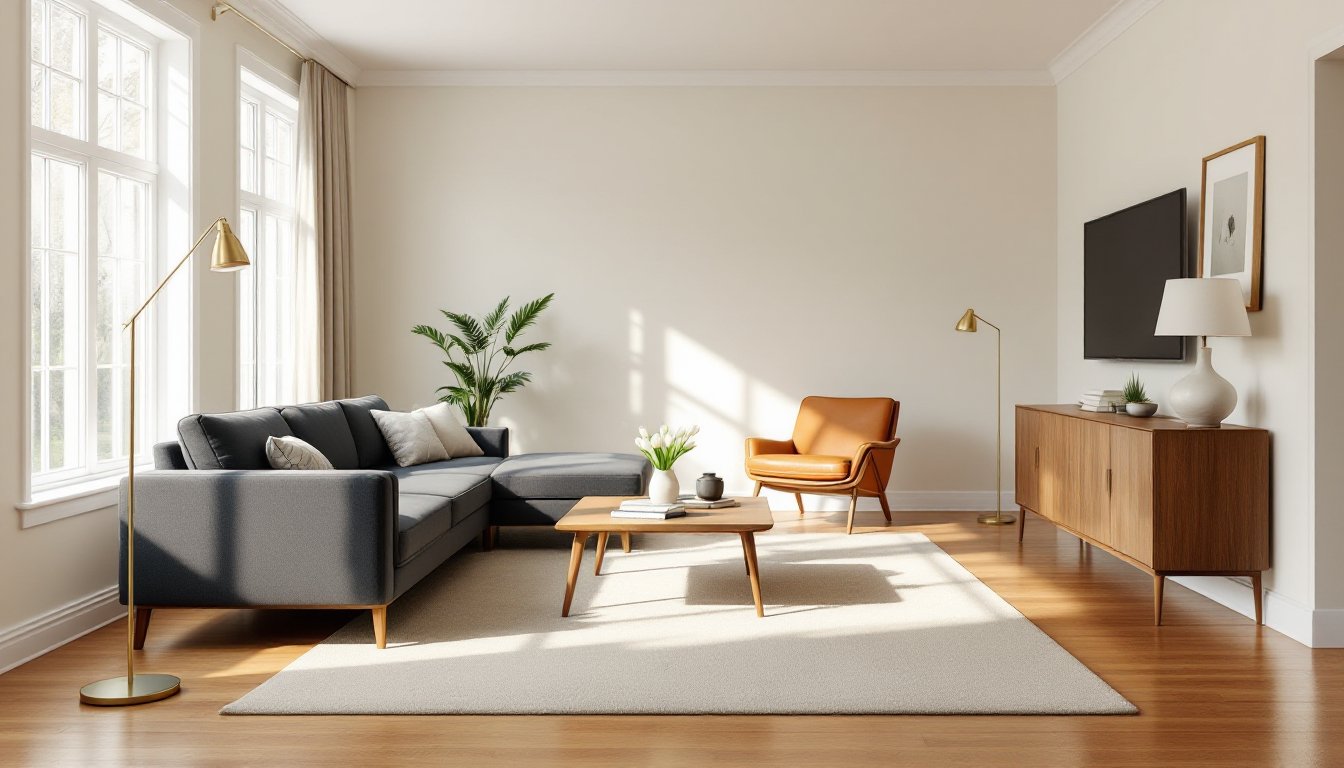
Asymmetrical how to place furniture in living room arrangements use varied pieces to create visual interest without mirrored balance. A sectional anchors one side of the room while a single accent chair and floor lamp balance the opposite corner.
This approach suits open-concept spaces, L-shaped rooms, or homes with contemporary aesthetics. It allows for more flexible furniture choices and adapts easily when needs change.
The key to successful asymmetry is balancing visual weight, not matching pieces. A large sectional on one side might balance against a console table, two chairs, and a tall plant on the other. Experts at MyDomaine frequently showcase how asymmetrical layouts can feel curated rather than haphazard when visual weight is properly distributed.
Avoid the common mistake of pushing all furniture against walls. Floating pieces away from walls, even 12–18 inches, creates a more intentional, designed look and often improves traffic flow by defining clear pathways.
Optimize Traffic Flow and Functional Zones
A beautiful layout fails if people can’t move through the space comfortably. Traffic flow and zoning are practical considerations that separate functional living room layout ideas from purely decorative ones.
Identify primary and secondary pathways. Primary routes, like from the main entrance to the kitchen, need 42–48 inches of clearance. Secondary paths between furniture pieces need at least 24–30 inches.
Avoid layouts that force traffic through conversation areas. If the only path to the kitchen cuts between the sofa and coffee table, the room won’t function during gatherings. Angle furniture to direct traffic around, not through, seating zones.
Define functional zones based on how the room gets used. A conversation zone clusters seating within 8–10 feet for comfortable talking. A media zone orients seating toward the TV with the coffee table positioned 14–18 inches from the sofa for easy reach.
If the living room serves multiple purposes, create distinct zones that don’t interfere with each other. A reading nook in the corner with a chair, floor lamp, and small side table can coexist with a main seating area. Use area rugs to visually separate zones, each functional area gets its own rug to define its boundaries.
Maintain scale relationships between pieces. A massive sectional paired with a tiny coffee table looks unbalanced and doesn’t serve the space well. Coffee tables should be roughly two-thirds the length of the sofa they serve. Side tables should stand at or slightly below arm height for easy access.
Consider sight lines from multiple angles. Sit in each proposed seating location and check what you see. Does the back of the TV dominate the view from the dining area? Does the sofa block a beautiful window? Adjusting placement by even 6–12 inches can resolve these issues.
Adaptable design solutions like modular furniture, nesting tables, and ottomans with storage help rooms flex between daily use and entertaining without a complete rearrangement. Many contemporary layouts on Homedit feature multipurpose pieces that maintain clean lines while offering practical flexibility.