
Table of Contents
ToggleChoosing bedroom furniture isn’t just about filling empty floor space, it’s about building a room that functions smoothly and looks good doing it. Bad furniture falls apart in three years, good furniture lasts decades. Whether someone’s furnishing a first apartment or upgrading a master suite, the right bed frame, dresser, and nightstand make the difference between clutter and calm. This guide reviews the best bedroom furniture available in 2026, covering everything from durable bed frames to complete sets, with honest assessments of what works and what doesn’t.
Key Takeaways
- Quality bedroom furniture reviews emphasize that solid wood with proper joinery (dovetail joints, mortise-and-tenon) lasts decades, while particle board and stapled construction fail within years.
- Platform beds with 14-16 closely spaced slats eliminate the need for box springs and provide superior mattress support without voiding warranties.
- Dresser construction quality matters more than aesthetics—look for ball-bearing slides rated for 75+ pounds, solid wood drawer boxes, and anti-tip hardware for tall pieces.
- Nightstand height should align within 2 inches of your mattress top, and top surface area needs at least 18×18 inches to hold a lamp, phone, water glass, and book practically.
- Bedroom furniture sets offer 15-25% price savings and aesthetic consistency, but only invest in complete sets if every piece serves your room’s layout and needs.
- Mattress-frame compatibility is essential—memory foam and latex work on any solid surface, while innerspring mattresses require adequate support every 3-4 inches to prevent warranty voidance.
What to Look for When Choosing Bedroom Furniture
Material quality separates furniture that lasts from stuff that ends up curbside in two years. Solid wood, oak, maple, walnut, or birch, outlasts particle board and MDF every time, though engineered wood products work fine for secondary pieces like nightstands if they’re properly constructed with quality veneers.
Construction details matter more than most shoppers realize. Check for dovetail joints in drawers (not just stapled corners), mortise-and-tenon joinery in frames, and ball-bearing drawer glides rated for at least 75 pounds. Cheaper furniture uses cam-lock connectors that loosen over time.
Proportions need to fit the room and the user. A king bed in a 10×12 bedroom leaves no space to walk. Measure the room, mark tape on the floor where furniture will sit, and walk around it before buying. Standard nightstands sit 24-28 inches tall to match most mattress heights, but verify against the actual bed frame height.
Finish durability varies wildly. Look for catalyzed lacquer or conversion varnish on wood furniture, both resist water rings and scratches better than standard polyurethane. Avoid furniture with heavy stain that hides grain: it often covers low-grade wood. When considering how to approach smart furniture placement strategies, remember that quality pieces anchor a room’s layout.
Best Bed Frames for Comfort and Durability
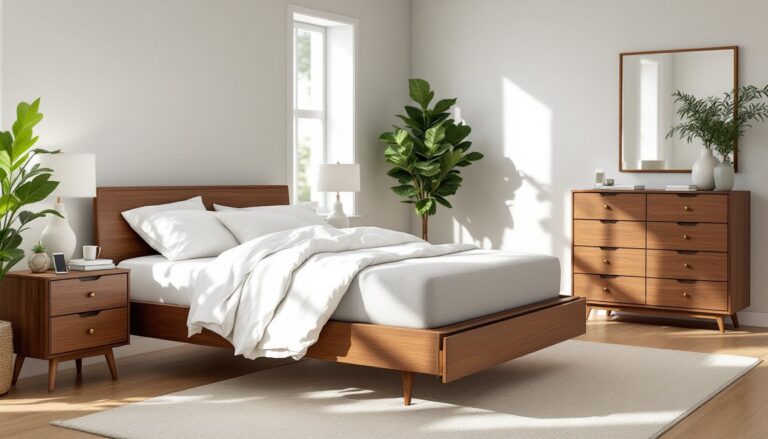
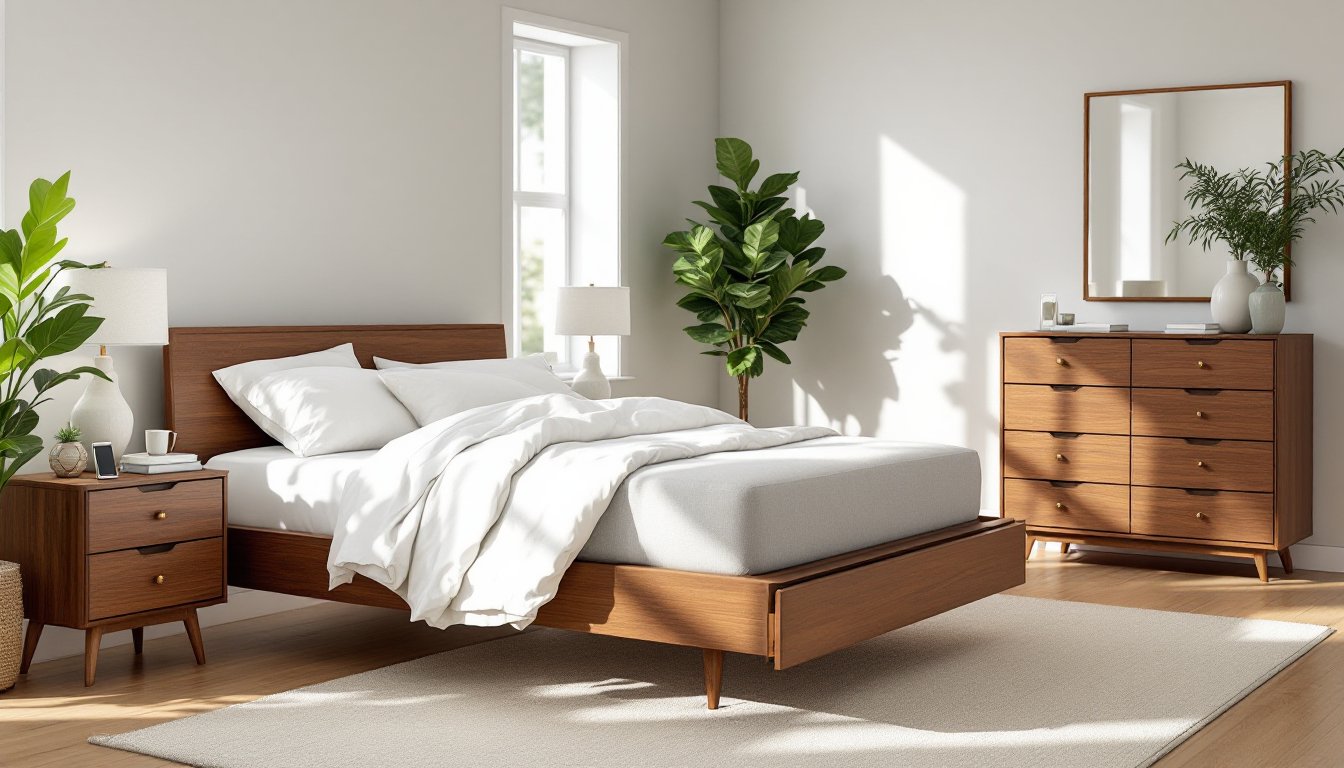
Platform beds dominate 2026 for good reason: they eliminate box springs, sit lower for easier access, and provide better mattress support with solid slats or panels. The best designs use 14-16 slats spaced no more than 3 inches apart to prevent sagging. Avoid frames with only 8-10 slats, they’ll void most mattress warranties.
For solid wood platform frames, look for models with center support legs on queen and king sizes. Without them, the frame will bow under weight. Quality frames use 2×4 or larger lumber for side rails, not 1×4 pine that splits at the bolt holes. Expect to pay $400-$800 for a well-built queen platform bed in solid hardwood.
Metal platform frames cost less ($200-$400) and assemble easier, but check the gauge, 14-gauge steel or thicker handles weight without flexing. Thin metal frames create noise and wobble. Welded frames beat bolted ones for stability. Powder-coated finishes resist scratching better than paint.
Upholstered beds add softness and sound dampening but hide construction quality. Feel for a solid wood or metal frame underneath, if the padding compresses easily to nothing, the frame’s likely cheap. Many platform bed designs incorporate storage drawers, which work well in smaller bedrooms but add $200-$300 to the price and require clearance space to open.
For adjustable bases, the frame needs to accommodate the mechanism. Most platform beds won’t work, look for frames specifically designed for adjustable mattresses, typically with a split design.
Top-Rated Dressers and Storage Solutions
A six-drawer dresser is the workhorse of bedroom storage. Quality models use 3/4-inch solid wood or plywood drawer boxes with 1/2-inch bottoms, not particle board that sags under the weight of folded jeans. Bottom-mounted ball-bearing drawer slides rated for 75-100 pounds handle heavy loads and extend fully for access to the back.
Check drawer fronts for warp. Set a straightedge across the face, any bow means the wood wasn’t properly dried before construction, and it’ll get worse. English dovetail joints (visible tails on drawer fronts) indicate hand-cut or quality machine work. Through dovetails are even stronger but less common in production furniture.
Tall dressers (five or six drawers high) need an anti-tip kit, period. The CPSC mandates these for children’s furniture, but all tall, top-heavy furniture should be anchored to wall studs with the included hardware or aftermarket straps. Use a stud finder, not just drywall anchors, they fail under dynamic load.
Drawer dimensions matter for organization. Shallow top drawers (4-5 inches) work for accessories: mid-depth drawers (7-8 inches) hold folded shirts: deep bottom drawers (10-12 inches) accommodate bulky sweaters or blankets. Dressers with all same-depth drawers waste space or force stacking.
Finish the back panel if the dresser will sit away from walls, exposed particle board looks unfinished and sheds dust. Quality dressers use 1/4-inch plywood backs, nailed and glued into dados, not stapled cardboard. Adding a well-chosen dresser often follows general furniture selection principles focused on durability and scale.
Best Nightstands for Style and Functionality
Nightstand height should align with the top of the mattress, give or take 2 inches, so someone lying in bed can reach items easily without straining. Most nightstands run 24-28 inches tall, but measure the actual bed setup, a pillow-top mattress on a tall platform frame might need a 30-inch nightstand.
Two-drawer models provide more storage than single-drawer or open-shelf designs, and drawers keep clutter out of sight. Look for the same construction quality as dressers: dovetail joints, solid wood drawer boxes, quality slides. Cheap nightstands use stapled particleboard drawers that collapse when someone yanks them open at 2 a.m.
Built-in USB ports and power outlets are increasingly standard in 2026 and worth the extra $30-$50. They eliminate charging cables snaking across the floor. Verify the outlet placement, side-mounted beats rear-mounted, which often ends up blocked against the wall. Look for models with at least one USB-C port rated for fast charging (18W or higher).
Top surface area matters more than people think. A nightstand needs room for a lamp, phone, water glass, and maybe a book, at least 18×18 inches of usable top space. Tiny 12-inch-square tops look sleek but can’t hold anything practical.
Nightstand materials should match or complement the bed frame, but they don’t need to be identical. Mixing wood tones works if the undertones align (all warm or all cool). Metal-and-wood combinations suit industrial or modern styles, while those starting out might consult a beginner’s guide to furniture for pairing advice.
Quality Mattresses That Pair Perfectly with Your Furniture
Mattress and frame compatibility isn’t automatic. Innerspring and hybrid mattresses need solid support, either a box spring on a traditional frame or a platform bed with closely spaced slats (3 inches or less). Memory foam and latex mattresses work on any solid, flat surface, including platform beds and adjustable bases.
Mattress thickness affects nightstand height and bed skirt length. Modern mattresses run 10-14 inches thick, but add a pillow top and they hit 16 inches. Measure the total height from the floor to the mattress top before buying nightstands or planning under-bed storage.
Foam mattresses (all-foam or memory foam) compress more than innerspring models under body weight, so they need firmer, more frequent support slats. If slats are too far apart, the foam sinks between them and creates uncomfortable pressure points. Some manufacturers void warranties if the mattress sits on inadequate support.
For platform beds with built-in slat systems, verify the mattress warranty requirements before buying. Most require support every 3-4 inches maximum. Adding a bunkie board (a 1-2 inch solid or slatted platform) on top of widely spaced slats satisfies most warranty terms and costs $50-$100.
Adjustable bases need flexible mattresses. Memory foam, latex, and some hybrids work fine: traditional innerspring mattresses don’t bend. The base also needs clearance under the bed for the mechanism, typically 10-12 inches minimum. Check frame specs before committing to an adjustable setup.
Complete Bedroom Furniture Sets Worth Investing In
Bedroom sets simplify shopping but often include pieces buyers don’t need. A typical five-piece set includes bed frame, dresser, mirror, and two nightstands. The mirror often ends up in a closet because it doesn’t fit the wall layout. Buy sets only if every piece has a purpose.
Sets do offer aesthetic consistency, same wood species, finish, and hardware throughout. That matters in smaller bedrooms where mismatched styles feel chaotic. In larger rooms, mixing furniture adds depth. The price break on sets runs 15-25% compared to buying pieces individually, which offsets the cost of unwanted items if two or fewer pieces go unused.
Avoid sets built from different materials masquerading as matching furniture. Some manufacturers use solid wood for visible frame parts and particle board for everything else, then stain it all the same color. Check drawer boxes and interior panels, if they’re printed particle board, walk away.
Matching hardware (drawer pulls, knobs) sounds minor but unifies a room’s look. Sets guarantee matching hardware, while buying separately often means hunting down six matching pulls across discontinued product lines. Upgrading hardware later costs $3-$8 per pull, so budget $50-$100 for a full bedroom’s worth.
For those who prefer coordinated but not identical pieces, many manufacturers offer collections with complementary styles. Same finish, compatible proportions, varied designs. This approach suits rooms where you might want to explore current trends without buying everything at once. Sets also pair well with those following a broader furniture planning guide that emphasizes room flow.
Conclusion
Good bedroom furniture balances durability, function, and budget without compromise. Solid construction, proper proportions, and honest materials outlast trendy designs every time. Whether buying individual pieces or a complete set, those who prioritize joinery, drawer quality, and appropriate support systems for mattresses will build bedrooms that work well for years, not months.